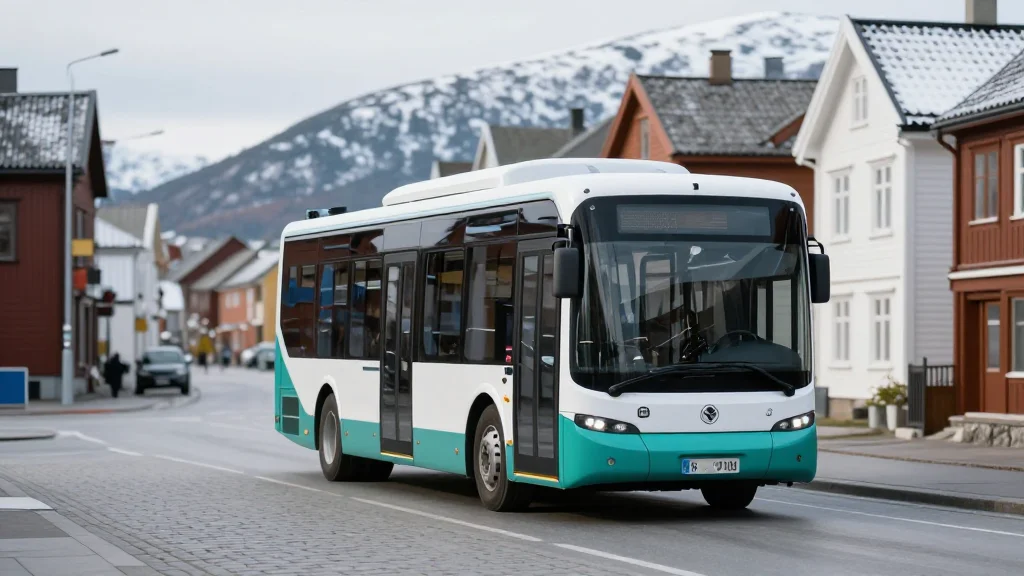
Norway Approves First Fully Driverless Buses for Public Roads

Why It Matters
The authorization of fully driverless buses in Norway represents a tangible regulatory milestone that could catalyze wider adoption of autonomous public transport across Europe. By eliminating the safety driver, operators can achieve lower operating costs, higher vehicle utilization, and a cleaner energy profile, directly supporting municipal climate targets. Beyond environmental benefits, the move tests the scalability of level‑4 autonomy in complex urban environments. Successful data from the pilot will provide valuable insights into sensor reliability, cybersecurity, and passenger acceptance, informing standards that other countries may adopt.
Key Takeaways
- •Norwegian regulators approved level‑4 autonomous e‑ATAK buses for Vy and Kolumbus, removing the on‑board safety driver.
- •The buses can carry 52 passengers, run on electric power, and are equipped with Adastec’s autonomous driving system.
- •Pilot service will start in May on a loop connecting a hospital and a university, pending performance review.
- •Approval makes Norway the first European nation to permit fully driverless public‑transport buses on open roads.
- •Success could trigger broader European deployments and influence global regulatory approaches to autonomous transit.
Pulse Analysis
Norway’s decision is more than a local policy tweak; it signals a shift in how governments view the risk‑benefit calculus of autonomous mobility. Historically, European regulators have been cautious, often requiring a human driver to intervene. By granting a waiver, Norway is betting that the technology’s safety record, demonstrated during years of supervised trials, outweighs residual uncertainties. This gamble could pay off by delivering measurable cost savings—driver wages represent a significant portion of transit operating budgets—and by accelerating the transition to zero‑emission fleets.
The competitive implications are equally profound. Karsan, a Turkish bus maker, and Adastec, a niche autonomous software provider, now have a high‑profile showcase that could attract contracts from other European cities seeking to leapfrog traditional bus models. Meanwhile, incumbent European manufacturers may need to accelerate their own autonomous programs or form strategic partnerships to stay relevant. The pilot’s data will likely become a benchmark for safety standards, influencing the European Union’s forthcoming regulatory framework for Level‑4 and Level‑5 vehicles.
Looking ahead, the pilot’s outcome will shape the timeline for broader deployment. If the buses meet safety and reliability targets, municipalities could fast‑track additional routes, potentially reshaping urban mobility patterns. Conversely, any incident could trigger a regulatory backlash, reinforcing the cautious stance seen in other regions. Stakeholders should watch the pilot’s performance metrics closely, as they will inform both policy and investment decisions in the autonomous transit sector for years to come.
Norway Approves First Fully Driverless Buses for Public Roads
Comments
Want to join the conversation?
Loading comments...