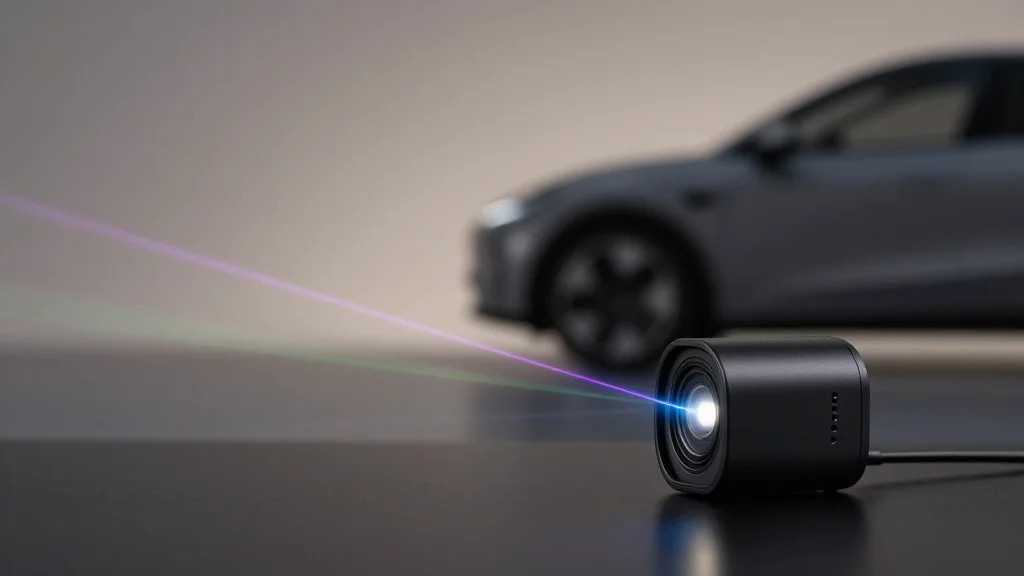
Ouster Unveils Rev8 OS, First Native‑Color Lidar for Autonomous Systems

Companies Mentioned
Why It Matters
Native‑color lidar could collapse the sensor stack that currently requires separate cameras and lidar units, reducing weight, power consumption, and calibration overhead. For autonomous vehicles, the ability to perceive color at the point level may improve detection of traffic signals, brake lights, and road markings under varied lighting conditions, directly impacting safety and regulatory approval timelines. In robotics, colorized 3D maps enable more nuanced object recognition and manipulation, expanding use cases from warehouse automation to outdoor inspection. The technology also signals a shift toward integrated perception platforms, where hardware‑level fusion replaces software‑only solutions. This could reshape supplier relationships, push OEMs to favor single‑sensor vendors, and accelerate the commoditization of high‑resolution perception, potentially lowering the cost barrier for smaller players entering the autonomy market.
Key Takeaways
- •Rev8 OS doubles range and resolution versus Ouster's previous generation
- •First lidar to embed 48‑bit color depth at each 3D point
- •L4 Silicon processes 42.9 GMACs, 20 trillion photons/sec, 40 kHz rate
- •Ouster acquired StereoLabs for $38 million to build a platform business
- •Rev8 ships to customers within the quarter, targeting automotive and robotics
Pulse Analysis
Ouster’s Rev8 launch marks a decisive step toward sensor consolidation in the autonomy stack. By marrying high‑resolution depth with true color at the hardware level, Ouster eliminates a major source of latency and error that has plagued multi‑sensor fusion pipelines. Historically, lidar providers have focused on geometry, leaving color interpretation to cameras, which introduces synchronization challenges and adds cost. Rev8’s native‑color approach could force a re‑evaluation of system architectures, especially for OEMs that have invested heavily in camera‑centric perception.
From a competitive standpoint, the move puts pressure on rivals like Velodyne and Luminar to either develop comparable color capabilities or double down on alternative modalities such as solid‑state or flash lidar. The $38 million StereoLabs acquisition underscores Ouster’s intent to become a full‑stack perception provider rather than a component supplier. If Rev8 lives up to its specifications in field trials, it could accelerate the timeline for Level‑4 deployments by simplifying validation processes and reducing the bill of materials.
Looking ahead, the market will watch how quickly integrators can translate Rev8’s specs into measurable safety improvements. Regulators are increasingly demanding demonstrable perception performance under diverse lighting and weather conditions. A sensor that can natively capture color may satisfy those requirements more readily than a stitched camera‑lidar solution. Consequently, Rev8 could become a de‑facto standard for next‑generation autonomous platforms, reshaping supplier ecosystems and potentially lowering the cost of entry for emerging players in the autonomous vehicle and robotics sectors.
Ouster Unveils Rev8 OS, First Native‑Color Lidar for Autonomous Systems
Comments
Want to join the conversation?
Loading comments...