Pirelli Takes 30% Stake in AI Startup Univrses to Power Smart‑Tire Autonomy

Companies Mentioned
Why It Matters
Embedding AI‑enabled perception directly into tyres creates a distributed sensor network that can dramatically improve the fidelity of road‑state information available to autonomous vehicles. This data not only enhances safety by alerting drivers and control systems to hazards such as potholes or ice, but also enables predictive road‑maintenance programs that reduce downtime and repair costs for municipalities. For the broader autonomy ecosystem, the Pirelli‑Univrses alliance illustrates a growing trend: hardware manufacturers are leveraging software and data services to stay relevant in a market increasingly defined by intelligence rather than mechanical performance. The partnership could set a precedent for other component suppliers to monetize the data they already collect, reshaping revenue models across the automotive supply chain.
Key Takeaways
- •Pirelli acquires a 30% equity stake in Univrses with an option for majority control.
- •Univrses’ 3DAI platform provides real‑time 3D mapping, positioning and road‑condition analytics.
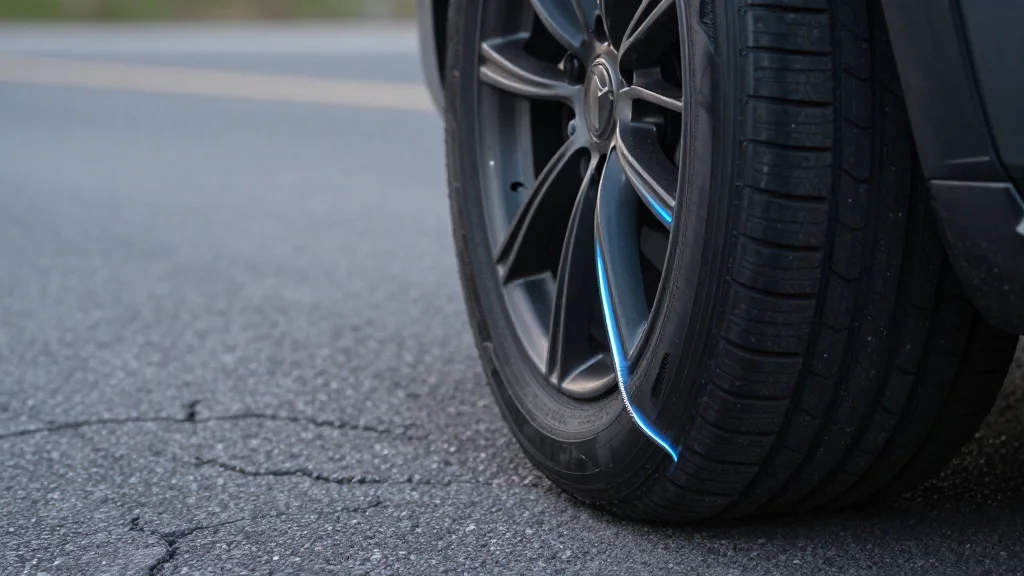
- •The technology will be embedded in Pirelli’s Cyber Tire ecosystem for ADAS and autonomous driving.
- •Pilot deployments are planned in European cities, building on a 2025 Italian data‑sharing test.
- •The partnership positions tyres as active sensors, opening new data‑licensing revenue streams.
Pulse Analysis
Pirelli’s stake in Univrses is a strategic hedge against the commoditisation of tyre manufacturing. By moving up the value chain into data services, the company can capture recurring revenue that scales with the number of connected vehicles on the road. This mirrors moves by other legacy suppliers—Michelin’s acquisition of a lidar startup and Goodyear’s partnership with a telematics firm—indicating that the tyre sector is rapidly evolving into a data‑centric industry.
From a technical standpoint, the integration of 3DAI into the Cyber Tire could solve a persistent blind spot for autonomous systems: the immediate condition of the road surface. While lidar and radar excel at detecting objects, they struggle with fine‑grained surface anomalies that affect traction and braking. A tyre‑borne sensor suite that continuously streams high‑resolution data could feed machine‑learning models that predict loss of grip before it happens, improving both safety and performance.
However, the venture faces hurdles. Data privacy regulations in Europe may limit how vehicle‑generated data can be shared with third parties, and the latency requirements for real‑time autonomous decision‑making are stringent. Pirelli will need to demonstrate that its cloud infrastructure can process and distribute data at sub‑second speeds. Moreover, the success of the model hinges on widespread OEM adoption; without a critical mass of vehicles equipped with Cyber Tires, the data set may remain too sparse to deliver the promised insights. The upcoming pilot phase will be the first real test of whether the technology can meet these operational demands and whether the market will reward tyre manufacturers for becoming data providers.
Pirelli Takes 30% Stake in AI Startup Univrses to Power Smart‑Tire Autonomy
Comments
Want to join the conversation?
Loading comments...