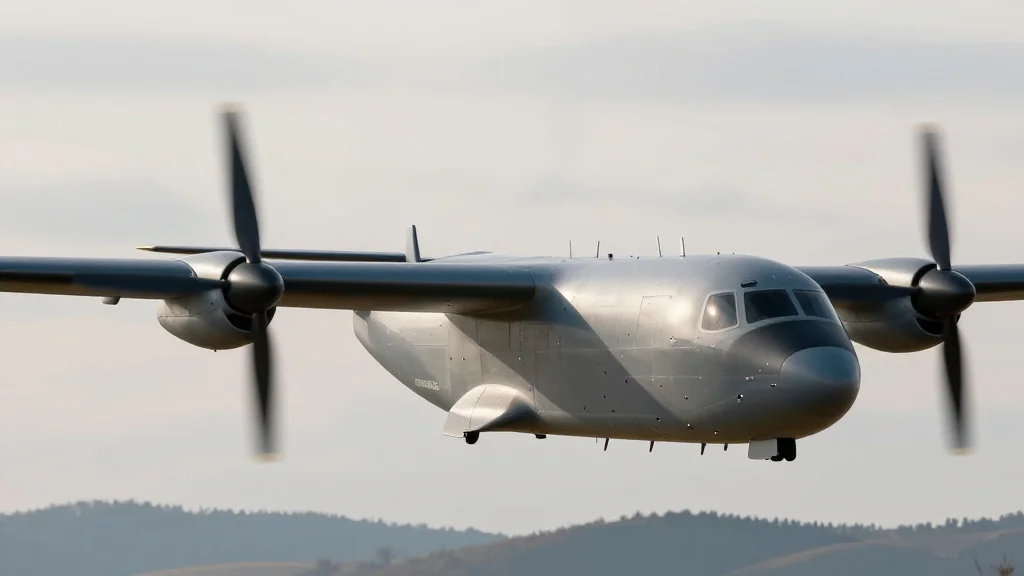
Pyka’s DropShip Completes First Flight, Proving Rapid Autonomous Cargo Capability

Companies Mentioned
Why It Matters
Autonomous cargo aircraft like DropShip could reshape how militaries and humanitarian agencies move supplies in contested or remote regions, reducing exposure to ground threats and cutting delivery times. By leveraging a proven commercial UAS foundation, Pyka demonstrates that high‑performance autonomous systems can be fielded faster and cheaper than traditional development pathways, potentially accelerating the broader adoption of unmanned logistics across both defense and commercial sectors. If DropShip achieves the promised cost and performance metrics, it may trigger a wave of investment in similar heavy‑lift autonomous platforms, prompting legacy aerospace firms to rethink their development cycles and prompting regulators to adapt certification frameworks for high‑risk, high‑payload unmanned aircraft.
Key Takeaways
- •Pyka completed DropShip's first flight on April 27, 2026, after a six‑month development cycle.
- •The aircraft is built on a 1,400‑lb MTOW autonomous platform that has logged over 10,000 flights.
- •DropShip features hybrid propulsion, modular open architecture, and precision airdrop capability.
- •CEO Michael Norcia highlighted rapid iteration and manufacturability as core to the program’s speed.
- •Future milestones include endurance tests, autonomous airdrop demos, and DoD integration trials.
Pulse Analysis
Pyka’s rapid rollout of DropShip reflects a broader shift in aerospace where commercial UAV experience is being repurposed for high‑value defense logistics. Historically, heavy‑lift unmanned aircraft have suffered from protracted development timelines and high unit costs, limiting adoption. By compressing concept to flight into six months, Pyka not only proves technical feasibility but also signals a new business model: iterate on a proven commercial base, then layer mission‑specific capabilities for defense customers. This approach could force incumbents like Lockheed Martin and Boeing to accelerate their own autonomous cargo programs or risk losing market share in a niche that is rapidly gaining strategic importance.
The cost argument is equally compelling. Traditional manned cargo aircraft require extensive crew training, maintenance infrastructure, and fuel logistics. DropShip’s hybrid propulsion and containerized maintenance promise lower operating expenses, a factor that could be decisive for budget‑constrained defense departments and NGOs operating in disaster zones. However, the platform’s success will hinge on regulatory acceptance and the ability to demonstrate reliability under contested conditions. If Pyka can secure early contracts with the U.S. Department of Defense or allied forces, it will create a validation loop that could unlock further private‑sector demand, especially in remote logistics for mining, oil, and humanitarian aid.
In the next 12 to 18 months, the market will watch for two key signals: the outcome of autonomous airdrop trials and the pace at which Pyka can transition from prototype to low‑rate production. A successful demonstration could catalyze a new class of autonomous cargo solutions, prompting a cascade of investment and potentially reshaping the logistics supply chain for both military and civilian operators.
Pyka’s DropShip completes first flight, proving rapid autonomous cargo capability
Comments
Want to join the conversation?
Loading comments...