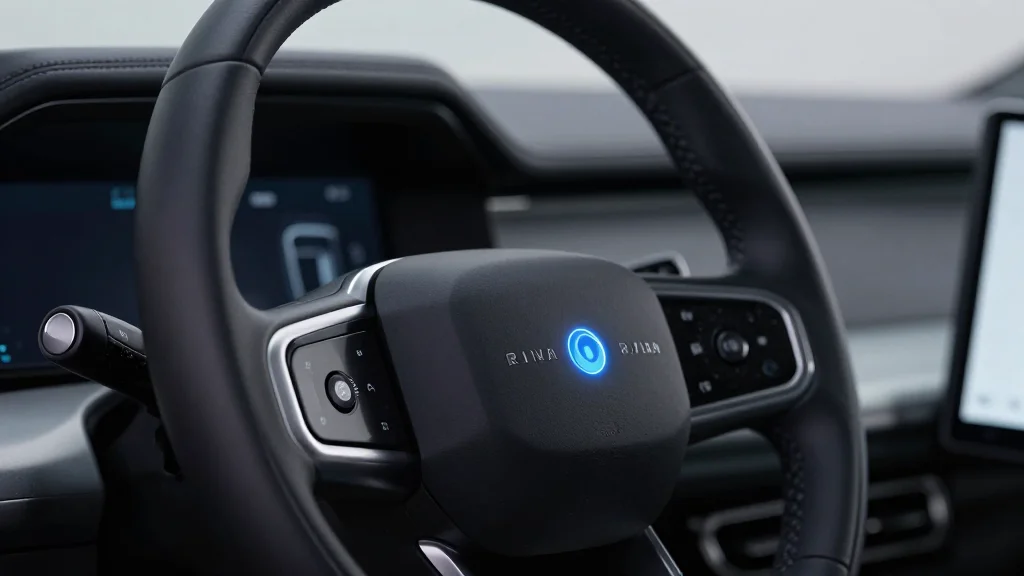
Rivian Deploys 'Hey Rivian' AI Assistant with Full Vehicle Control

Companies Mentioned
Why It Matters
Rivian’s ‘Hey Rivian’ assistant demonstrates how automakers are leveraging AI to deepen vehicle‑owner engagement and create recurring software revenue streams. By granting voice control over core vehicle systems, Rivian blurs the line between driver assistance and true autonomy, setting a functional benchmark that rivals must match. The move also raises questions about data privacy, as the assistant learns personal context stored in driver profiles, and about the scalability of subscription models in a market where consumers may balk at recurring fees. If Rivian’s approach gains traction, it could accelerate the industry’s shift toward on‑board AI chips and edge compute, reducing reliance on cloud latency and enabling more sophisticated, real‑time decision‑making. This would not only enhance the user experience but also lay groundwork for higher levels of autonomous driving, where seamless integration of perception, planning and user interaction becomes essential.
Key Takeaways
- •Rivian rolls out ‘Hey Rivian’ voice assistant via OTA to all Gen 1 and Gen 2 R1 owners
- •Assistant can control drive modes, climate, ride height, front trunk, cameras and range data
- •Requires Connect+ subscription at $14.99/month ($149.99/year)
- •Built on Rivian Unified Intelligence with custom LLMs and 200 sparse TOPS edge AI on upcoming R2
- •Tesla’s Grok assistant lacks full vehicle control, highlighting Rivian’s functional advantage
Pulse Analysis
Rivian’s decision to embed a full‑vehicle voice assistant reflects a broader strategic pivot toward software as a profit engine. Historically, EV makers have competed on range, performance and price; Rivian is now betting that a differentiated AI experience will lock customers into its ecosystem. The $14.99 monthly fee is modest compared with Tesla’s premium tier, but the real value proposition lies in the assistant’s ability to command vehicle hardware—a capability that could become a de‑facto standard as consumers grow accustomed to hands‑free, context‑aware interactions.
From a competitive standpoint, Rivian’s move forces Tesla to either enhance Grok’s control scope or risk losing a perceived advantage in user convenience. Mercedes‑Benz’s MBUX already offers similar functionality, suggesting that legacy OEMs may have a head start in integrating voice with vehicle systems. However, Rivian’s edge‑AI hardware and unified AI framework could give it a scalability edge, especially as it expands third‑party integrations beyond Google Calendar.
Looking ahead, the success of ‘Hey Rivian’ will hinge on adoption rates and how effectively Rivian addresses privacy concerns. If drivers embrace the assistant and maintain Connect+ subscriptions, Rivian could unlock a steady revenue stream that funds further autonomy development, such as Level 4 self‑driving capabilities hinted at during its AI and Autonomy Day. Conversely, low uptake could signal market fatigue for subscription‑based vehicle features, prompting a reassessment of pricing or bundling strategies.
Rivian Deploys 'Hey Rivian' AI Assistant with Full Vehicle Control
Comments
Want to join the conversation?
Loading comments...