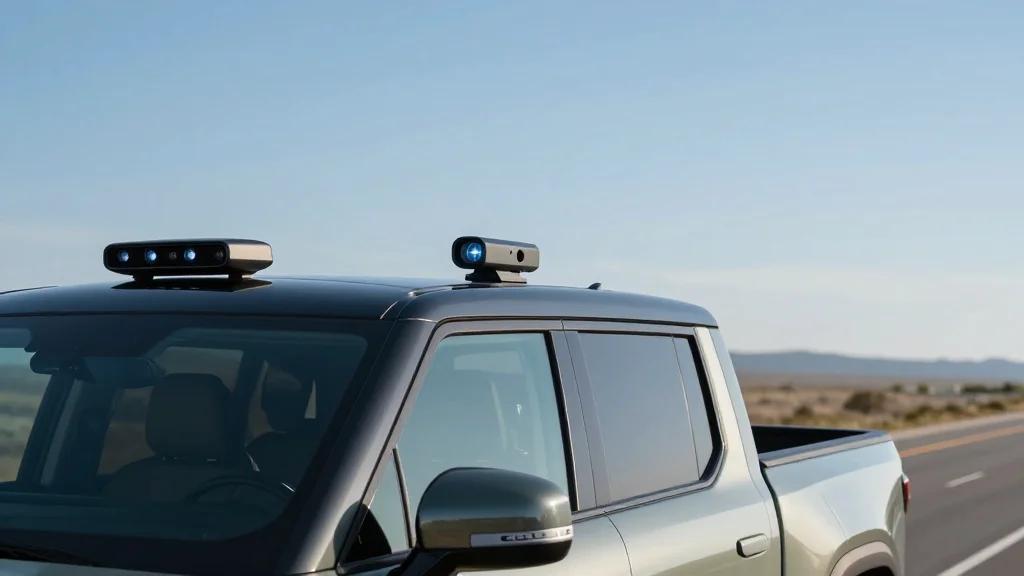
Rivian Mulls Domestic Lidar Production as Uber Pledges $1.25 B Robotaxi Deal

Companies Mentioned
Why It Matters
Rivian’s pursuit of U.S. lidar manufacturing tackles two strategic challenges: supply‑chain security and cost competitiveness. By internalizing a component that currently dominates the market and is sourced mainly from Chinese firms, Rivian reduces exposure to geopolitical tensions and potential export controls. The move also positions the company to offer lower‑priced sensor packages, a key factor in scaling robotaxi fleets. The Uber partnership amplifies the stakes. A $1.25 billion commitment tied to performance milestones forces Rivian to deliver a reliable, high‑volume autonomous system without relying on external software layers. Success would validate the viability of a fully integrated stack and could pressure rivals—such as Tesla, Waymo, and traditional OEMs—to accelerate similar vertical integration strategies.
Key Takeaways
- •Rivian is in active talks to build lidar sensors in the United States, possibly via a joint venture with Chinese technology firms.
- •CEO RJ Scaringe said the only affordable lidar options are currently from China, priced in the low hundreds of dollars per unit.
- •Rivian’s autonomy stack includes a custom 5nm RAP1 AI processor delivering 1,600 trillion operations per second.
- •Uber pledged up to $1.25 billion, with an initial $300 million, to deploy up to 50,000 Rivian R2 robotaxis by 2031.
- •The first robotaxis are slated for launch in San Francisco and Miami in 2028, contingent on Rivian meeting performance milestones.
Pulse Analysis
Rivian’s lidar ambition reflects a broader industry shift toward end‑to‑end control of autonomous technology. Historically, most automakers have outsourced lidar to specialists, accepting higher costs and longer lead times. By attempting to domestically produce lidar, Rivian not only mitigates geopolitical risk but also creates a potential cost advantage that could make robotaxi economics more attractive. If the company can achieve a price point comparable to current Chinese offerings, it could undercut competitors that remain dependent on imported sensors.
The Uber deal adds a financial catalyst that forces Rivian to prove its stack’s reliability at scale. Unlike partnerships that merely provide capital, Uber’s milestone‑based funding ties cash flow directly to autonomous performance, creating a high‑stakes testing ground. Success would demonstrate that a vertically integrated model can meet commercial deployment timelines, a narrative that could attract further investment and partnership opportunities.
However, the path is fraught with technical and regulatory hurdles. Lidar manufacturing requires precision optics and high‑volume semiconductor processes, areas where Rivian has limited experience. Moreover, U.S. regulators may scrutinize any joint venture involving Chinese technology, potentially slowing approvals. Rivian’s ability to navigate these challenges will determine whether its integrated approach becomes a template for the next generation of autonomous vehicle makers or remains an ambitious outlier.
Rivian Mulls Domestic Lidar Production as Uber Pledges $1.25 B Robotaxi Deal
Comments
Want to join the conversation?
Loading comments...