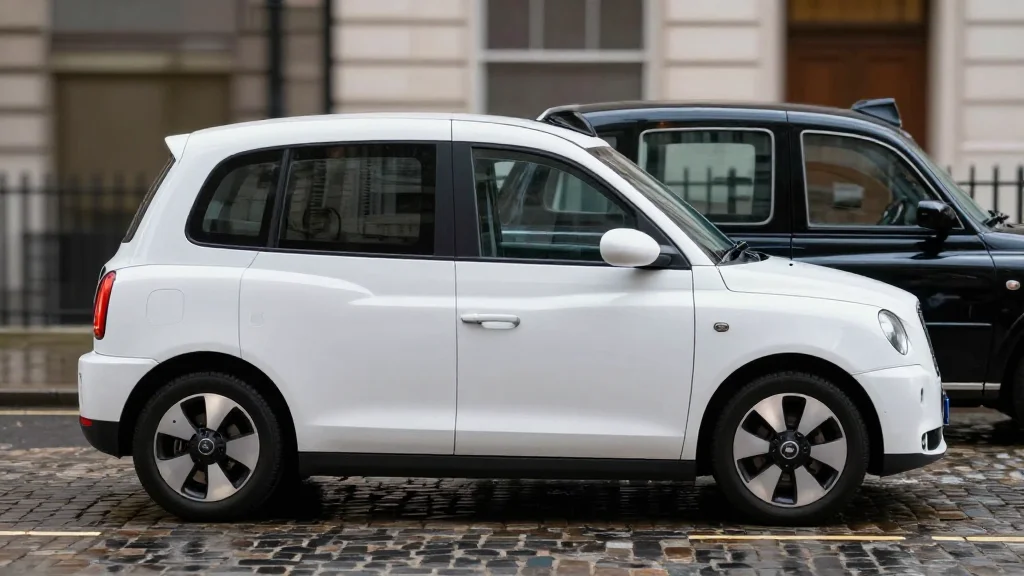
Robotaxis Target London’s Black Cabs as Driver Numbers Slip to 16,000

Companies Mentioned
Why It Matters
The clash between robotaxis and London’s black cabs illustrates a broader global tension between legacy transport models and emerging autonomous technology. If Wayve or Waymo secure a foothold, the economics of urban mobility could shift dramatically, pressuring regulators to rethink licensing, insurance, and road‑space allocation. Beyond London, the outcome will signal to other historic cities—Paris, Rome, Tokyo—whether AI can displace deeply entrenched, knowledge‑intensive driver professions. A successful robotaxi rollout could accelerate investment in autonomous fleets worldwide, while a backlash could reinforce the value of human expertise in complex urban environments.
Key Takeaways
- •Wayve, backed by Nvidia and Microsoft, targets a London robotaxi launch later this year.
- •Waymo’s fleet travels >2 million miles weekly and claims to be five times safer than human drivers.
- •London black‑cab driver numbers have dropped from 25,000 to 16,000 in the last decade.
- •The Knowledge exam requires memorising ~25,000 streets and thousands of landmarks.
- •TfL is consulting on new licensing rules to accommodate autonomous vehicles.
Pulse Analysis
London’s robotaxi showdown is more than a local story; it is a litmus test for how cities will integrate autonomous mobility into dense, historic street networks. The black‑cab model has survived horse‑drawn carriages, motor buses, and rideshare apps by leveraging the Knowledge—a uniquely human, memory‑intensive credential. AI firms, however, are betting on data volume and sensor fidelity to replicate that expertise at scale. Waymo’s claim of five‑times‑safer performance rests on a combination of real‑world miles and massive simulation, a strategy that could outweigh the intangible trust built by cabbies over generations.
From a market perspective, the entry of Wayve and Waymo could compress margins for traditional cabs, which already face reduced earnings due to Uber and Lyft‑type services. Investors will watch the regulatory response closely; permissive licensing could unlock a multi‑billion‑dollar urban‑mobility market, while stringent rules could stall deployment and preserve the status quo. The outcome may also influence funding flows: venture capital that once poured into rideshare platforms is now pivoting toward autonomous‑vehicle startups, and a successful London pilot could attract further capital from global investors seeking proof points in regulated environments.
Looking ahead, the key variables will be public acceptance, safety data, and the ability of autonomous systems to navigate London’s irregular road geometry—narrow alleys, pedestrian‑only zones, and frequent construction. If robotaxis can demonstrate reliability comparable to the Knowledge‑trained driver, cities may accelerate the transition, reshaping employment, urban planning, and the very definition of what it means to ‘know’ a city.
Robotaxis Target London’s Black Cabs as Driver Numbers Slip to 16,000
Comments
Want to join the conversation?
Loading comments...