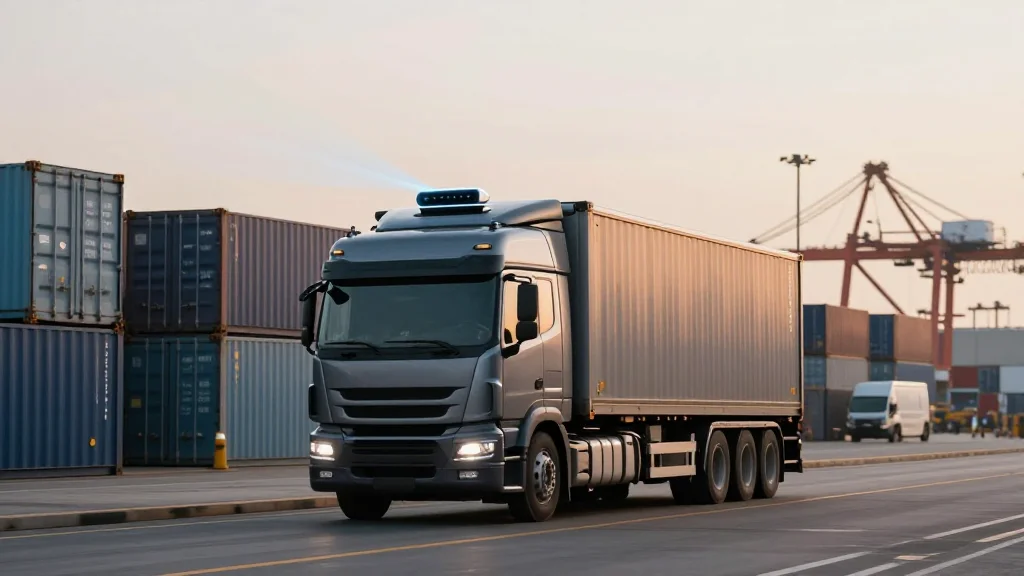
RoshAi Rolls Out Level‑4 Autonomous Trucks for Ports and Mines, Targets $6 M Revenue

Companies Mentioned
Why It Matters
The deployment marks the first large‑scale commercial use of Level‑4 autonomy in India’s industrial sectors, moving the technology out of test tracks and into revenue‑generating operations. By addressing a 2.2 million‑driver shortfall, RoshAi could reshape labor dynamics, lower freight costs and improve supply‑chain resilience for a country that handles roughly 95 percent of its trade via ports. If successful, the model could accelerate adoption of retrofitted autonomous solutions across emerging markets facing similar driver shortages, prompting regulators to craft clearer frameworks for high‑level autonomy and spurring investment in AI‑driven logistics infrastructure.
Key Takeaways
- •RoshAi targets ₹50 crore ($6 M) operating revenue this FY, up from ₹15 crore last year
- •Level‑4 autonomous trucks now deployed at Indian ports and mining sites
- •Company offers retrofit‑ready hardware, AI software and cloud fleet management
- •India faces a shortage of 22 lakh (2.2 M) skilled drivers, per World Bank
- •RoshAi founded in 2021; co‑founder Roshy John cites pandemic‑driven eureka moment
Pulse Analysis
RoshAi’s strategy of retrofitting existing fleets sidesteps the massive capital outlay that has slowed adoption of purpose‑built autonomous trucks in emerging economies. By leveraging a modular hardware kit and a cloud‑native software stack, the startup can tap into a vast base of underutilized assets, turning idle trucks into revenue generators. This approach mirrors the early success of autonomous warehouse robots, where plug‑and‑play solutions gained traction faster than bespoke systems.
The timing aligns with a broader shift in Indian logistics: e‑commerce growth, stricter emissions norms and mounting pressure on port throughput are forcing operators to seek efficiency gains. RoshAi’s Level‑4 capability—where the vehicle handles all driving tasks under defined conditions—offers a compelling value proposition, especially in controlled environments like ports and mines where routes are predictable. Yet the company must navigate a fragmented regulatory landscape; India’s motor vehicle rules still require a human driver in most scenarios. RoshAi’s ability to secure exemptions or demonstrate safety parity will be a litmus test for the sector.
Looking ahead, the competitive field is heating up. Global firms such as Waymo and TuSimple are eyeing the Indian market, while domestic players like Ashok Leyland are developing proprietary autonomous platforms. RoshAi’s early mover advantage in industrial retrofits could translate into market share if it can scale pilots into long‑term contracts and prove ROI. The next six months—marked by additional port rollouts and potential OEM tie‑ups—will determine whether the company can convert its technical showcase into a sustainable business model.
RoshAi Rolls Out Level‑4 Autonomous Trucks for Ports and Mines, Targets $6 M Revenue
Comments
Want to join the conversation?
Loading comments...