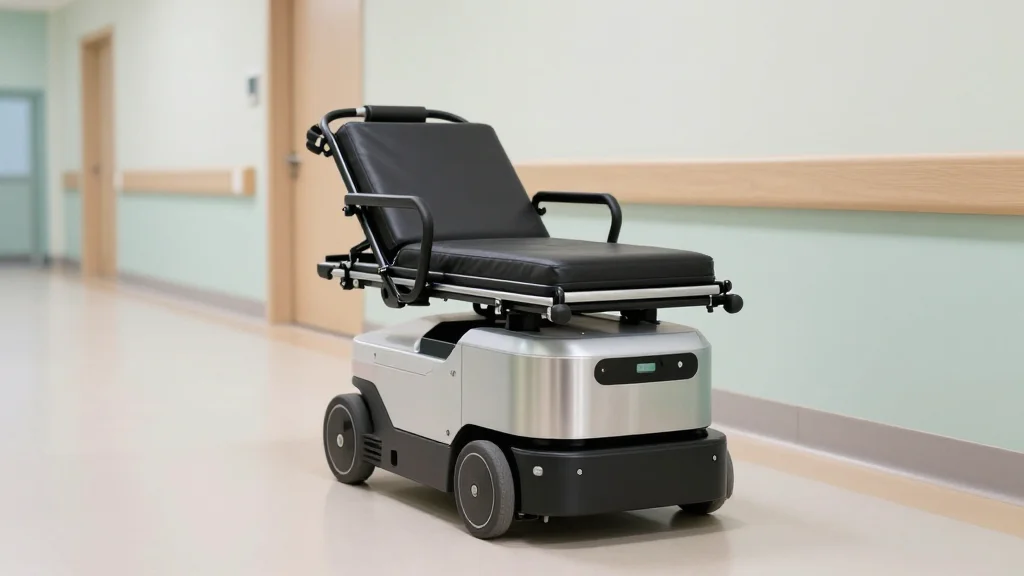
Rovex and Sphaira Launch First Autonomous Patient Transport Pilot at Florida Hospital

Why It Matters
Autonomous patient transport tackles a hidden cost center in hospitals: inefficient, injury‑prone logistics that delay care and inflate expenses. By automating the movement of beds and stretchers, Rovex and Sphaira aim to improve throughput, reduce staff turnover, and generate data that can reshape hospital operations. Success could accelerate the broader adoption of robotics in clinical settings, a market projected to exceed $10 billion by 2030. Beyond operational gains, the pilot tests how autonomous systems can coexist with vulnerable patients, setting safety and ethical standards that will inform future regulations. If hospitals can prove that robots enhance, rather than replace, human care, the technology could become a staple of modern healthcare infrastructure.
Key Takeaways
- •Rovex and Sphaira begin autonomous patient‑transport pilot at Morton Plant Hospital, Florida
- •System uses a towing robot that grips existing beds, stretchers and wheelchairs
- •Pilot targets to cut transport times that currently exceed one hour for 200 yards
- •Founder‑CEO Dr. David Crabb cites 100% staff turnover in one year for transporters
- •Data collection from robot fleet seen as a future revenue and efficiency driver
Pulse Analysis
The Rovex‑Sphaira pilot arrives at a moment when hospitals are under pressure to improve operational efficiency while battling staff shortages. Historically, automation in healthcare has focused on diagnostics and pharmacy, leaving logistics largely manual. This initiative flips that script by applying proven autonomous‑vehicle tech to a high‑touch environment. The partnership leverages Rovex’s domain expertise—born from a physician’s frustration with hallway bottlenecks—and Sphaira’s navigation stack, creating a solution that is both clinically informed and technically robust.
From a market perspective, the pilot could unlock a new revenue tier for robot manufacturers: data‑as‑a‑service. As Crabb notes, the “data is probably the biggest opportunity,” suggesting that hospitals may soon pay for analytics that predict demand spikes, optimize staffing, and benchmark performance across facilities. Competitors such as Aethon and Swisslog have introduced autonomous delivery carts, but few have tackled patient‑centric transport with a towing approach. If the pilot demonstrates safety and ROI, Rovex could capture early‑mover advantage in a niche yet sizable segment.
Looking ahead, regulatory clarity will be pivotal. The FDA’s current framework for medical robots focuses on devices that directly interact with patients, but towing robots occupy a gray area. Successful compliance in this pilot could prompt clearer guidance, smoothing the path for nationwide rollouts. Moreover, the hybrid model—robots handling logistics while clinicians retain bedside authority—addresses ethical concerns about depersonalization of care. Should the pilot’s metrics meet expectations, investors may see a wave of capital flowing into autonomous logistics startups, accelerating a shift that could redefine hospital design and staffing for the next decade.
Rovex and Sphaira Launch First Autonomous Patient Transport Pilot at Florida Hospital
Comments
Want to join the conversation?
Loading comments...