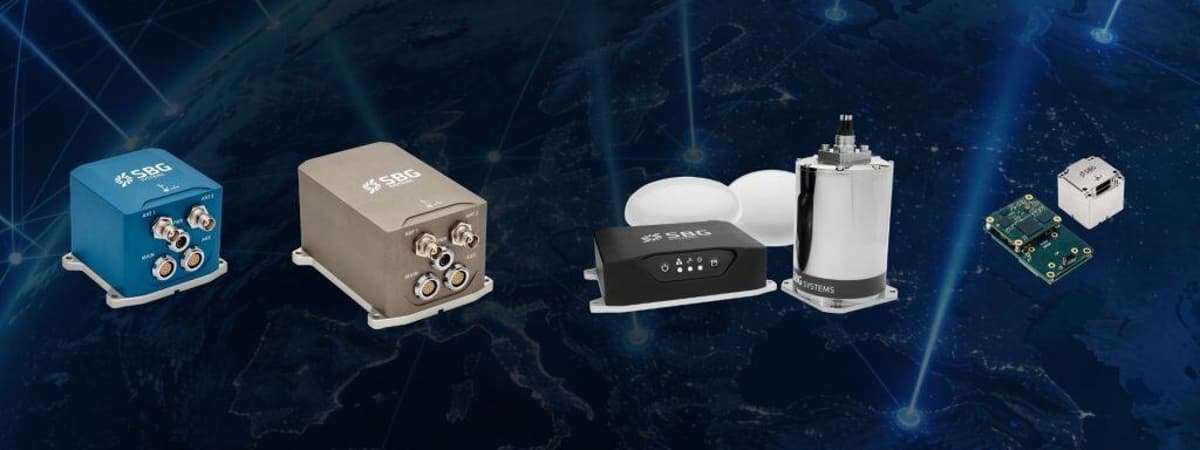
SBG Systems Releases Firmware 6.0 to Advance UAV Navigation & Sensor Fusion
•March 9, 2026
0
Why It Matters
The firmware dramatically raises navigation reliability in GNSS‑challenged environments, giving UAV manufacturers and industrial vehicle OEMs a more flexible, high‑accuracy sensor stack.
Key Takeaways
- •Fixed‑wing UAV profile with airspeed, barometric altitude
- •External camera/LiDAR/radar inputs now supported
- •New AHRS algorithm leverages external magnetometers
- •Dead‑reckoning improved for GNSS‑degraded scenarios
- •Added CAN messages and Nucleus DVL compatibility
Pulse Analysis
UAV operators have long wrestled with the limits of GNSS‑only navigation, especially in urban canyons or beyond‑visual‑line‑of‑sight missions. By embedding a full air‑data suite and a dedicated fixed‑wing motion profile, SBG’s Firmware 6.0 gives pilots real‑time airspeed and barometric altitude, narrowing the performance gap between rotary and fixed‑wing platforms. The ability to fuse external visual, LiDAR or radar feeds further diversifies data sources, creating a multi‑modal navigation architecture that can compensate for satellite outages and improve overall flight safety.
The firmware’s next‑generation sensor‑fusion core targets both precision and resilience. An upgraded AHRS algorithm now accepts external magnetometer inputs, delivering more stable heading estimates in magnetically disturbed environments. Enhanced vertical gyro processing and refined alignment flags boost attitude accuracy for heavy machinery and off‑road vehicles, where vibration and tilt are extreme. Moreover, the expanded dead‑reckoning capabilities maintain accurate position estimates during GNSS denial, a critical feature for autonomous inspection drones and delivery services operating in contested airspace.
From a market perspective, these advancements position SBG Systems as a key enabler for next‑generation autonomous platforms. OEMs can integrate SBG’s modules with fewer external components, reducing weight, power consumption and bill of materials. Compatibility with the Nucleus DVL format and new CAN messages streamlines system integration, accelerating time‑to‑market for both commercial UAVs and industrial automation solutions. As regulatory pressure mounts for reliable beyond‑visual‑line‑of‑sight operations, firmware upgrades like this are likely to become a differentiator in competitive procurement cycles.
SBG Systems Releases Firmware 6.0 to Advance UAV Navigation & Sensor Fusion
0
Comments
Want to join the conversation?
Loading comments...