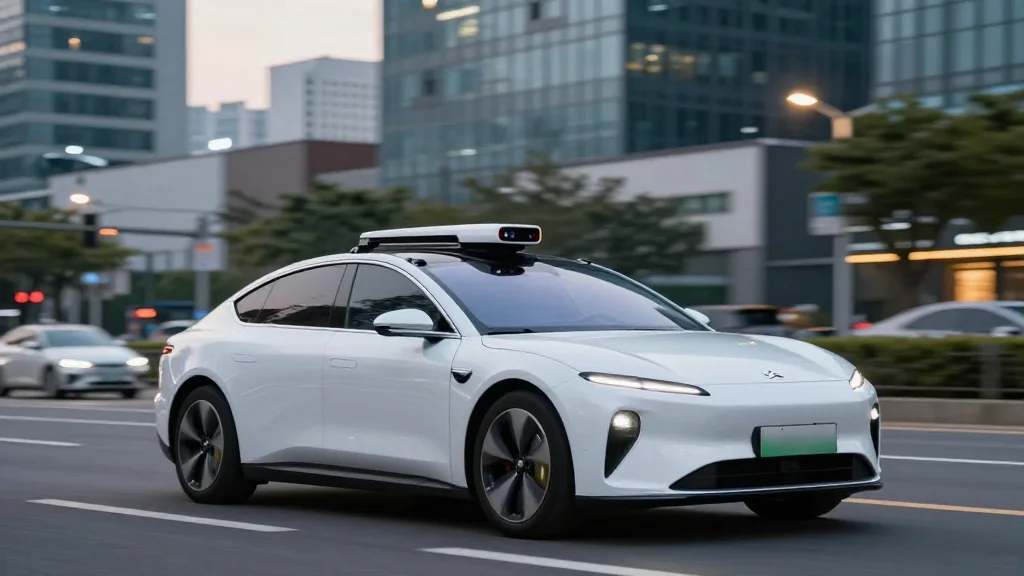
South Korea Launches 200‑vehicle Autonomous Driving Pilot in Gwangju with Hyundai, Kia and Partners

Companies Mentioned
Why It Matters
The Gwangju pilot demonstrates how a coordinated public‑private effort can accelerate autonomous‑vehicle development, providing a template for other nations. By targeting Level‑4 autonomy within a live urban environment, South Korea aims to secure a foothold in a market projected to exceed $600 billion by 2035, diversifying its automotive export base and fostering a domestic ecosystem of AI, insurance and mobility services. Success would also shift the competitive balance in the autonomous‑driving arena, challenging the current duopoly of U.S. and Chinese firms. It could attract global talent and investment to Korea, stimulate job creation in high‑tech sectors, and accelerate the rollout of driverless mobility services for consumers.
Key Takeaways
- •200 autonomous vehicles based on Hyundai’s Ioniq 5 will be deployed across Gwangju starting June 2026.
- •The pilot targets Level‑4, driver‑less operation by 2027 through a data‑AI‑demonstration cycle.
- •MOLIT, Gwangju city, Korea Transportation Safety Authority, Samsung Fire & Marine, Autonomous A2Z and RideFlux form the public‑private consortium.
- •Vehicles are equipped with eight cameras and one radar; lidar is omitted to reduce cost.
- •Minister Kim Yun‑duk pledged regulatory exemptions and a policy support package to make Gwangju a ‘mega special zone.’
Pulse Analysis
South Korea’s Gwangju initiative is a bold attempt to leapfrog into the top tier of autonomous‑vehicle developers. By marshaling a fleet of 200 software‑defined vehicles, the country is creating a massive, real‑world data set that can train end‑to‑end AI models faster than isolated test tracks. This scale, combined with the involvement of insurers and a dedicated mobility platform, suggests a holistic approach that could shorten the path to commercial services.
The strategic emphasis on regulatory flexibility and a “mega special zone” mirrors similar efforts in the United States, such as Arizona’s autonomous‑vehicle corridors, but with a more centralized coordination. If the pilot delivers reliable Level‑4 performance, it could validate a lower‑cost sensor suite (cameras and radar only) and encourage other OEMs to adopt similar configurations, potentially reshaping the economics of driverless fleets worldwide.
However, the project’s success hinges on overcoming technical challenges in complex urban traffic and ensuring public trust. The involvement of Samsung Fire & Marine in crafting bespoke insurance products is a proactive step toward risk mitigation, yet any safety incident could erode confidence and stall momentum. As the pilot progresses, stakeholders will watch closely for performance metrics that could either cement South Korea’s place among autonomous‑driving leaders or reaffirm the dominance of U.S. and Chinese firms.
South Korea launches 200‑vehicle autonomous driving pilot in Gwangju with Hyundai, Kia and partners
Comments
Want to join the conversation?
Loading comments...