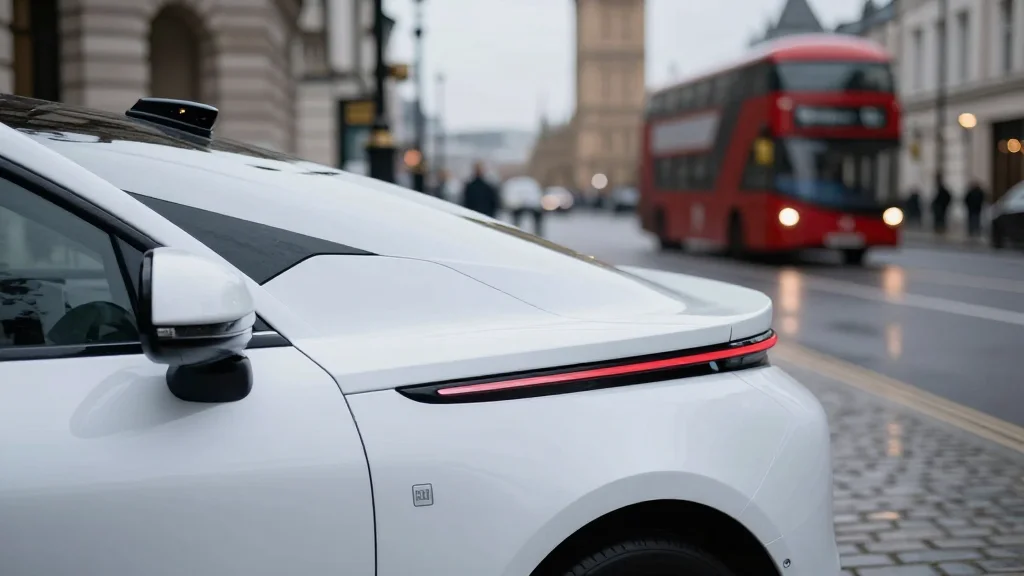
Stellantis Teams with Wayve on Hands‑free Door‑to‑door Robotaxi Rollout in London

Companies Mentioned
Why It Matters
The Stellantis‑Wayve partnership marks one of the first instances where a major global automaker is directly supplying a vehicle platform for a hands‑free robotaxi service. By moving beyond safety‑driver‑only trials, the collaboration tests the commercial viability of fully autonomous rides at scale, a prerequisite for the broader adoption of robotaxi fleets. Success in London could accelerate regulatory acceptance across Europe, prompting other OEMs to prioritize in‑vehicle autonomy solutions rather than relying on third‑party retrofits. Moreover, the deal illustrates how traditional carmakers are repositioning themselves in the mobility ecosystem. Stellantis’s expertise in mass production combined with Wayve’s data‑centric AI approach creates a vertically integrated model that could lower costs, improve reliability, and speed time‑to‑market. For investors and city planners, the partnership offers a tangible proof point that autonomous, door‑to‑door transport can move from pilot to revenue‑generating service, reshaping urban mobility and potentially reducing congestion and emissions.
Key Takeaways
- •Stellantis will supply Ford Mustang Mach‑E SUVs equipped with Wayve’s AI stack for Uber’s London robotaxi launch.
- •Wayve’s system uses six cameras, a radar and an AI computer, and completed a 15‑minute safety‑driver‑free demo at 20 mph.
- •Uber plans to start with a small fleet, scaling up after initial performance data is collected.
- •The launch is part of a broader rollout to more than 10 cities, including Tokyo, under Wayve‑Uber partnership.
- •European regulators are introducing a “testbed” framework to streamline autonomous vehicle approvals.
Pulse Analysis
Stellantis’s entry into the robotaxi arena via Wayve is a strategic pivot that reflects the automaker’s recognition that future revenue will increasingly come from mobility services rather than traditional vehicle sales. By embedding Wayve’s perception and decision‑making stack into a production‑grade EV, Stellantis sidesteps the costly retrofitting route that many OEMs have pursued, potentially achieving economies of scale faster. This approach also aligns with the industry’s shift toward software‑defined vehicles, where the value proposition is increasingly tied to data and AI capabilities.
The London launch serves as a litmus test for the hands‑free model. If the safety driver can be removed without compromising safety, it will validate the robustness of Wayve’s learning‑from‑real‑world data pipeline, a claim that has been difficult to prove at scale. Success could trigger a cascade of similar partnerships, especially as the EU’s new testbed regime reduces bureaucratic friction. Competitors like Waymo and Baidu’s Apollo Go are already operating in the city, so Stellantis must leverage its manufacturing muscle and Wayve’s agile software to differentiate on cost, reliability, and geographic reach.
Looking ahead, the partnership’s impact will hinge on three variables: regulatory clarity, public acceptance, and the economics of fleet operation. While Uber’s driver‑protest narrative highlights labor concerns, the company’s promise of “magical” passenger experiences may win over early adopters. If Stellantis can demonstrate that its vehicles can sustain high‑utilisation rates with lower per‑mile costs, the business case for expanding beyond pilot cities becomes compelling. In that scenario, Stellantis could transition from a component supplier to a full‑stack mobility provider, reshaping its role in the autonomous future.
Stellantis teams with Wayve on hands‑free door‑to‑door robotaxi rollout in London
Comments
Want to join the conversation?
Loading comments...