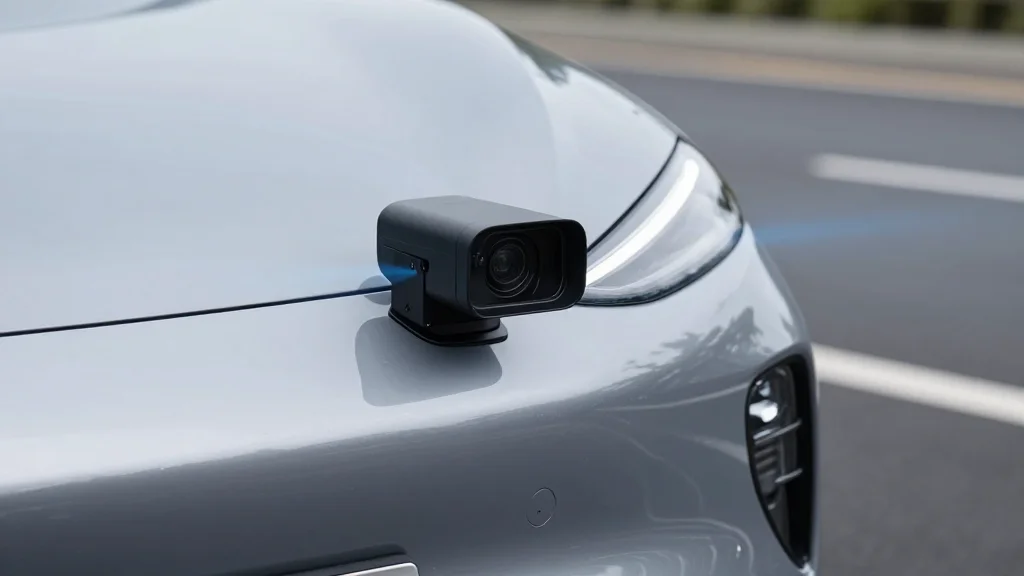
STRADVISION Launches Production‑Ready Integrated Perception Platform for Level‑2+ ADAS

Companies Mentioned
Why It Matters
The integrated perception platform tackles a critical choke point in the ADAS supply chain: the fragmented software stack that forces OEMs to stitch together disparate components, often leading to delays and cost overruns. By offering a validated, low‑latency solution, STRADVISION could lower the barrier to entry for mid‑tier manufacturers, expanding the market for advanced driver‑assistance beyond premium brands. Moreover, the move underscores the growing importance of physical AI frameworks that combine sensor fusion with real‑time decision making, a capability that will be essential as regulators push toward higher automation levels. If the platform delivers on its performance promises, it may accelerate the industry’s transition from Level‑2 to Level‑2+ and eventually Level‑3 systems, reshaping vehicle development cycles and influencing the competitive dynamics among perception technology providers.
Key Takeaways
- •STRADVISION launched a production‑ready integrated perception platform for Level‑2+ ADAS on May 11, 2026.
- •The platform combines STRADVISION's SVNet vision stack with a leading Physical AI developer under a multi‑year agreement.
- •Targeted OEM delivery is set for Q3 2026, aiming to reduce integration time by up to six months.
- •STRADVISION employs over 300 engineers across six global locations and holds ISO 26262 functional safety certification.
- •The solution meets FMVSS and GSR2 safety standards, positioning it for both passenger and commercial vehicle segments.
Pulse Analysis
STRADVISION’s entry into the production‑ready ADAS market reflects a strategic pivot from pure software licensing to bundled hardware‑software offerings. Historically, perception vendors have relied on OEMs to integrate their stacks with proprietary sensor suites, a process fraught with compatibility risks and lengthy validation cycles. By delivering a pre‑validated, modular platform, STRADVISION not only shortens time‑to‑market but also creates a recurring revenue model tied to volume production—a shift that could pressure larger incumbents to reconsider their pricing structures.
The partnership with a Physical AI developer is particularly noteworthy. Physical AI, which embeds AI models directly into sensor hardware for real‑time processing, promises lower latency and reduced power consumption—key differentiators for automotive applications where every millisecond counts. If STRADVISION can demonstrate measurable gains in latency and computational efficiency, it may set a new benchmark that forces competitors to accelerate their own hardware‑software integration efforts.
Looking forward, the platform’s success will hinge on OEM adoption rates and real‑world performance data. Early pilot programs in commercial fleets could provide the empirical evidence needed to convince skeptical manufacturers. Should those pilots confirm the promised cost and time savings, STRADVISION could capture a sizable share of the burgeoning Level‑2+ market, positioning itself as a go‑to supplier for the next generation of driver‑assistance systems.
STRADVISION Launches Production‑Ready Integrated Perception Platform for Level‑2+ ADAS
Comments
Want to join the conversation?
Loading comments...