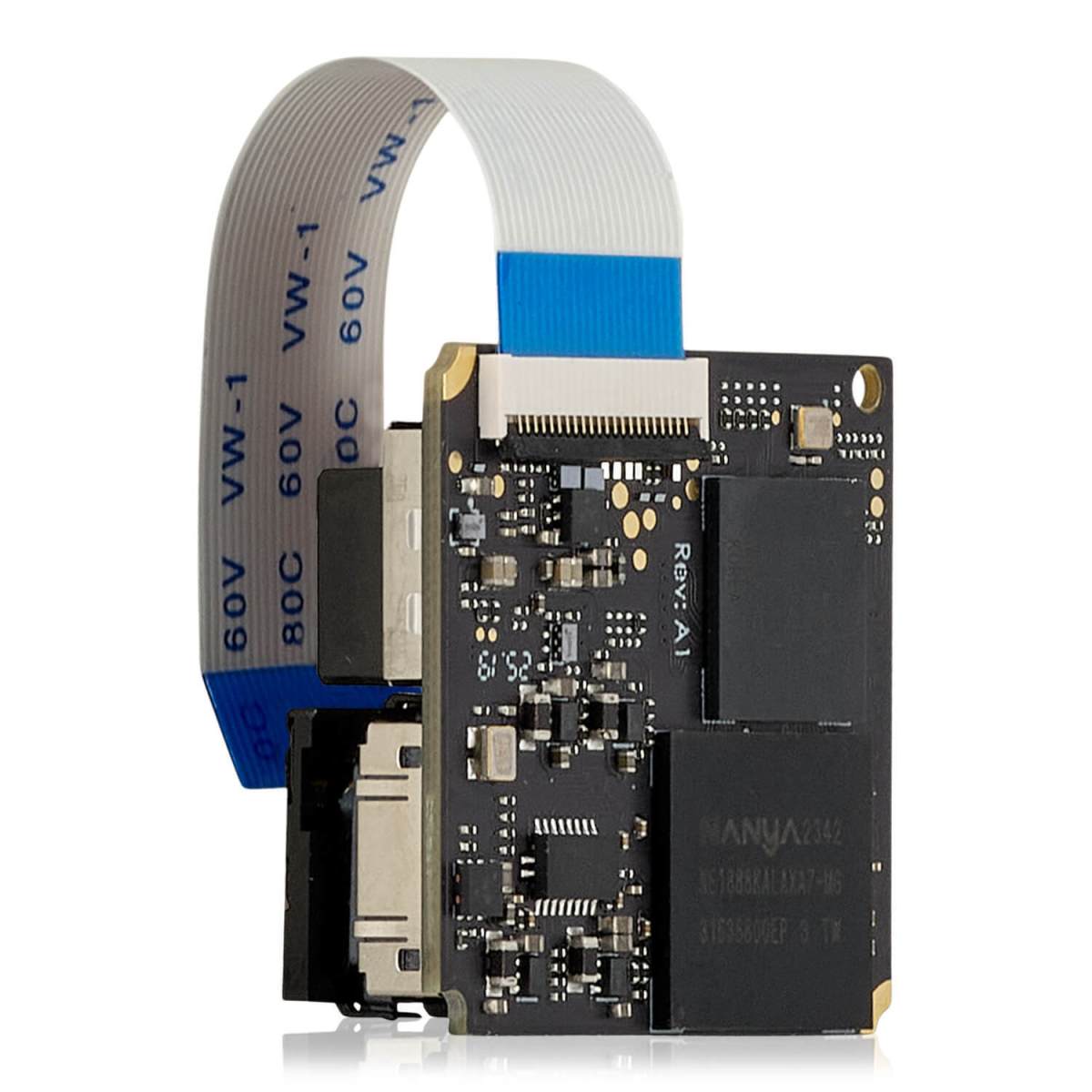
Teledyne FLIR OEM Launches Lepton XDS at Mobile World Congress; A Compact Thermal‑Visible Camera Module Featuring Patented MSX Technology
•February 24, 2026
0

Why It Matters
Lepton XDS gives OEMs affordable, high‑performance thermal vision, cutting integration time and expanding thermal imaging into cost‑sensitive markets.
Key Takeaways
- •Lepton XDS merges 160×120 thermal and 5 MP visible sensors.
- •Patented MSX adds visible edges onto thermal images instantly.
- •ITAR‑free, USB‑compatible module simplifies global OEM deployment.
- •Prism ISP provides radiometric JPEG and advanced image analytics.
- •Designed for EV batteries, robotics, fire detection, smart infrastructure.
Pulse Analysis
Thermal imaging has moved from niche military tools to mainstream commercial products, driven by falling sensor costs and rising demand for safety‑critical vision. FLIR, the industry’s thermal camera leader, has long leveraged its Multi‑Spectral Dynamic Imaging (MSX) algorithm to enhance low‑resolution thermal data with visible‑light detail. By embedding MSX in a miniature package, the Lepton XDS bridges the gap between high‑end thermal systems and the growing need for lightweight, power‑efficient sensors in consumer‑grade devices.
The Lepton XDS combines a 160 × 120 radiometric sensor with a five‑megapixel visible chip, delivering fused imagery through the on‑board Prism ISP. This software stack adds real‑time edge enhancement, radiometric JPEG compression, and a suite of measurement tools such as spot meters and region‑of‑interest analysis. Its ITAR‑free status and standard USB interface reduce regulatory hurdles and simplify board‑level integration, making it attractive for battery‑powered platforms, drones, and edge AI modules where size, weight and power (SWaP) constraints dominate design decisions.
For OEMs, the new module translates into faster time‑to‑market and lower development risk. Applications ranging from electric‑vehicle battery health monitoring to autonomous robot navigation can now incorporate reliable thermal insight without the expense of larger, higher‑resolution cameras. As the market for smart infrastructure and safety systems expands, the Lepton XDS positions FLIR to capture a broader share of the thermal‑vision ecosystem, reinforcing its role as a catalyst for next‑generation, data‑rich sensing solutions.
Teledyne FLIR OEM Launches Lepton XDS at Mobile World Congress; A Compact Thermal‑Visible Camera Module Featuring Patented MSX Technology
0
Comments
Want to join the conversation?
Loading comments...