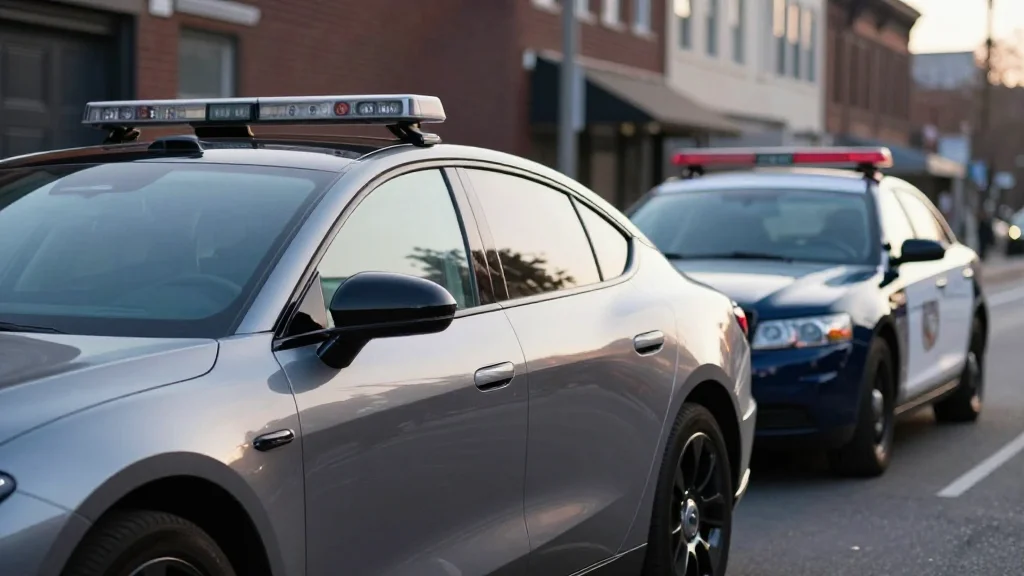
Tennessee Law Allows Nashville Police to Ticket Waymo Driverless Cars

Companies Mentioned
Why It Matters
The legislation closes a critical gap in the regulatory framework for autonomous vehicles, providing a clear mechanism for enforcing traffic laws without a human driver present. By establishing enforceable accountability, the law could boost public confidence in driverless technology, encouraging broader adoption and investment. At the same time, the ordinance sets a precedent that could shape how other states address autonomous‑vehicle oversight. If Nashville’s model proves workable, it may accelerate the creation of a national patchwork of enforcement rules, compelling manufacturers to develop standardized compliance tools and potentially influencing the pace of rollout for driverless services across the United States.
Key Takeaways
- •Nashville police can now ticket Waymo driverless cars starting July 1
- •Law defines driverless vehicles as Level 4+ autonomous units
- •Waymo operates a growing fleet in Nashville, supported by a Lyft maintenance hub
- •City will pilot officer training and require Waymo to submit a compliance report within 90 days
- •The ordinance could become a template for other states grappling with autonomous‑vehicle enforcement
Pulse Analysis
Nashville’s decision to empower police with ticketing authority reflects a pragmatic shift from the earlier, more ambiguous regulatory stance many jurisdictions have taken toward autonomous vehicles. Historically, the lack of a clear enforcement mechanism has been a sticking point for both regulators and manufacturers, often leading to ad‑hoc solutions that vary city by city. By codifying the process, Nashville not only clarifies expectations for Waymo but also signals to the broader market that safety compliance can be integrated into existing law‑enforcement structures without requiring a new bureaucratic layer.
From an industry perspective, the ordinance could be a double‑edged sword. On one hand, it offers a predictable enforcement pathway that may reduce litigation risk and reassure insurers, potentially lowering premiums for autonomous‑vehicle operators. On the other hand, the prospect of receiving citations without a human driver to contest them could increase operational costs and necessitate sophisticated backend systems to track and settle fines. Companies that can quickly adapt their compliance infrastructure will gain a competitive edge, while slower adopters may face higher regulatory friction.
Looking ahead, the Nashville model may catalyze a wave of state‑level legislation that mirrors its enforcement approach, especially in markets where autonomous fleets are already active. However, the emergence of a fragmented regulatory landscape could also prompt calls for federal guidance to harmonize standards. The next six months will be critical: if Nashville demonstrates that police‑issued tickets can be efficiently processed and lead to measurable safety improvements, the precedent could accelerate the rollout of driverless services nationwide, reshaping urban mobility and the economics of autonomous transportation.
Tennessee Law Allows Nashville Police to Ticket Waymo Driverless Cars
Comments
Want to join the conversation?
Loading comments...