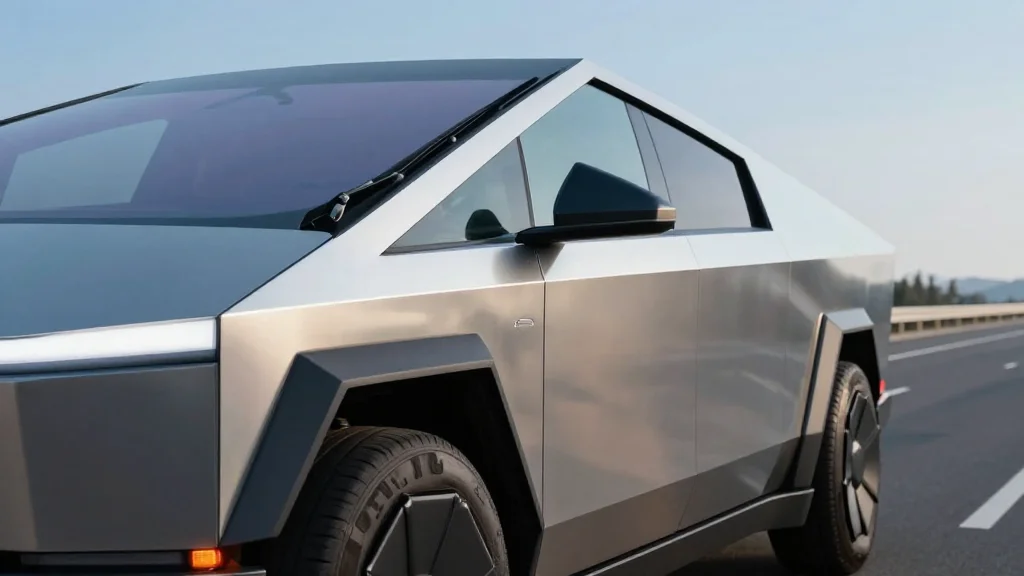
Tesla Begins Cybercab Production, Bypasses 2,500‑Unit Cap Amid Unsolved Autonomy Hurdles

Companies Mentioned
Why It Matters
Tesla’s decision to self‑certify the Cybercab removes a major regulatory bottleneck that has constrained other autonomous‑vehicle firms, potentially unlocking a path to mass‑market robotaxi services. If the vehicle can be produced at scale while meeting safety standards, it could dramatically lower per‑ride costs and accelerate the shift toward driverless mobility. Conversely, the ongoing software challenges and elevated crash rates highlight the gap between hardware readiness and reliable autonomy. The leadership exodus adds uncertainty to Tesla’s ability to deliver on its timeline, making the upcoming Q4 FSD milestone a critical inflection point for investors, regulators, and the broader autonomous‑driving ecosystem.
Key Takeaways
- •Tesla began continuous Cybercab production at Giga Texas in March 2026.
- •VP Lars Moravy confirmed the Cybercab is exempt from NHTSA’s 2,500‑unit annual cap.
- •Elon Musk said unsupervised Full Self‑Driving is expected “probably Q4” of 2026.
- •Current supervised robotaxi fleet crashes once per 57,000 miles, four‑times the human benchmark.
- •Three senior Cybercab leaders left the program between February and March 2026.
Pulse Analysis
Tesla’s manufacturing move is a strategic gamble that leverages its vertical integration and regulatory agility. By designing the Cybercab to meet every existing FMVSS, Tesla sidesteps the exemption process that has hamstrung Waymo and Cruise, effectively future‑proofing its volume ambitions against pending legislation like the SELF DRIVE Act. This could give Tesla a first‑mover advantage in a market where scale is the primary lever for profitability.
However, the advantage is contingent on closing the software gap. The robotaxi crash rate—four times higher than human drivers—poses a reputational risk that could trigger stricter oversight or slow adoption by ride‑hailing platforms. The recent leadership turnover may further delay critical software integration, as seasoned program managers who understand the intricacies of autonomous hardware‑software co‑development are gone. Investors will be watching the Q4 FSD rollout as a litmus test: a successful launch could validate Tesla’s self‑certification model and cement its dominance; a miss could reinforce the notion that hardware prowess alone cannot deliver safe, unsupervised autonomy.
In the broader context, Tesla’s approach could pressure regulators to reconsider the exemption framework. If the self‑certification route proves safe and scalable, NHTSA may be compelled to streamline or expand its waiver processes, reshaping the competitive dynamics for all autonomous‑vehicle developers. The coming months will therefore not only determine Tesla’s robotaxi trajectory but also influence the regulatory architecture governing the next generation of driverless transport.
Tesla Begins Cybercab Production, Bypasses 2,500‑Unit Cap Amid Unsolved Autonomy Hurdles
Comments
Want to join the conversation?
Loading comments...