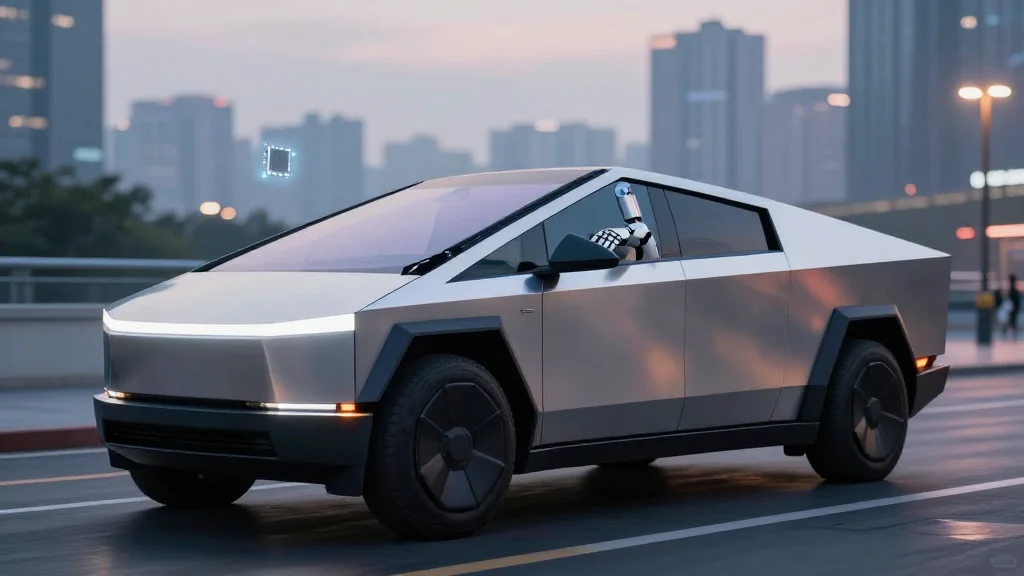
Tesla Commits over $25 B to Robotics, Chips and AI for 2026, Tripling 2025 Spend

Companies Mentioned

Why It Matters
Tesla’s $25 billion capital commitment marks a decisive pivot from pure automotive manufacturing to an integrated AI and robotics platform. By internalizing chip design and robot production, Tesla aims to reduce reliance on external suppliers, lower unit costs, and accelerate the deployment of its robotaxi network. Success could force legacy automakers and pure‑play AI firms to rethink their own investment strategies in autonomous hardware. The move also raises competitive pressure on other autonomous‑vehicle developers that lack comparable vertical integration. If Tesla can achieve the projected production volumes for Optimus and Cybercab, it could set new cost benchmarks for robot‑as‑a‑service offerings, potentially reshaping logistics, ride‑hailing and even consumer robotics markets.
Key Takeaways
- •Tesla earmarks >$25 B for robotics, chips and AI in 2026, three‑fold increase from 2025.
- •Q1 operating expenses rose 37% YoY to $3.8 B, driven by AI and R&D spend.
- •Fremont plant to produce 1 M Optimus robots annually; Texas Gigafactory targets 10 M long‑term.
- •Tesla aims to launch volume production of its Cybercab robotaxi and Tesla Semi this year.
- •In‑house AI5 inference processor chip design completed; partnership with SpaceX to build the largest chip fab.
Pulse Analysis
Tesla’s capital surge is less about expanding its EV lineup and more about building a self‑sufficient autonomous ecosystem. Historically, the company has leveraged its battery and powertrain expertise to dominate the EV market; now it is applying the same vertical integration playbook to AI hardware. By controlling the silicon, robot chassis and software stack, Tesla can iterate faster than rivals that depend on third‑party chipmakers or robot manufacturers.
The financial risk is significant. A $25 billion outlay represents a sizable portion of Tesla’s cash reserves and will pressure free cash flow in the near term. However, the potential upside is equally large: a profitable robotaxi service could generate recurring revenue that dwarfs vehicle sales, while Optimus robots could open industrial and consumer markets. If Tesla can achieve the projected production scales, the per‑unit cost of both robots and chips could fall dramatically, creating a defensible cost advantage.
Competitors must now decide whether to double down on partnerships with existing chip suppliers or accelerate their own in‑house development. Companies like Waymo, which rely heavily on Google’s Tensor Processing Units, may find themselves at a cost disadvantage if Tesla’s AI5 chip delivers superior inference performance at lower power. In the broader autonomous‑mobility landscape, Tesla’s aggressive spend could compress the timeline for mass‑market robotaxis, forcing regulators, insurers and cities to adapt more quickly to driverless fleets.
Tesla commits over $25 B to robotics, chips and AI for 2026, tripling 2025 spend
Comments
Want to join the conversation?
Loading comments...