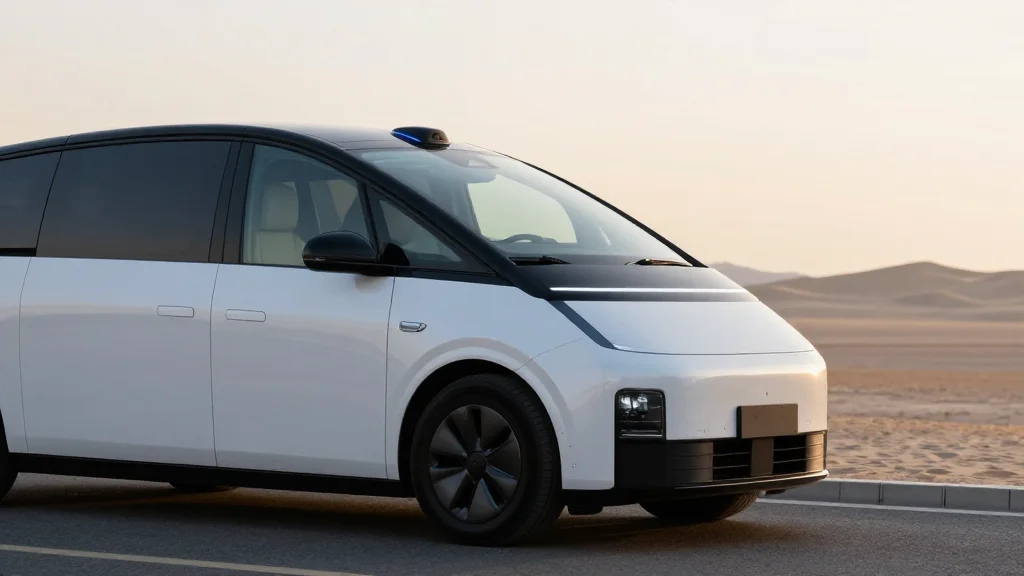
Tesla Confirms Work on Autonomous “Robovan” After Social Media Exchange

Companies Mentioned

Why It Matters
The Robovan signals that autonomous technology is moving beyond the traditional car segment into lifestyle‑focused vehicles, potentially unlocking a multi‑billion‑dollar market for driverless RVs. By marrying full self‑driving capability with the amenities of a mobile home, Tesla could set a new benchmark for convenience, reshaping consumer expectations for road travel and remote work. Beyond revenue, the Robovan could accelerate regulatory frameworks for driverless vehicles that lack any manual override, forcing lawmakers to address safety, liability, and insurance for a class of vehicles that never requires a human driver. The ripple effect may also stimulate competition, prompting legacy automakers and EV startups to explore larger autonomous platforms, thereby expanding the overall autonomy ecosystem.
Key Takeaways
- •Tesla AI director Ashok Elluswamy confirmed on X that the company is working on a fully autonomous van called the Robovan.
- •The Robovan is designed without steering wheels or pedals, offering interior space for beds, kitchens, and workstations.
- •Elon Musk has indicated a prototype may not appear until 2027, placing the project several years behind the Cybercab.
- •The concept targets a luxury market segment, contrasting with the low‑cost Cybercab aimed at mass transit pricing.
- •If realized, the Robovan could create a new autonomous‑RV market and pressure existing RV manufacturers to adopt self‑driving tech.
Pulse Analysis
Tesla’s decision to revive the Robovan reflects a broader strategic shift: leveraging its Full Self‑Driving (FSD) stack to create differentiated, high‑margin products. Historically, Tesla has used vehicle form‑factor innovation—first the Model S sedan, then the Cybertruck—to capture attention and command premium pricing. The Robovan extends that playbook into the experiential travel space, where consumers are willing to pay a premium for convenience and novelty. By positioning the van as a luxury mobile home, Tesla sidesteps the price‑sensitivity that has hampered broader FSD adoption in commuter cars.
From a competitive standpoint, the Robovan could force legacy RV makers like Winnebago and Thor Industries to accelerate their own autonomous programs or partner with tech firms. The move also threatens emerging autonomous‑mobility startups that focus on shuttle or micro‑transit solutions, as Tesla’s brand cachet and vertical integration give it a distinct advantage in scaling hardware and software together. However, the 2027 prototype horizon suggests Tesla is still in an exploratory phase, and the company may encounter regulatory roadblocks that have slowed other autonomous projects.
Looking ahead, the key question is whether Tesla can translate the Robovan from concept to production without diluting its core automotive business. If successful, the vehicle could open a new revenue stream and reinforce Tesla’s narrative of being more than a car company—an autonomous mobility platform. If the project stalls, it may serve as a cautionary tale about overextending autonomous ambitions into niche markets before the technology and regulatory environment mature.
Tesla Confirms Work on Autonomous “Robovan” After Social Media Exchange
Comments
Want to join the conversation?
Loading comments...