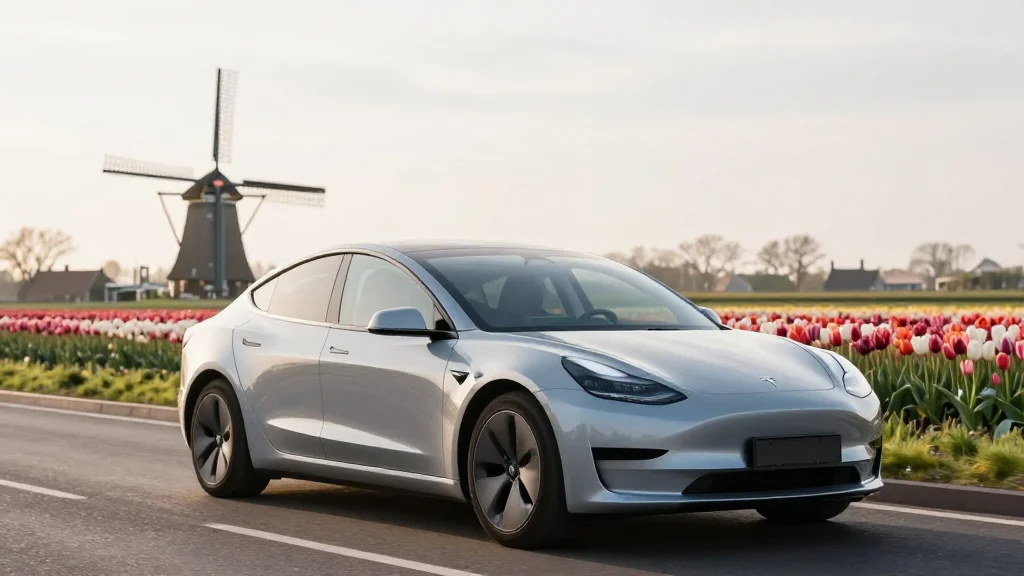
Tesla Deploys Spring 2026 FSD Update to Dutch Owners, Adds New App and Tracking

Companies Mentioned
Why It Matters
The Spring 2026 rollout demonstrates how autonomous‑driving software must navigate a patchwork of national regulations before achieving mass adoption. By securing Dutch approval and embedding a dedicated app with usage‑tracking, Tesla is testing both compliance mechanisms and consumer‑facing data tools that could become standard across markets. Successful validation in the Netherlands could accelerate approvals elsewhere, while any shortcomings may prompt regulatory pushback that slows the global rollout of Level 3‑plus autonomy. Furthermore, the limited‑access data provides a rare glimpse into real‑world performance of Tesla’s most recent FSD version. Early user feedback on rule‑following behaviour, such as precise indicator management, offers a benchmark for how autonomous systems can align with local traffic codes—a critical factor for safety certifications and public trust.
Key Takeaways
- •Spring 2026 FSD update (v14.2.2.5, re‑branded v14.3) released to early‑access users in the Netherlands
- •Dutch road authority (RDW) granted approval on April 10, 2026
- •Only about 20 owners reported receiving the update; tracker sites show fewer than 10 installations
- •New app includes usage‑tracking features; specific details were not disclosed
- •System follows Dutch signalling rules, keeping turn indicators on through highway off‑ramps
Pulse Analysis
Tesla’s decision to launch the Spring 2026 FSD package as a tightly controlled pilot reflects a strategic shift from the company’s earlier, more aggressive over‑the‑air deployments. By tying the rollout to a specific regulator’s sign‑off, Tesla can collect granular performance data while insulating itself from broader legal exposure. This mirrors a broader industry trend where autonomous‑driving firms are moving from a ‘global push’ model to a region‑by‑region validation strategy, acknowledging that a one‑size‑fits‑all software stack is unlikely to satisfy the divergent traffic codes of Europe, North America, and Asia.
The inclusion of a dedicated FSD app and usage‑tracking tools signals an emerging focus on driver‑behavior analytics. While the update’s core navigation capabilities remain the headline, the telemetry gathered from the app could inform future pricing models, insurance partnerships, and even regulatory reporting. If Tesla can demonstrate that the usage data improves safety outcomes, it may pave the way for more permissive licensing from authorities that currently demand extensive post‑deployment monitoring.
Looking forward, the modest adoption numbers suggest Tesla is still gauging consumer appetite for the new features. Should the early feedback prove positive, the company could accelerate its European expansion, leveraging the Dutch case study as a template for markets like Germany, where autonomous‑driving legislation is more stringent. Conversely, any negative incidents could reinforce the caution exercised by regulators worldwide, potentially slowing the path to Level 3 and Level 4 autonomy for the broader automotive industry.
Tesla Deploys Spring 2026 FSD Update to Dutch Owners, Adds New App and Tracking
Comments
Want to join the conversation?
Loading comments...