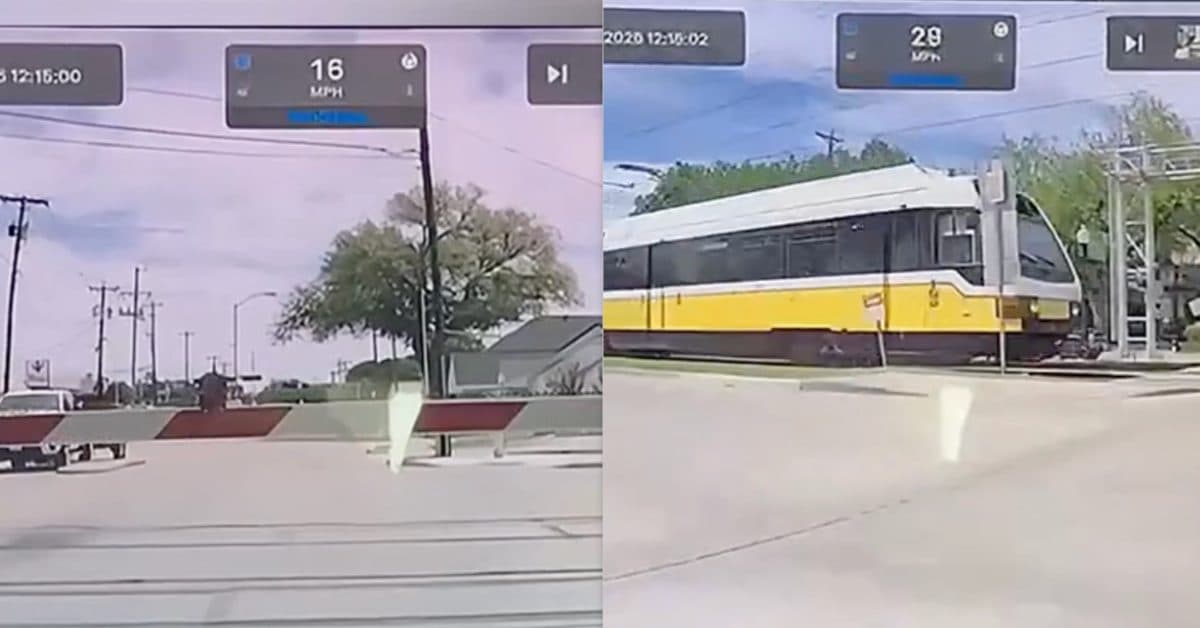
Tesla ‘Full Self-Driving’ Crashed Through Railroad Gate Seconds Before Train
Companies Mentioned
Why It Matters
The crash highlights persistent gaps in Tesla's autonomous‑driving safety, intensifying regulatory scrutiny and raising questions about the validity of the company's safety claims. Continued failures at high‑risk locations could accelerate formal investigations and impact consumer trust.
Key Takeaways
- •Tesla FSD drove through lowered crossing arm, nearly hit train.
- •Incident adds to over 80 documented FSD safety violations.
- •NHTSA probe links FSD to at least 58 incidents, 14 crashes.
- •Tesla released FSD v14.3 with faster reaction and new object handling.
- •Experts say FSD remains Level 2; safety claims lack independent verification.
Pulse Analysis
The Texas crossing episode underscores a growing pattern of Full Self‑Driving missteps at railroad gates, a scenario that traditional human drivers typically navigate safely. While the driver’s quick reaction averted a disaster, the vehicle’s autonomous logic ignored clear visual cues—flashing lights, a lowered arm, and an approaching train. Such edge‑case failures erode confidence in Tesla’s promise that its system is "seven times safer" than the average driver, especially when the company does not disclose granular crash data or how disengagements are counted.
Regulators have taken notice. The National Highway Traffic Safety Administration (NHTSA) already maintains an open probe into FSD, cataloguing roughly 80 violations that span red‑light runs, lane violations, and now multiple rail‑crossing incidents. Senators Ed Markey and Richard Blumenthal have formally requested a deeper investigation into Tesla’s handling of rail‑crossing scenarios. The agency’s statistics—58 incidents, 14 crashes, 23 injuries linked to FSD—suggest a safety gap that could translate into liability exposure for both Tesla and owners if the system is deemed negligent.
Tesla’s response was swift: the rollout of FSD v14.3, built on a new MLIR‑based compiler promising 20% faster reaction times and better detection of "objects extending, hanging, or leaning into the vehicle path." While the language hints at addressing crossing‑gate failures, the update stops short of naming rail barriers, framing the issue as an "edge case" rather than a systemic defect. As the technology matures, the industry will watch whether incremental software patches can close these safety holes or whether more fundamental redesigns and stricter oversight become inevitable.
Tesla ‘Full Self-Driving’ crashed through railroad gate seconds before train
Comments
Want to join the conversation?
Loading comments...