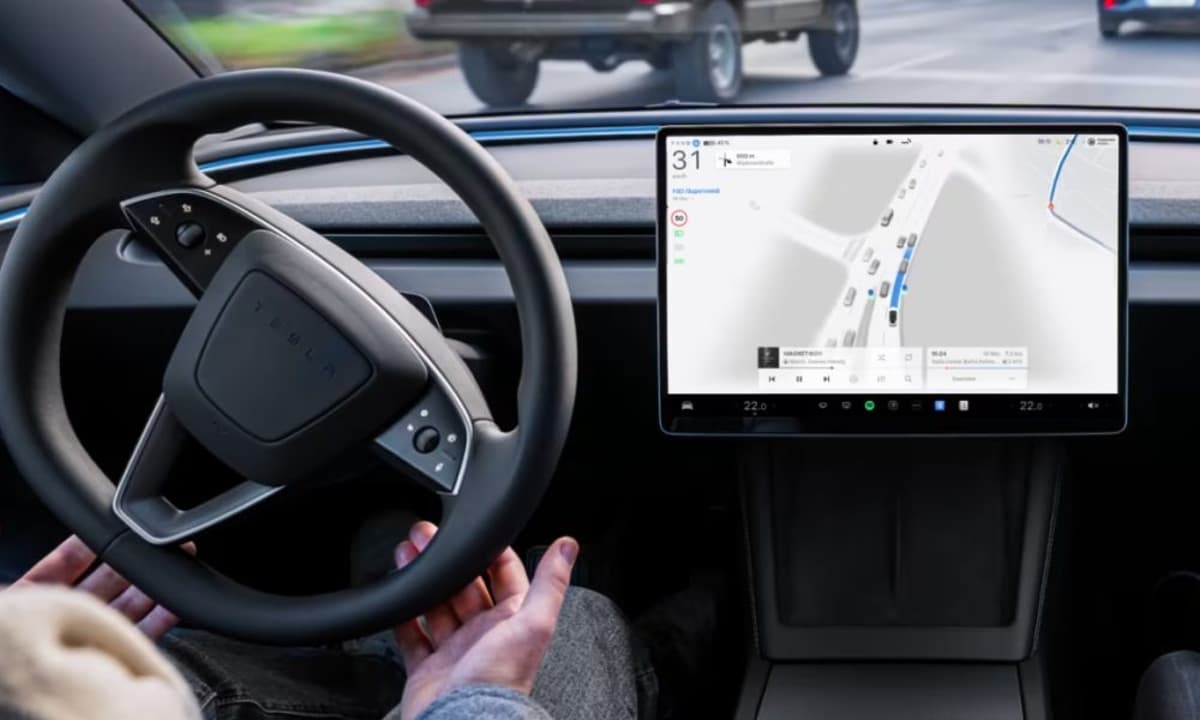
Tesla Full Self-Driving v14.2.2.5 Might Be the Most Confusing Release Ever
Key Takeaways
- •Speed profiles vary, but overall improved consistency
- •Turn signals erratically activate, sometimes opposite navigation
- •Autopark struggles with spot selection, manual selection works better
- •New school‑zone slowing and deer avoidance detected
- •Navigation still fails exiting neighborhoods, choosing odd routes
Pulse Analysis
Tesla’s latest Full Self‑Driving rollout, version 14.2.2.5, underscores the company’s rapid iteration strategy but also reveals the growing pains of a complex AI stack. While speed‑profile tuning appears more consistent—standard and hurry modes now respect speed limits better—the update introduces a suite of new quirks. Drivers report turn‑signal anomalies that fire on sharp bends or contradict navigation cues, and Autopark still misjudges spot selection, especially in adverse conditions like snow‑covered lots. These issues illustrate the difficulty of translating massive fleet data into reliable edge‑case handling, a hurdle for any OEM pursuing Level 3‑4 autonomy.
Safety‑focused features such as automatic deceleration in school zones and deer‑avoidance detection are noteworthy milestones, suggesting Tesla’s perception algorithms are expanding beyond basic lane‑keeping. However, their intermittent activation raises questions about consistency and regulatory compliance. Turn‑signal mishaps, while seemingly minor, could have legal implications if the vehicle signals incorrectly in traffic. Likewise, navigation failures—particularly the inability to exit residential areas correctly—highlight gaps in map integration and real‑time routing, which are critical for consumer trust and for meeting emerging autonomous‑vehicle standards.
From a market perspective, the mixed reception of v14.2.2.5 may influence buyer sentiment and investor confidence. Competitors like Waymo and Cruise are emphasizing rigorous validation and transparent safety reporting, putting pressure on Tesla to demonstrate measurable improvements. The company’s data‑driven approach—leveraging billions of miles from its supervised fleet—remains a competitive advantage, but each confusing release risks diluting that edge. Future updates will need to balance rapid feature rollouts with robust quality assurance to sustain Tesla’s leadership in the autonomous driving race.
Tesla Full Self-Driving v14.2.2.5 might be the most confusing release ever
Comments
Want to join the conversation?