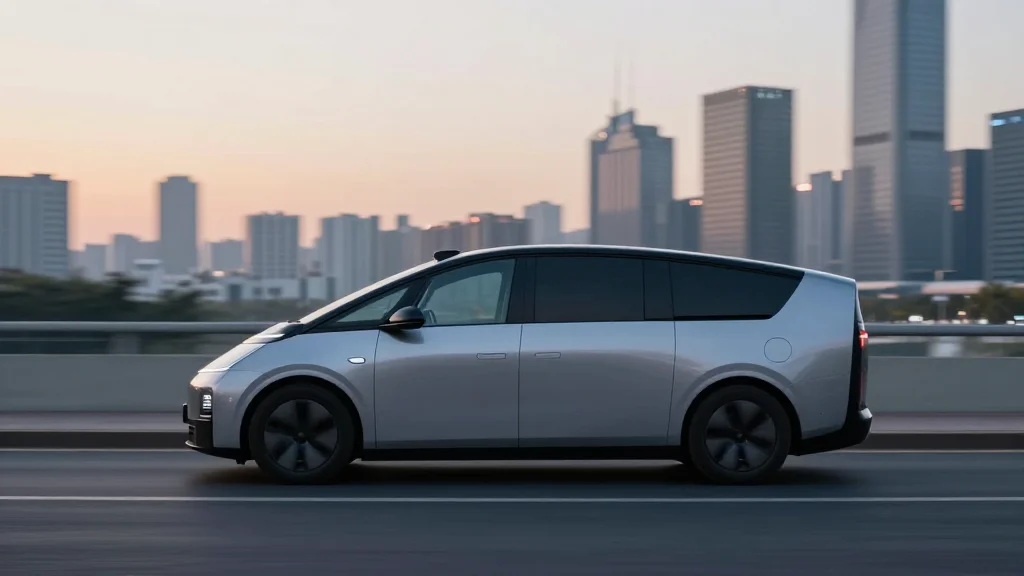
Tesla Launches Cybercab Robotaxi Service in Tokyo, Set for Dec 2024 Debut

Companies Mentioned
Why It Matters
Tesla’s Cybercab launch signals the first large‑scale deployment of Level 4 autonomous taxis in a major Asian market, offering a real‑world test of the company’s self‑driving stack outside the United States. The service could dramatically lower urban transportation costs, reshaping commuter behavior and putting pressure on traditional taxi operators. If Tesla can deliver on its promise of 70% cheaper fares while maintaining safety, the move could spur faster regulatory adoption across the region, encouraging other automakers and tech firms to accelerate their own autonomous mobility projects. Conversely, any safety incident or operational hiccup could reinforce regulatory caution and slow the broader rollout of driverless services globally.
Key Takeaways
- •Tesla's Cybercab robotaxi service to launch in Tokyo and Yokohama in Dec 2024
- •Expansion to Osaka and Nagoya planned for mid‑2025
- •Partnerships with SoftBank and JR East to support integration and data needs
- •Fares projected to be up to 70% lower than conventional taxis
- •Uses HW5 AI hardware with cameras and LiDAR to meet Japan’s Level 4 autonomy standards
Pulse Analysis
Tesla’s entry into Japan’s robotaxi market is more than a geographic expansion; it is a litmus test for the scalability of its autonomous technology platform. The company’s vertically integrated approach—designing chips, sensors, and software in‑house—offers a cost advantage over rivals that rely on third‑party suppliers. By pairing this hardware advantage with strategic local partners, Tesla can sidestep many of the logistical bottlenecks that have hampered other firms, such as data acquisition and regulatory navigation.
However, the rollout also exposes Tesla to new risk vectors. Japan’s dense urban fabric, with its mix of narrow alleys, unpredictable pedestrians, and complex signage, presents a tougher perception problem than the relatively orderly streets of California. Success will hinge on the robustness of Tesla’s mapping pipeline and its ability to quickly adapt to localized traffic nuances. Moreover, the company must manage stakeholder expectations—particularly from taxi unions that have historically resisted driverless competition.
From an investment perspective, the Cybercab launch could unlock a recurring revenue stream that diversifies Tesla’s earnings beyond vehicle sales and energy products. If the service achieves the projected fare reductions while maintaining high utilization rates, it could generate significant per‑vehicle revenue, accelerating the path to profitability for Tesla’s autonomous division. The market will be watching the first quarter of 2025 closely for performance metrics, rider adoption rates, and any regulatory feedback that could either accelerate or stall the broader global rollout of robotaxi services.
Tesla launches Cybercab robotaxi service in Tokyo, set for Dec 2024 debut
Comments
Want to join the conversation?
Loading comments...