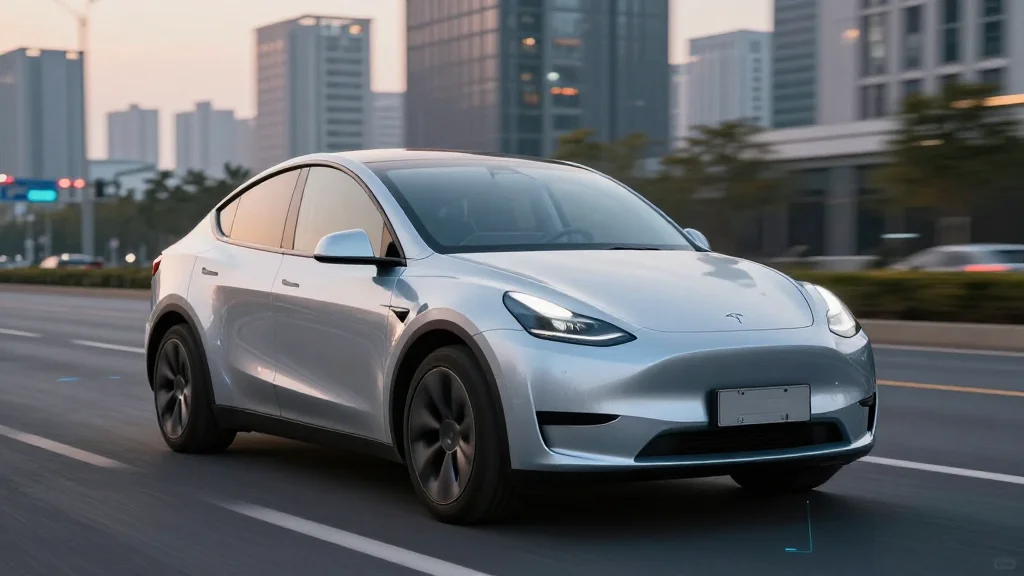
Tesla Leads $10 Trillion Robotaxi Surge as Market Outlook Soars

Companies Mentioned

Why It Matters
The projected $10 trillion robotaxi market signals a seismic shift in urban mobility, promising to reshape transportation economics, reduce car ownership, and generate new revenue streams for technology firms. Tesla’s potential dominance could accelerate the transition to electric, shared mobility, while also setting industry standards for safety, cost, and scalability. However, the juxtaposition of lofty market forecasts with emerging safety criticisms highlights a pivotal tension: rapid commercial rollout versus rigorous validation. How regulators, investors, and the public reconcile these forces will determine whether the robotaxi vision becomes a transformative reality or a cautionary tale of overpromised technology.
Key Takeaways
- •Fool.com analysts forecast a $10 trillion global robotaxi market by 2030.
- •Cathie Wood (Ark Invest) values the opportunity at $8‑$10 trillion.
- •Elon Musk expects Tesla robotaxi revenue to be material by next year.
- •Reuters investigation uncovered safety concerns in Tesla’s FSD system.
- •McKinsey predicts Level‑4 robotaxis will achieve large‑scale rollout by 2030.
Pulse Analysis
The robotaxi narrative is entering a phase where hype meets hard economics. Historically, autonomous‑vehicle projects have suffered from under‑estimated capital needs and over‑optimistic timelines. Tesla’s advantage lies in its ability to mass‑produce vehicles at a fraction of the cost of pure‑play AV startups, a factor that could compress the path to profitability if safety hurdles are cleared. Yet the Reuters findings expose a systemic risk: if the data‑labelling workforce continues to flag critical failures, regulators may impose stricter oversight, delaying market entry and eroding the premium investors have already priced into Tesla’s stock.
Competing firms are pursuing a different playbook, focusing on high‑definition mapping, lidar, and incremental city licences. Waymo’s partnership with Lyft and Cruise’s alliance with General Motors illustrate a strategy of leveraging existing mobility platforms rather than building a proprietary ride‑hailing ecosystem. Tesla’s vertically integrated model could either outpace these collaborations or stumble if its camera‑only approach proves insufficient for complex urban environments.
For the broader market, the $10 trillion estimate is both a beacon and a warning. It underscores the massive upside for firms that can deliver safe, reliable robotaxis at scale, but it also amplifies the stakes for any misstep. Investors should monitor three signals: the frequency and severity of FSD incidents reported by independent auditors, the speed at which city regulators approve Level‑4 deployments, and Tesla’s ability to transition pilot fleets into revenue‑generating services. The next 12‑18 months will likely determine whether the robotaxi sector lives up to its trillion‑dollar promise or remains a speculative frontier.
Tesla Leads $10 Trillion Robotaxi Surge as Market Outlook Soars
Comments
Want to join the conversation?
Loading comments...