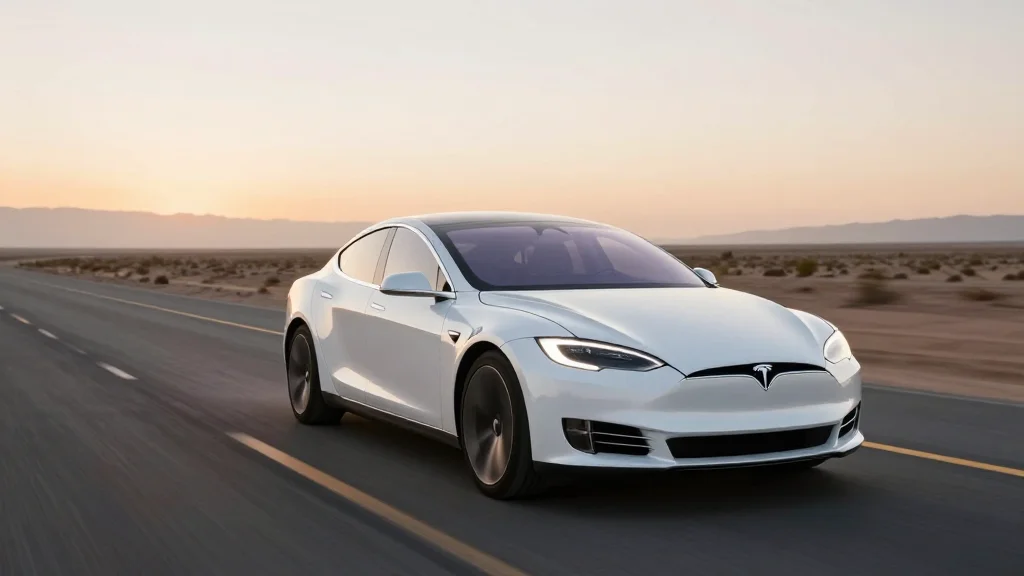
Tesla Model S Completes 3,081‑Mile Coast‑to‑Coast FSD Run With Zero Interventions

Why It Matters
The coast‑to‑coast, zero‑intervention run showcases the practical maturity of Tesla’s FSD system, moving it from a beta feature to a demonstrable, real‑world capability. By proving that a consumer‑grade vehicle can navigate an entire continent without human input, Tesla strengthens its narrative that a single, data‑driven neural network can outperform map‑centric solutions, potentially reshaping the competitive dynamics of the autonomous vehicle market. Regulators and insurers are likely to scrutinize the run as a data point in the broader safety debate. If Tesla can consistently replicate such performance across varied environments, it could accelerate the path to wider legal acceptance of higher‑level autonomy, influencing legislation, insurance models, and consumer trust in self‑driving technology.
Key Takeaways
- •Tesla Model S drove 3,081 mi from LA to NYC in 58 hrs 22 min of driving, averaging 64 mph.
- •Full Self‑Driving software version 14.2.2.3 and HW4 hardware recorded zero human interventions.
- •Charging added 10 hrs 11 min, bringing total elapsed time to just under 68 hours.
- •Previous runs in Dec 2024 required 32 interventions (2,833 mi) and 5 min 20 sec (2,869 mi).
- •Tesla’s data‑centric approach contrasts with Waymo’s map‑based robotaxi model.
Pulse Analysis
Tesla’s coast‑to‑coast record is less a proof of fleet‑scale safety than a headline‑grabbing showcase of rapid software iteration. The company’s ability to push a major version jump—from v12.5.6 to v14.2.2.3—in a matter of months and eliminate all driver overrides suggests a highly effective feedback loop between real‑world data collection and model training. This agility gives Tesla a strategic edge over competitors that rely on slower, hardware‑heavy sensor stacks and city‑specific mapping.
However, the achievement also highlights a strategic blind spot: the test route was predominantly highway. Urban environments remain the litmus test for true Level 4 autonomy, where edge cases proliferate. Waymo’s cautious, city‑first rollout may ultimately prove more valuable for safety validation, even if it lacks the flashiness of a coast‑to‑coast dash. Investors should watch how Tesla translates this technical milestone into measurable reductions in disengagement rates across its beta fleet, as that will determine whether the record translates into market share.
In the short term, the record is likely to boost consumer confidence and give Tesla leverage in negotiations with state regulators seeking data‑driven evidence of safety. In the longer term, the industry may see a bifurcation: firms that double‑down on massive data ingestion and neural‑network generalization versus those that double‑down on high‑definition mapping and lidar. The outcome of that strategic split will shape the next decade of autonomous mobility.
Tesla Model S Completes 3,081‑Mile Coast‑to‑Coast FSD Run With Zero Interventions
Comments
Want to join the conversation?
Loading comments...