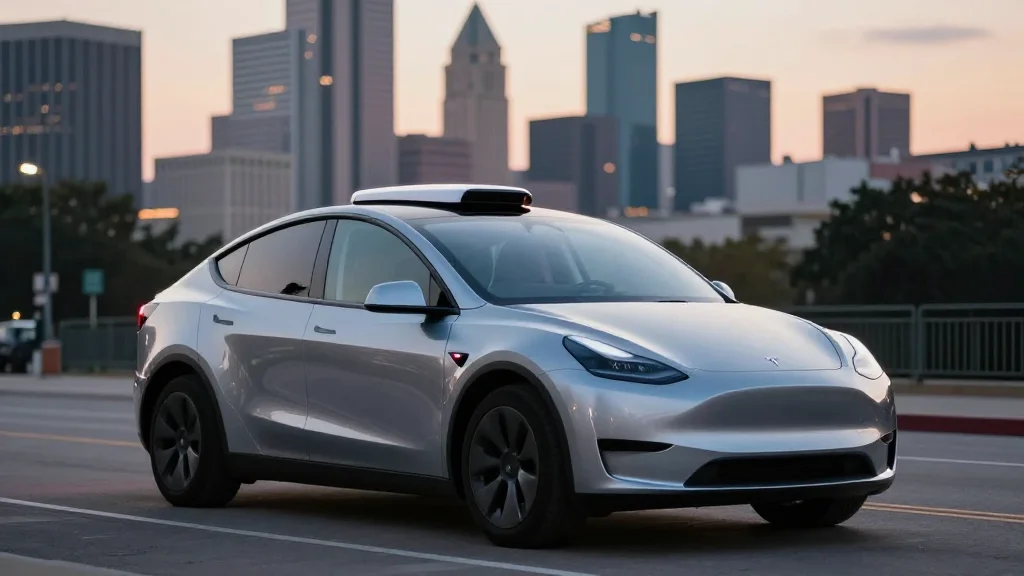
Tesla Robotaxi Rollout Stalls as Firm Discloses 17 Crash Incidents

Why It Matters
The twin revelations – a delayed market expansion and a transparent crash log – underscore the growing pains of scaling autonomous ride‑hailing. For investors, the postponement of the Dallas and Houston launch pushes back revenue expectations and raises questions about Tesla’s ability to compete with firms that have already achieved higher operational uptime. For regulators, the detailed incident data provides a rare glimpse into how remote teleoperation interacts with real‑world traffic, informing future safety standards for Level 4 autonomy. Moreover, the disclosures may set a precedent for other manufacturers to unmask their own incident reports, potentially accelerating industry‑wide safety benchmarking. As autonomous fleets expand, the balance between rapid deployment and rigorous safety validation will shape public trust and the regulatory framework governing driverless mobility.
Key Takeaways
- •Tesla delayed its robotaxi rollout to Dallas and Houston, citing operational readiness concerns.
- •NHTSA filings reveal 17 robotaxi incidents in Austin from July 2025 to March 2026, including two low‑speed crashes under remote teleoperation.
- •13 incidents caused only property damage; two resulted in minor injuries, one requiring hospital treatment.
- •Elon Musk emphasized safety as the primary bottleneck, describing the rollout approach as "very cautious."
- •Tesla pledged a revised safety protocol to NHTSA by Q3 2026 and plans to expand its safety‑monitor fleet.
Pulse Analysis
Tesla’s robotaxi setbacks illustrate a classic trade‑off in autonomous vehicle development: speed to market versus safety assurance. The company’s aggressive timeline, driven by Musk’s vision of a $10 billion‑plus robotaxi revenue stream, collided with the practical realities of a nascent ADS that still struggles with low‑speed maneuvering and remote teleoperation handoffs. By pulling back the Dallas‑Houston launch, Tesla is effectively buying time to refine its software stack, but it also hands a competitive edge to Waymo and Zoox, which have already demonstrated higher reliability metrics in their pilot cities.
The newly disclosed crash data is a watershed for industry transparency. Historically, Tesla has shielded incident narratives behind confidentiality claims, limiting external analysis. The unredacted reports now allow safety researchers to compare failure modes across platforms, highlighting that most of Tesla’s incidents stem from external actors rather than software errors. This nuance could temper criticism that Tesla’s autonomous system is inherently unsafe, yet the two teleoperator‑related crashes expose a vulnerability in the backup control architecture that regulators will likely scrutinize.
Looking forward, Tesla’s ability to regain momentum hinges on two factors: the robustness of its revised safety protocol and the scalability of its safety‑monitor network. If the company can demonstrate a measurable reduction in incident frequency and severity, it may restore investor confidence and accelerate the delayed rollout. Conversely, further incidents or regulatory pushback could force a more cautious, incremental deployment strategy, reshaping the competitive dynamics of the U.S. autonomous‑vehicle market.
Tesla Robotaxi Rollout Stalls as Firm Discloses 17 Crash Incidents
Comments
Want to join the conversation?
Loading comments...