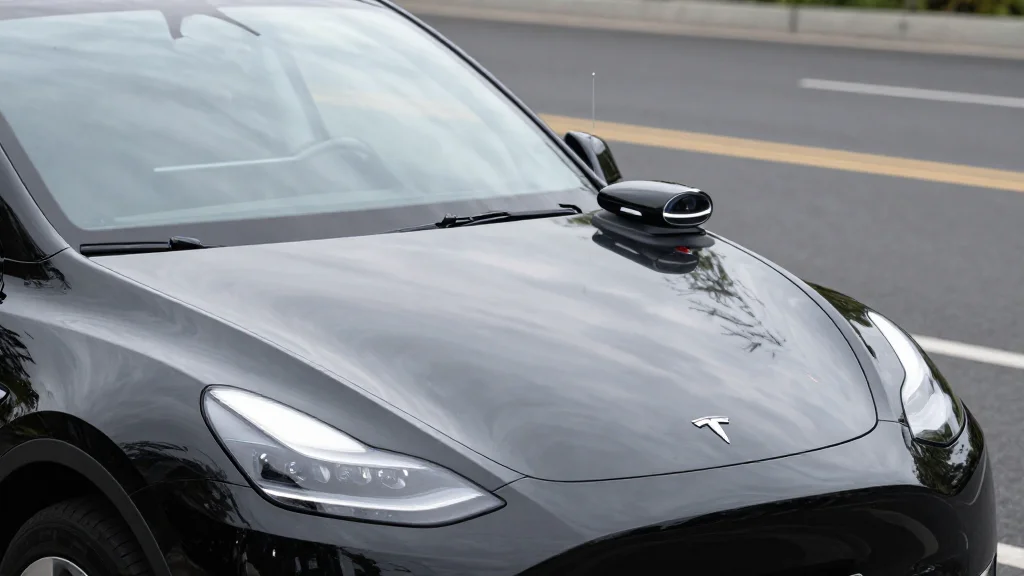
Tesla Robotaxi Trials in Austin Hit Navigation Glitches, Low‑Speed Crashes

Companies Mentioned
Why It Matters
The Austin navigation failures expose a critical friction point in Tesla's strategy to replace lidar‑heavy systems with a vision‑only approach. Successful robotaxi deployment could unlock a multi‑trillion‑dollar market, but each operational misstep raises the specter of stricter oversight and potential liability. For the autonomy industry, Tesla's real‑world data is both a competitive advantage and a public test of whether vision‑only AI can meet safety standards without extensive sensor suites. Moreover, the incidents influence investor sentiment. While Tesla's financials remain strong, the robotaxi segment's perceived risk can affect stock valuations, especially as analysts factor execution risk into price targets. A sustained record of safe, unsupervised operation is essential for the company to justify the lofty market‑size forecasts that drive much of its current valuation premium.
Key Takeaways
- •Two low‑speed crashes in Austin required remote operator takeovers during robotaxi trials.
- •Navigation errors forced a robotaxi in Dallas to take an inefficient detour, highlighting route‑planning issues.
- •Tesla's shares rose 1.95% to $426.01 on May 22, despite the operational setbacks.
- •Analysts estimate the robotaxi market could be worth over $1 trillion, with potential to represent up to 90% of Tesla's enterprise value by 2029.
- •Tesla aims to expand unsupervised FSD operations to more U.S. cities by the end of 2026, pending regulatory approval.
Pulse Analysis
Tesla's robotaxi rollout is a litmus test for its vision‑only autonomous driving philosophy. The company has leveraged a massive real‑world dataset—over 8 million vehicles equipped with FSD hardware—to train its neural networks, but the Austin incidents reveal that data quantity does not automatically translate into flawless execution. The navigation glitches suggest gaps in perception‑planning integration, especially in complex urban environments where lidar provides redundant depth cues.
Historically, autonomous vehicle pioneers have relied on sensor fusion to achieve redundancy. Waymo, for example, combines lidar, radar, and cameras, resulting in higher hardware costs but arguably more robust safety margins. Tesla's bet on a cheaper, camera‑only stack hinges on software sophistication outpacing hardware limitations. If the company can resolve these early failures, it could sustain a cost advantage that pressures competitors to reconsider sensor strategies. Conversely, persistent errors could accelerate regulatory demands for additional safety layers, eroding the cost benefit.
From an investment perspective, the market appears to compartmentalize short‑term operational risk from long‑term upside. Tesla's Q1 earnings beat expectations, and the stock's modest gain suggests investors are willing to absorb early setbacks in anticipation of a future revenue stream from autonomous ride‑hailing. However, the Hold consensus and relatively modest price targets indicate that analysts are pricing in a significant execution risk premium. Future earnings releases will likely be scrutinized for any correlation between robotaxi performance metrics and revenue guidance, making the next quarter a pivotal period for Tesla's autonomy narrative.
Tesla Robotaxi Trials in Austin Hit Navigation Glitches, Low‑Speed Crashes
Comments
Want to join the conversation?
Loading comments...