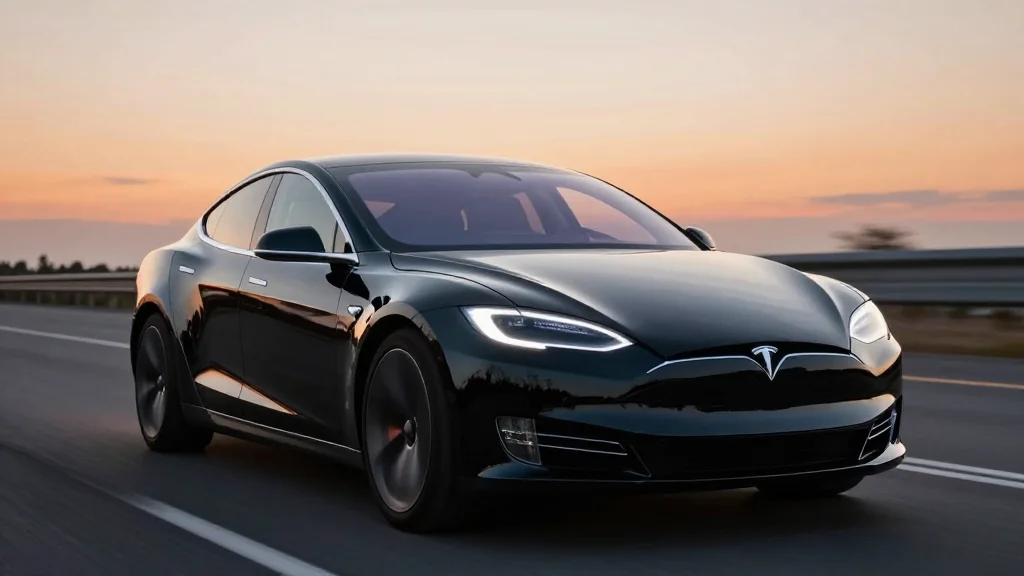
Tesla Rolls Out FSD 14.3.3 with Smoother Driving but Fewer Safety Alerts

Companies Mentioned
Why It Matters
The rollout of FSD 14.3.3 highlights the tension between user experience and safety in the autonomous‑driving sector. Smoother vehicle behavior can accelerate consumer adoption, but fewer driver alerts risk eroding the safety envelope that regulators and the public expect from Level‑2 systems. As Tesla expands its software into new markets, the company’s approach will influence industry standards for how much supervision is required and how safety is measured. If the reduced warning cadence leads to higher incident rates, it could trigger stricter oversight that would affect not only Tesla but all manufacturers offering assisted‑driving features. Conversely, if the smoother performance translates into fewer driver‑initiated corrections and lower crash statistics, it could set a new benchmark for balancing comfort and safety in semi‑autonomous vehicles.
Key Takeaways
- •Tesla began rolling out Full Self‑Driving version 14.3.3, improving acceleration and lane‑change smoothness.
- •Smart Summon speed increased from ~6 mph to ~8 mph, offering more natural remote‑drive behavior.
- •Driver‑monitoring alerts are issued less frequently, allowing longer periods of visual distraction.
- •Update coincides with Tesla’s expansion of FSD into additional international markets.
- •Safety advocates warn the reduced alerts could encourage complacency despite the “Supervised” label.
Pulse Analysis
Tesla’s incremental software strategy reflects a broader industry pattern: push the envelope on user comfort while using data collection as a lever for long‑term safety gains. By making the car feel more like a human driver, Tesla reduces driver fatigue and the annoyance that has plagued earlier FSD versions, potentially widening its appeal among mainstream consumers. However, the trade‑off—fewer safety prompts—exposes a regulatory blind spot. Level‑2 systems are legally required to keep the driver in the loop, and any perception that the system is “too relaxed” can invite scrutiny from agencies that have already begun tightening oversight of driver‑assistance features.
Competitors such as Waymo and Cruise are pursuing higher automation levels (Level 3‑4) that aim to eliminate the need for constant driver supervision. Tesla’s approach, by contrast, leans on massive fleet data to iteratively improve a Level‑2 product. The success of this model hinges on whether the data‑driven refinements can demonstrably lower crash rates without sacrificing the mandatory driver engagement. If Tesla can prove that reduced alerts do not increase risk, it may set a new industry norm for how much supervision is truly necessary.
Looking forward, the next inflection point will likely be a regulatory decision that either validates Tesla’s relaxed monitoring philosophy or imposes stricter alert requirements. Such a ruling could reshape the competitive landscape, forcing all Level‑2 providers to recalibrate the balance between driver comfort and safety. Investors and policymakers should monitor crash statistics from the new version, as well as any formal complaints or investigations that arise as the software spreads globally.
Tesla rolls out FSD 14.3.3 with smoother driving but fewer safety alerts
Comments
Want to join the conversation?
Loading comments...