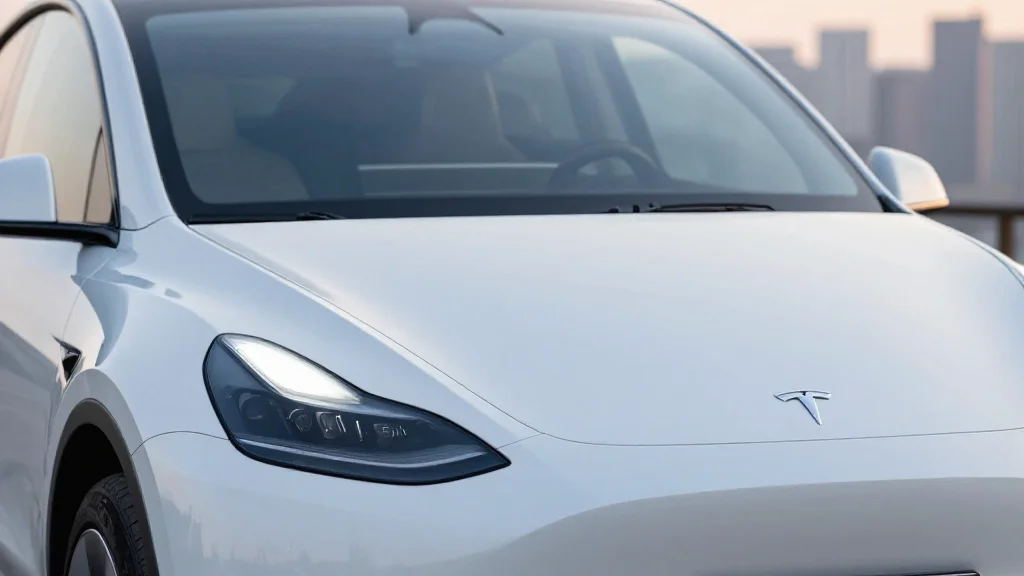
Tesla Rolls Out Supervised FSD in China, Triggering Fierce Race with Domestic EV Makers

Companies Mentioned
Why It Matters
Tesla’s entry into China’s supervised FSD market tests the company’s ability to navigate a regulatory environment that prioritizes data sovereignty and local safety standards. Success could unlock a multi‑billion‑dollar revenue stream in a market that accounts for roughly a quarter of Tesla’s global deliveries. Conversely, a tepid rollout may reinforce the perception that Chinese firms have overtaken Tesla in autonomous‑driving expertise, reshaping the competitive hierarchy of the global EV industry. The broader implication extends beyond vehicle sales. The race to dominate Level‑2 and Level‑3 autonomy in China will drive massive investments in sensor technology, AI training infrastructure, and mapping data, influencing supply chains from LiDAR manufacturers to semiconductor fabs. How quickly Tesla can adapt its hardware and software to Chinese conditions will set a benchmark for other foreign automakers eyeing the market.
Key Takeaways
- •Tesla announced supervised FSD availability in China at 64,000 CNY ($9,410) on May 21, 2026.
- •Model 3/Y sales in China rose 36% YoY to 79,478 units in April 2026.
- •XPeng aims for Level‑3 autonomy within two years and has already secured L4 robotaxi testing permits.
- •Momenta controls 60.1% of China’s NOA ADAS market; local stocks rallied double‑digit percentages on the news.
- •Tesla posted 90 autonomous‑driving testing hires across nine Chinese cities, with >70% of roles focused on regulatory and data compliance.
Pulse Analysis
Tesla’s China FSD launch is less a product drop than a regulatory litmus test. The company has spent the past two years building a domestic AI training loop to satisfy China’s data‑localization rules, a move that could become a template for other foreign OEMs. Yet the Level‑2 constraint means Tesla is selling a version of its flagship technology that is technically inferior to what U.S. customers receive, potentially diluting its brand promise of “full self‑driving.”
Domestic players like XPeng and Momenta enjoy a home‑court advantage: they have been collecting Chinese road data for years, their software is tuned to local traffic nuances, and they operate under a regulatory framework that favors locally sourced solutions. Their rapid hardware rollouts and aggressive robotaxi pilots suggest they could capture the premium segment of autonomous services before Tesla scales its own robotaxi fleet in China. Investors are already pricing in this competitive risk, as evidenced by the rally in Chinese ADAS stocks.
Looking ahead, the decisive factor will be how quickly Tesla can upgrade its hardware fleet in China to support the full 64,000 CNY package and whether regulators will grant broader permissions beyond Level‑2. If Tesla can demonstrate safety parity with domestic rivals and leverage its global brand, it could command a sizable share of the $30‑plus billion Chinese smart‑driving market. Failure to do so would cement the narrative that Chinese firms have overtaken the U.S. pioneer in autonomous vehicle technology, reshaping the strategic calculus for all foreign entrants.
Tesla Rolls Out Supervised FSD in China, Triggering Fierce Race with Domestic EV Makers
Comments
Want to join the conversation?
Loading comments...