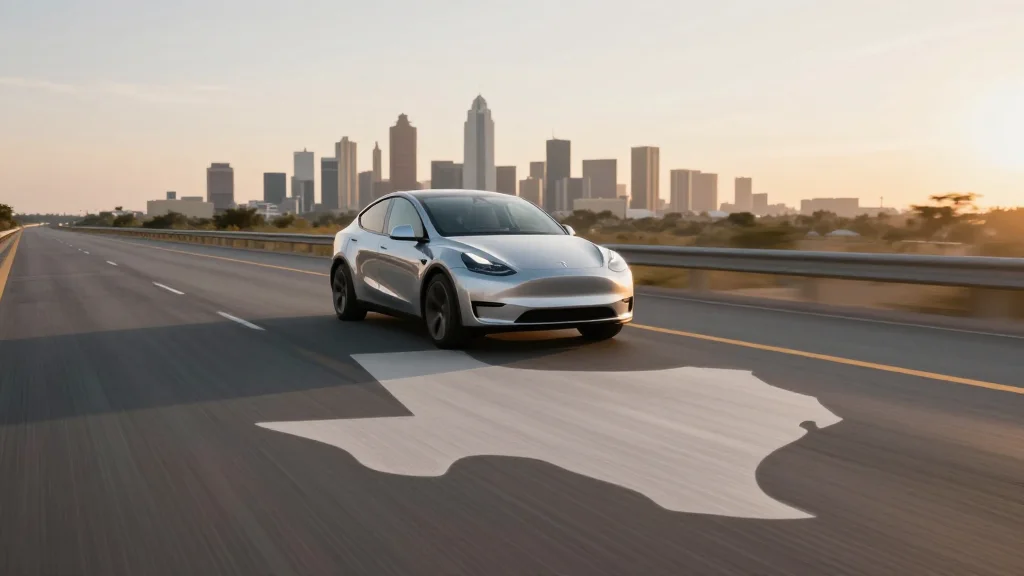
Tesla Rolls Out Unsupervised Robotaxi Service in Dallas and Houston

Companies Mentioned
Why It Matters
The Dallas‑Houston launch demonstrates that Tesla can move from supervised pilots to fully unsupervised operations in major metros, a transition that many competitors have yet to achieve. By proving the technology in three Texas cities, Tesla not only validates its Full Self‑Driving stack at scale but also creates a new, high‑margin revenue source that could reshape its financial outlook. If the service proves reliable and safe, it could accelerate broader regulatory acceptance of driverless taxis, prompting cities to revise permitting frameworks and potentially spurring a wave of autonomous mobility investments. Conversely, any safety incidents could invite stricter oversight, slowing the industry’s momentum.
Key Takeaways
- •Tesla launched unsupervised Robotaxi service in Dallas (30‑35 sq mi) and Houston (12‑15 sq mi) on April 18, 2026.
- •The expansion triples Tesla’s Texas footprint to three active hubs, covering roughly 70 sq mi.
- •Austin’s geofence has grown from 20 sq mi to about 245 sq mi, indicating Tesla’s rapid scaling pattern.
- •Launch precedes Tesla’s Q1 2026 earnings call, providing a concrete AI‑robotics milestone for investors.
- •Competitors like Waymo and Cruise still rely on safety drivers, giving Tesla a potential cost advantage.
Pulse Analysis
Tesla’s aggressive Texas rollout underscores a strategic bet that unsupervised autonomy can be commercialized faster than the industry’s cautious, safety‑driver‑first approach. By leveraging its vertically integrated hardware stack and massive data pipeline, Tesla can iterate on edge‑case handling in real‑world traffic without the overhead of human monitors. This operational advantage translates into lower per‑mile costs, which could allow Tesla to price rides competitively against traditional ride‑share services.
Historically, autonomous vehicle pilots have struggled with scaling beyond limited test zones due to regulatory hurdles and public skepticism. Tesla’s decision to push unsupervised service into two of the nation’s largest metros suggests confidence in both its technology and its ability to navigate state‑level regulations. If the Dallas and Houston pilots achieve high uptime and safety metrics, they will provide a powerful data point for other jurisdictions, potentially accelerating nationwide adoption.
However, the move also amplifies risk. Unsupervised operation places the onus of liability squarely on Tesla, and any high‑profile incident could trigger a regulatory backlash that would reverberate across the sector. Moreover, the modest initial geofences indicate Tesla is still cautious about overextending before sufficient data is collected. The next quarter will reveal whether the company can convert these pilots into a sustainable revenue stream and whether the market will reward the gamble with higher valuations.
Tesla Rolls Out Unsupervised Robotaxi Service in Dallas and Houston
Comments
Want to join the conversation?
Loading comments...