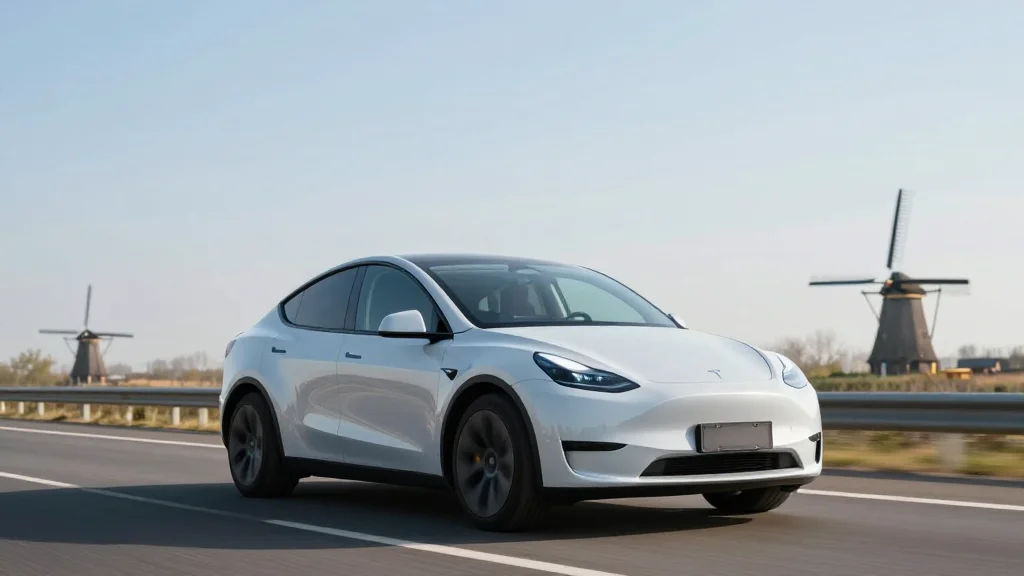
Tesla Secures First EU Approval for Supervised Full Self-Driving in the Netherlands

Companies Mentioned

Why It Matters
The Dutch approval marks a turning point for autonomous vehicle regulation in Europe, establishing a precedent that supervised Level 3‑2 systems can meet stringent safety criteria. By unlocking a pathway for Tesla’s FSD Supervised service, the decision could accelerate subscription revenue growth and set a de‑facto standard for other manufacturers seeking EU clearance. The move also pressures European regulators to harmonize testing protocols, potentially smoothing the path for future fully autonomous deployments. For consumers, the approval signals that advanced driver‑assistance features are moving from experimental to commercially viable, offering hands‑free driving in specific contexts while retaining driver oversight. This hybrid model may become the dominant approach in the near term, balancing safety concerns with the demand for higher automation levels.
Key Takeaways
- •Dutch vehicle authority (RDW) approved Tesla's Full Self-Driving Supervised system after 18 months of testing.
- •Approval allows hands‑free operation on highways and urban streets under driver supervision.
- •RDW stated the system contributes positively to road safety and requires continuous driver monitoring.
- •Tesla aims to submit an EU‑wide application by Q2 2026; individual EU states can also grant separate approvals.
- •Analyst Seth Goldstein predicts the clearance could boost European sales as consumers seek FSD experiences.
Pulse Analysis
Tesla’s Dutch approval is less about a single market win and more about establishing a regulatory template for supervised autonomy across Europe. Historically, the EU has taken a cautious stance, favoring incremental safety upgrades over radical leaps to full autonomy. By securing a Level 3‑2 clearance that mandates driver oversight, Tesla sidesteps the most contentious legal debates while still delivering a compelling value proposition to its subscriber base.
The move also reshapes competitive dynamics. Legacy OEMs have invested heavily in sensor suites and software stacks, but many are still navigating fragmented national approvals. Tesla’s ability to leverage a single, unified software platform across markets gives it a scalability advantage that could translate into faster revenue generation from its FSD subscription model. If the EU vote follows the Dutch lead, Tesla could lock in a multi‑billion‑dollar revenue stream that complements its vehicle sales, echoing Musk’s earlier forecasts of AI‑driven profitability.
Looking ahead, the real test will be how regulators balance safety oversight with the commercial incentives of rapid deployment. The RDW’s emphasis on driver attentiveness and automatic shutdown mechanisms may become baseline requirements for any future Level 4 or Level 5 approvals. For investors, the Dutch green light reduces regulatory uncertainty, but the path to continent‑wide adoption remains contingent on political consensus and potential legal challenges. The next quarter will reveal whether Tesla can convert this regulatory foothold into a sustainable market advantage or whether competing technologies will erode its early lead.
Tesla Secures First EU Approval for Supervised Full Self-Driving in the Netherlands
Comments
Want to join the conversation?
Loading comments...