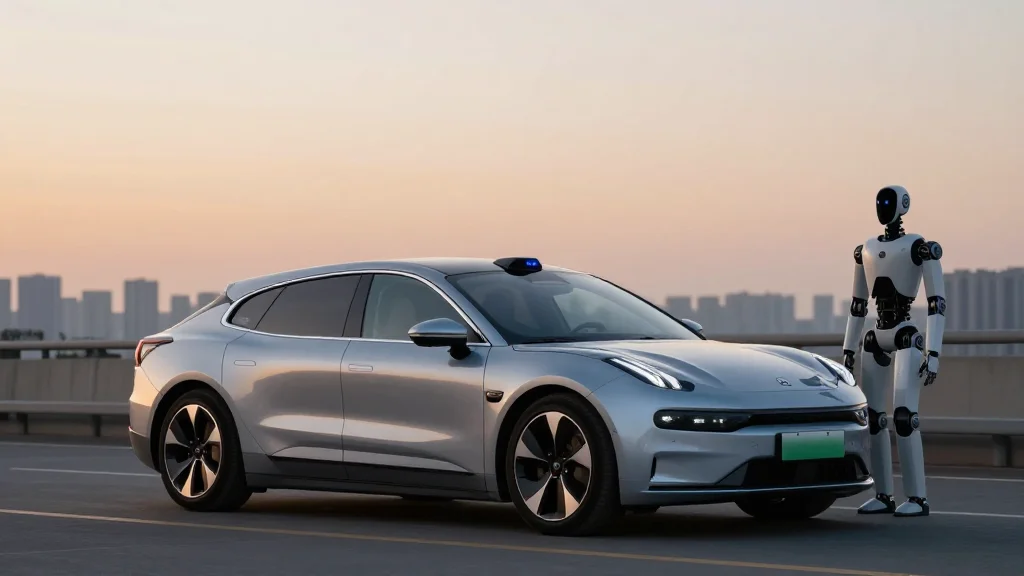
Tesla Signals Fresh Push on Robotaxi Service and Optimus Humanoid Amid Capital Spend Surge

Companies Mentioned

Why It Matters
Tesla’s renewed capital commitment and Intel partnership signal that the company is moving from concept to commercial scale in two of the most transformative autonomous‑technology markets: robotaxis and humanoid robotics. If the robotaxi service can achieve profitability, it would create a recurring revenue stream far beyond vehicle sales, reshaping the economics of personal transportation. Simultaneously, a cost‑effective Optimus robot could open new industrial and consumer applications, challenging incumbents like Unitree and Linkerbot and potentially redefining labor productivity. The moves also highlight the growing interdependence between automotive OEMs and semiconductor firms. By adopting Intel’s 14A node, Tesla diversifies its supply chain and reduces reliance on a single GPU vendor, while providing Intel a high‑profile customer in a sector traditionally dominated by Nvidia. This dynamic could accelerate innovation across the AI‑hardware ecosystem and influence future standards for autonomous systems.
Key Takeaways
- •Tesla announced a "very significant increase" in capital expenditures to fund robotaxi and Optimus development.
- •Elon Musk confirmed a partnership with Intel to use the 14A manufacturing process for chips powering both projects.
- •Analyst consensus remains a "Hold" with price targets around $400, but bullish forecasts cite robotaxi upside.
- •Tesla’s AI spend supports both Full Self‑Driving software and the perception/control stack for Optimus.
- •The Intel tie‑up diversifies Tesla’s silicon supply, potentially boosting Nvidia and Intel sales.
Pulse Analysis
Tesla’s latest announcements reflect a classic high‑risk, high‑reward play that mirrors its earlier bet on full‑self‑driving. By earmarking a sizable capex increase, the company is effectively betting that the marginal cost of scaling robotaxi services will fall faster than the revenue curve rises. The robotaxi model hinges on regulatory clearance and public acceptance; any delay could erode the projected cash flows that underpin the $600 price target floated by bullish analysts.
The Intel 14A partnership is a strategic hedge against the semiconductor bottlenecks that have plagued the industry. While Tesla’s in‑house AI chips excel at inference, training massive neural networks still leans heavily on GPU power. Intel’s entry into Tesla’s supply chain could spur competition that drives down GPU pricing, indirectly benefiting Nvidia, which remains Tesla’s primary training hardware provider. This multi‑vendor approach may also insulate Tesla from supply shocks, a lesson learned from the pandemic‑era chip shortages.
From a competitive standpoint, Tesla now faces a crowded field. Meta’s push into embodied AI and China’s Linkerbot, which commands over 80% of the high‑DOF hand market, illustrate that the race is not limited to automotive players. Tesla’s advantage lies in its data moat—billions of miles of driving data that can train more robust perception models. However, translating that data advantage into a reliable, city‑wide robotaxi service will require breakthroughs in safety validation and public policy that have yet to materialize.
In the short term, investors should monitor two leading indicators: the rollout timeline for the next Optimus prototype and any concrete updates on robotaxi pilot expansions. Both will serve as proxies for Tesla’s ability to convert its capital spend into tangible product milestones. If the company can demonstrate functional progress without regulatory setbacks, the long‑term upside could be transformative, potentially redefining both personal mobility and industrial automation.
Tesla Signals Fresh Push on Robotaxi Service and Optimus Humanoid Amid Capital Spend Surge
Comments
Want to join the conversation?
Loading comments...