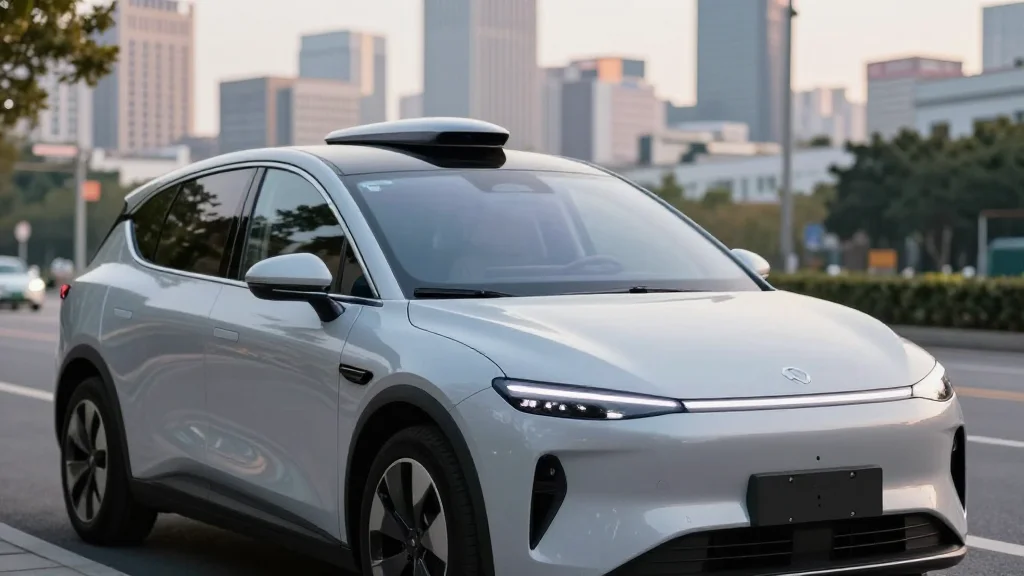
Tesla Starts Cybercab Production at Giga Texas, Warns Slow Ramp

Companies Mentioned
Why It Matters
The Cybercab represents Tesla’s most ambitious attempt to monetize its Full Self‑Driving technology beyond vehicle sales. If the company can overcome validation and supply‑chain hurdles, a low‑cost, purpose‑built robotaxi could generate recurring revenue streams that dwarf traditional automotive margins. Conversely, a prolonged ramp‑up erodes the financial upside and gives rivals a chance to lock in regulatory approvals and market share, potentially reshaping the competitive landscape of autonomous mobility. Moreover, the $25 billion AI investment underscores a strategic pivot: Tesla is betting that its in‑house AI hardware and software ecosystem will become a defensible moat. Success would validate a vertically integrated model that could be replicated across other high‑growth segments such as energy storage and humanoid robotics, while failure could force the company to rely on external partners and dilute its competitive edge.
Key Takeaways
- •Tesla confirmed Cybercab production started at Giga Texas, with ~60 units spotted in early April.
- •Elon Musk warned that initial output will be “very slow” as safety validation and new supply‑chain constraints dominate.
- •2026 capital expenditures are projected to exceed $25 billion, three times the prior year’s spend, to fund AI, Optimus, and Cybercab.
- •Paid Robotaxi miles nearly doubled sequentially in Q1 2026, but unsupervised rides remain limited to a few cities.
- •Regulatory approval for driver‑less operation is still pending, and Tesla has reported 14 crash incidents to the NHTSA.
Pulse Analysis
Tesla’s decision to launch Cybercab production now, while openly admitting a sluggish ramp‑up, reflects a classic trade‑off between market signaling and operational reality. By announcing the start of production, the company reinforces its narrative of being at the forefront of autonomous mobility, which helps sustain a lofty valuation amid a broader AI boom. Yet Musk’s tempered tone signals an internal acknowledgment that the vehicle’s novel architecture – no steering wheel, bespoke chassis, and a new supply chain – forces a longer S‑curve than traditional models. This candidness may temper short‑term hype but could build credibility with regulators and safety advocates, a crucial factor given the 14 crash reports.
Financially, the $25 billion capex surge is a double‑edged sword. On one hand, it funds the AI compute and chip fabs needed to train and run Full Self‑Driving at scale, potentially unlocking the massive network effects Musk has long touted. On the other, it pushes Tesla into negative free‑cash‑flow territory for the remainder of 2026, raising the stakes for the Cybercab to deliver revenue sooner rather than later. Competitors like Waymo, which already operate driver‑less fleets in Phoenix and San Francisco, are leveraging years of validated data to attract city contracts. Tesla’s advantage lies in its massive fleet of data‑generating Model Y Robotaxis, but the transition to a purpose‑built platform must be swift enough to convert that data advantage into a profitable robotaxi service.
Strategically, the Cybercab rollout will be a litmus test for Tesla’s broader AI‑first vision. Success could validate the company’s claim that autonomous ride‑hailing will become its primary profit engine, reshaping the EV market’s economics. Failure, however, would reinforce skepticism about Musk’s timelines and could accelerate a shift in investor sentiment toward more disciplined autonomous players. The next few quarters will therefore be pivotal: production cadence, safety metrics, and regulatory clearances will either cement Tesla’s leadership in autonomy or expose the limits of its ambition.
Tesla Starts Cybercab Production at Giga Texas, Warns Slow Ramp
Comments
Want to join the conversation?
Loading comments...