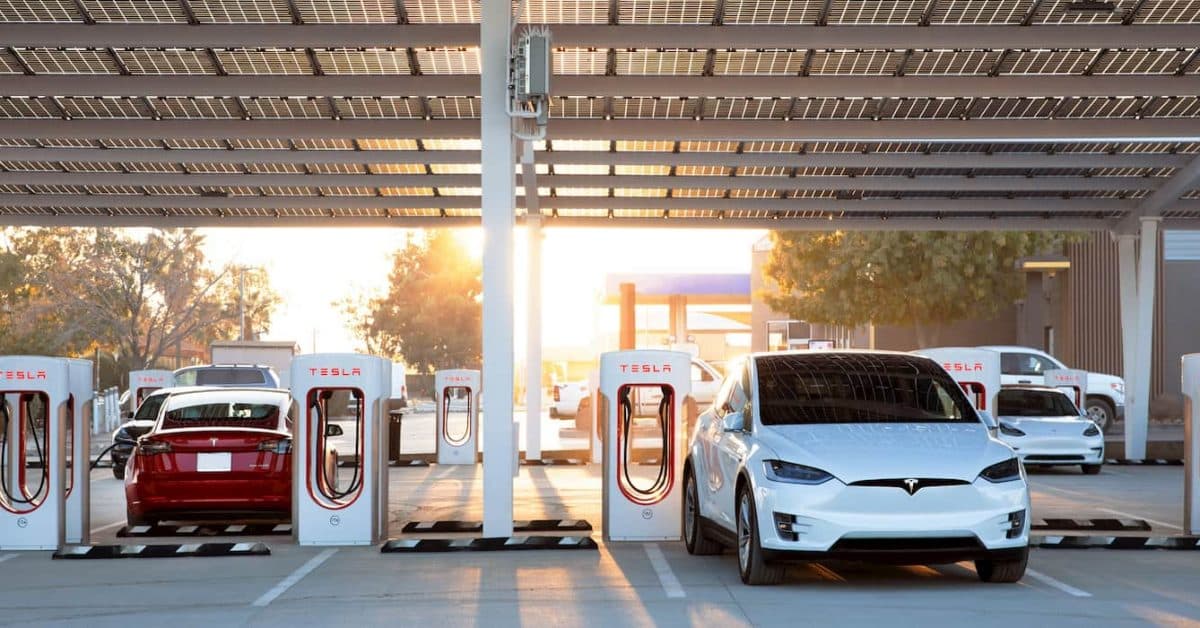
Tesla Submits Plans for First Robotaxi-Only Supercharger Stations
Why It Matters
Dedicated charging infrastructure is essential for scaling autonomous ride‑hailing, giving Tesla a logistical edge and reducing strain on its public Supercharger network. It also signals aggressive competition with Waymo in a key market.
Key Takeaways
- •Tesla seeks 56 private V4 stalls in Chandler, Arizona.
- •Stations reserved for Model Y Robotaxi fleet, not public use.
- •Location challenges Waymo’s autonomous hub in Phoenix metro area.
- •Infrastructure could be repurposed as public chargers if robotaxis lag.
Pulse Analysis
Tesla’s recent permit filings for two private V4 Supercharger stations in Chandler and Mesa underscore the company’s push to build a charging backbone for its nascent robotaxi service. Unlike the roughly 7,000 public Superchargers that power the consumer fleet, these sites will be off‑limits to regular drivers and will serve the Model Y vehicles currently operating in autonomous mode in Texas and soon in Arizona. By situating the hubs in the Phoenix East Valley—home to Waymo’s original ride‑hailing deployment—Tesla signals a willingness to compete directly in the region’s autonomous‑mobility market.
Dedicated charging bays give Tesla the ability to centralize not only power but also cleaning, diagnostics and software updates, a logistical advantage when scaling from a handful of pilot cars to a fleet of thousands. The 56‑stall Chandler station alone could support dozens of vehicles operating around the clock without draining public charger capacity. Moreover, the hardware is identical to standard V4 units, meaning the sites can be flipped to public use if the robotaxi rollout stalls, providing a low‑risk asset that bolsters the overall Supercharger network.
The move arrives amid a broader industry scramble for autonomous‑vehicle infrastructure, where regulators, utilities and real‑estate developers are all vying for early positioning. While Tesla still faces hurdles—limited unsupervised miles, higher crash rates than human drivers, and weather‑related shutdowns—the permits lay groundwork that could shorten the time to market once the Full Self‑Driving software reaches commercial reliability. Competitors such as Waymo and Cruise have already invested in private charging and maintenance depots, suggesting that dedicated infrastructure will become a standard prerequisite for large‑scale robotaxi operations.
Tesla submits plans for first Robotaxi-only Supercharger stations
Comments
Want to join the conversation?
Loading comments...