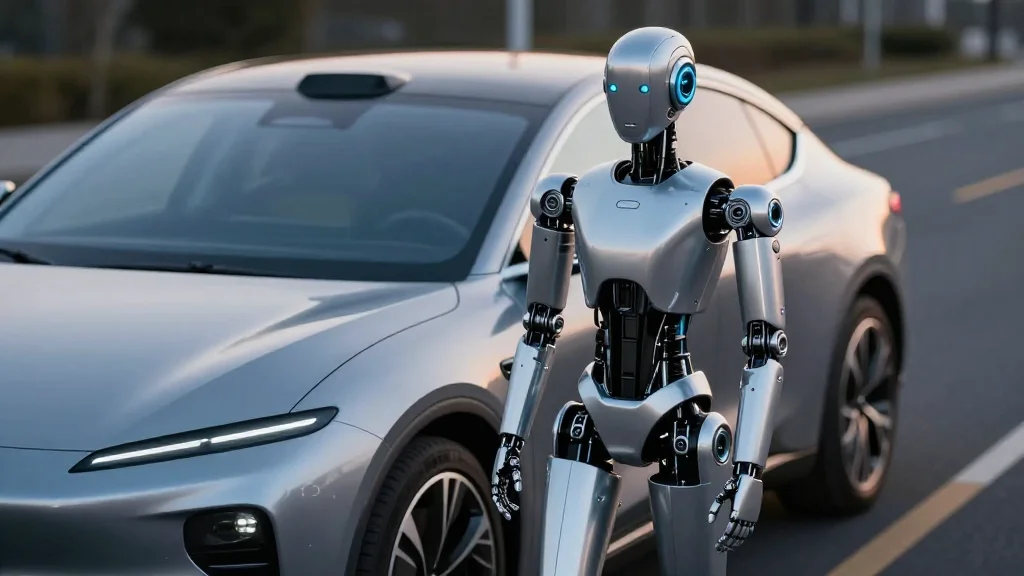
Tesla’s $25 B AI and Robotics Bet Triggers Stock Volatility and Higher CapEx

Companies Mentioned

Why It Matters
Tesla’s $25 billion AI and robotics commitment marks the most aggressive shift toward autonomy in the auto industry’s history. By allocating a third of its annual capex to AI compute and humanoid robots, the company is betting that autonomous vehicle services and robot‑assisted manufacturing will become core revenue streams, potentially reshaping the competitive dynamics of both automotive and AI markets. If successful, Tesla could leverage its massive data set and vertically integrated hardware to outpace rivals in robotaxi deployment and autonomous logistics, creating a new high‑margin business that offsets the commoditization of electric‑vehicle sales. Conversely, a prolonged cash‑burn without clear monetization could strain the balance sheet and erode investor confidence, especially as traditional automakers accelerate their own autonomous programs. The outcome will influence how other manufacturers allocate capital toward AI, and may set a benchmark for the scale of investment required to transition from assisted driving to fully autonomous fleets.
Key Takeaways
- •Tesla raised its 2024 capital‑expenditure outlook to $25 billion, up from $9 billion in 2025.
- •AI compute investments accounted for $3.5 billion of the quarter’s capex.
- •Record operating cash flow of $6.3 billion was generated in Q1.
- •Vehicle deliveries rose 6.3% YoY to 358,000 units, while automotive margins face Q4 pressure.
- •Full‑Self‑Driving revenue reached $326 million in North America.
Pulse Analysis
Tesla’s autonomy push is a high‑stakes gamble that hinges on turning massive R&D spend into scalable, cash‑generating services. The company’s vertical integration—designing its own AI chips, building a dedicated fab, and controlling the software stack—offers a competitive edge that few rivals can match. However, the timing risk is acute; Optimus and the Cybercab are still in early production phases, and regulatory approval for robotaxi services remains uncertain.
Historically, capital‑intensive pivots have succeeded when a firm can leverage existing cash flows to fund the transition. Tesla’s record cash generation this quarter provides a short‑term buffer, but the projected negative free‑cash‑flow through 2026 signals that the company will need either rapid revenue from autonomy or external financing to sustain the spend. Compared with Big Tech peers, Tesla lacks a high‑margin software business to subsidize its AI investments, making the path to profitability more precarious.
Investors are therefore split between faith in Musk’s vision and caution over the financial runway. If Tesla can demonstrate measurable improvements in FSD safety metrics and achieve volume robotaxi deployments by 2025, the $25 billion outlay could be justified as a strategic foundation for a new, high‑margin revenue pillar. Failure to do so would likely force a re‑allocation of resources back to core vehicle sales, potentially slowing the company’s autonomy timeline and ceding ground to competitors such as Waymo, Cruise and emerging Chinese players.
In the near term, market participants will monitor quarterly updates on Dojo 3 progress, the ramp‑up of the Terafab, and the first‑generation Optimus line. Each milestone will either reinforce the narrative that Tesla can monetize its AI and robotics ambitions or deepen concerns about a costly, unproven bet.
Tesla’s $25 B AI and Robotics Bet Triggers Stock Volatility and Higher CapEx
Comments
Want to join the conversation?
Loading comments...