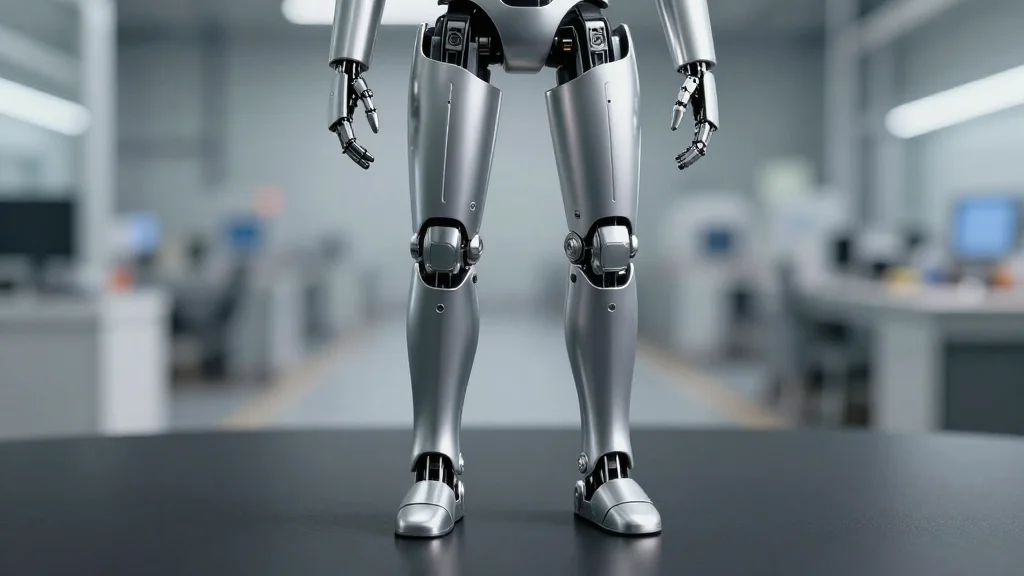
Tesla's $25B Optimus Push Stumbles on Weak Consumer Demand

Companies Mentioned

Why It Matters
The Optimus setback signals a broader challenge for the autonomy sector: scaling expensive, consumer‑focused robots requires not just engineering breakthroughs but proven market demand. Tesla’s failure to generate sufficient interest could dampen investor enthusiasm for other large‑scale humanoid projects, slowing capital inflows into the field. Moreover, the episode underscores the risk of diverting resources from proven revenue streams. As Tesla’s automotive business continues to shoulder the bulk of its earnings, a misstep in robotics could pressure the company to reprioritize, potentially reshaping the competitive dynamics among firms racing to commercialize autonomous machines.
Key Takeaways
- •Tesla allocated over $25 billion of capex to retool factories for Optimus production
- •Targeted output: 1 million humanoid robots per year, with sales not expected before late 2027
- •Estimated production cost $10,000 per unit; projected retail price $20,000‑$30,000
- •Automotive sales still account for 73 % (up to 87 % with leasing) of Tesla’s revenue
- •Analysts and observers warn demand for a $30,000 consumer robot is weak, risking the capex shift
Pulse Analysis
Tesla’s Optimus ambition is a textbook case of technology optimism colliding with market reality. The company’s $25 billion reallocation mirrors past bets—such as the early 2000s push for electric vehicles—where capital intensity outpaced consumer uptake. Unlike EVs, which eventually benefitted from regulatory incentives and a clear cost‑of‑ownership advantage, humanoid robots lack a compelling value proposition for the average household. The $30,000 price point places Optimus in a niche comparable to high‑end home appliances, yet the robot’s functional capabilities remain largely unproven, making the purchase a speculative luxury.
From a competitive standpoint, Tesla’s scale could have been a game‑changer, but the timing disadvantage is stark. Companies like Boston Dynamics have been iterating on task‑specific robots for years, targeting industrial and logistics customers willing to pay premium prices for proven productivity gains. Tesla’s consumer‑first narrative may force it into a race against time to secure enterprise contracts that can subsidize the high R&D spend. Failure to do so could erode margins and force a strategic retreat back to core automotive operations.
Looking ahead, the key variables will be pre‑order volumes, partnership announcements, and the ability to demonstrate tangible use cases beyond a novelty gadget. If Tesla can lock in corporate pilots—perhaps in warehouse automation or last‑mile delivery—it could justify the capex and create a pathway to broader consumer adoption. Absent that, the Optimus program may become a cautionary tale of over‑ambitious diversification, reminding the autonomy sector that engineering prowess must be matched by clear economic incentives for buyers.
Tesla's $25B Optimus Push Stumbles on Weak Consumer Demand
Comments
Want to join the conversation?
Loading comments...