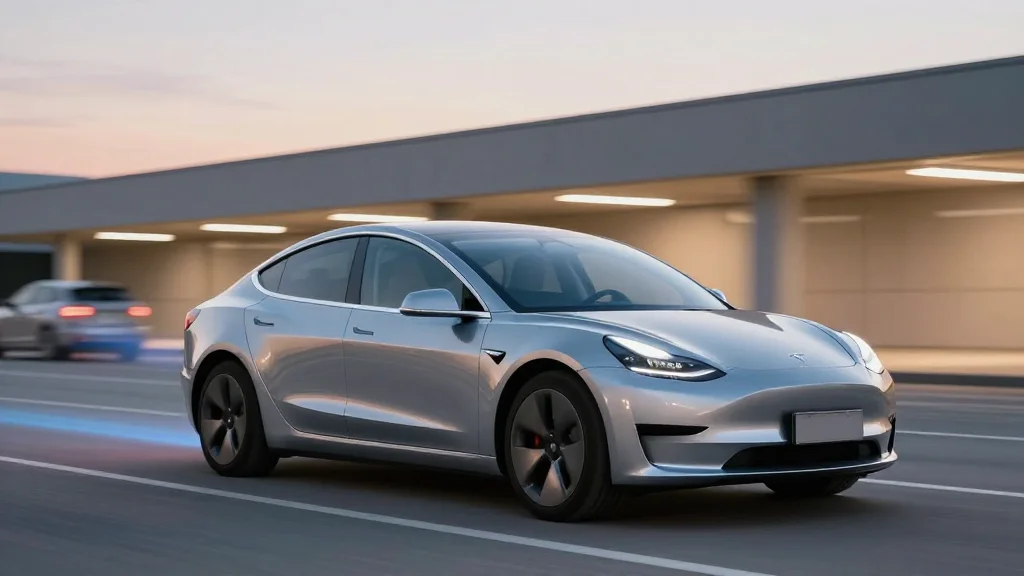
Tesla's 'ASS' Is Safe As Feds End Probe Into Remote Control Feature
Why It Matters
The clearance removes a regulatory cloud, bolstering consumer confidence and paving the way for broader autonomous‑driving deployments, including future robotaxi services.
Key Takeaways
- •NHTSA ends probe, deems incidents low severity.
- •About 100 crashes, all low-speed, no injuries.
- •Incident rate roughly 1% of millions of summons.
- •Feature relies on camera vision, not ultrasonic sensors.
- •Tesla’s remote summon cleared, supporting broader autonomy plans.
Pulse Analysis
Tesla’s Actual Smart Summon (ASS) marks a pivotal shift from ultrasonic to camera‑only perception, reflecting the company’s broader strategy to rely on vision AI for autonomous functions. By allowing owners to command a vehicle from a smartphone at walking speed, the feature mimics a low‑speed robotaxi in a parking lot. The NHTSA’s decision, based on an analysis of roughly 100 minor collisions among millions of summons, underscores that the technology’s safety profile meets current regulatory expectations, even as it highlights the importance of robust obstacle detection in real‑world environments.
The regulatory green light carries significant weight for Tesla’s long‑term autonomy roadmap. With the probe closed, Tesla can promote ASS as a proven, safe capability, reinforcing consumer trust in its Full Self‑Driving (FSD) suite. The clearance also reduces legal risk for future expansions, such as integrating remote‑summon functions into shared‑mobility or robotaxi pilots. Investors and analysts will likely view the outcome as a validation of Tesla’s vision‑first approach, potentially accelerating rollout timelines for higher‑level autonomous services.
Industry peers are watching closely, as the decision sets a de‑facto benchmark for remote‑control features across the EV sector. Rivian’s upcoming R2 robotaxi fleet and other manufacturers exploring similar summon capabilities must now demonstrate comparable safety metrics to satisfy regulators. The NHTSA’s focus on incident frequency and severity, rather than outright bans, suggests a pragmatic path forward for emerging autonomous technologies, encouraging innovation while maintaining public safety.
Tesla's 'ASS' Is Safe As Feds End Probe Into Remote Control Feature
Comments
Want to join the conversation?
Loading comments...