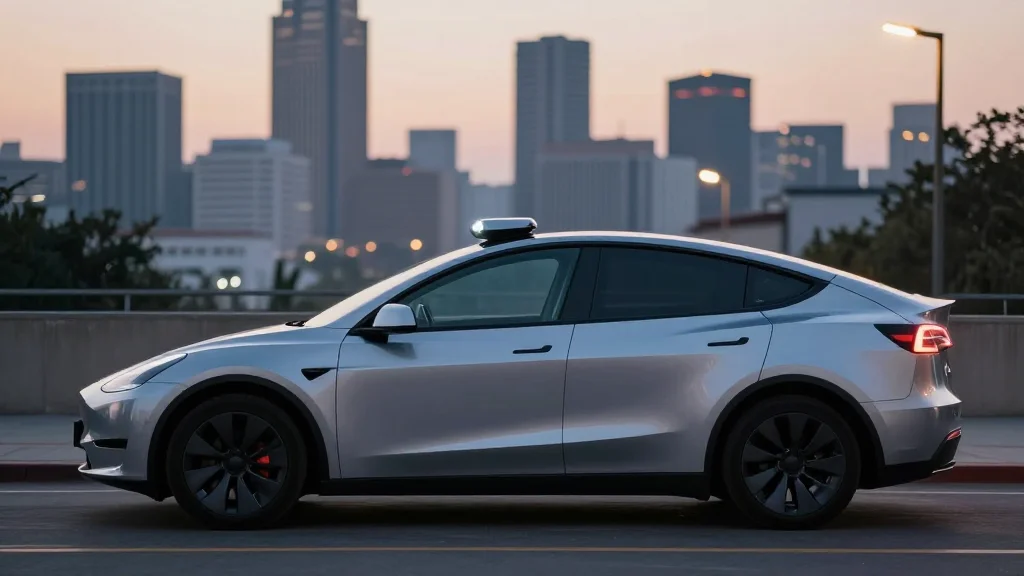
Tesla's Austin Robotaxi Service Falters: Long Waits and Safety Hurdles

Companies Mentioned
Why It Matters
Tesla’s robotaxi challenges highlight the broader difficulty of scaling autonomous vehicle services from prototype to mass market. The disparity between promised vehicle counts and actual on‑the‑ground availability raises questions about the feasibility of Musk’s timeline and the reliability of FSD technology under real‑world conditions. For the autonomy ecosystem, Tesla’s setbacks serve as a cautionary tale for startups and incumbents alike, emphasizing the need for robust safety validation, regulatory compliance, and realistic deployment strategies. The competitive dynamics in Austin also illustrate how early market entrants can shape consumer expectations. Waymo’s ability to deliver consistent, driver‑less rides with a larger fleet sets a benchmark that Tesla must meet or exceed to remain relevant. Failure to close the service gap could accelerate investor migration toward firms with proven autonomous capabilities, reshaping funding flows and partnership opportunities across the sector.
Key Takeaways
- •Tesla operates ~50 robotaxis in Austin, serving a city of >1 million residents.
- •Reuters test found 27% of ride requests received no vehicle, with wait times >15 minutes half the time.
- •Waymo runs five times more robotaxis in Austin, with average wait times of 3‑6 minutes.
- •Dallas rides experienced two‑hour trips for 5 miles and erroneous “restricted area” messages.
- •EU regulators have signaled a speedbump for Tesla’s Full Self‑Driving software, adding compliance pressure.
Pulse Analysis
Tesla’s autonomy narrative has long hinged on the promise of a trillion‑dollar ride‑hailing business, yet the Austin rollout reveals a stark gap between ambition and execution. The company’s reliance on a modest fleet and lingering safety drivers suggests that the underlying FSD stack still requires substantial refinement before it can operate at scale without human oversight. This operational lag not only dents consumer trust but also provides a foothold for competitors like Waymo, whose driver‑less model has already proven viable in the same market.
From a financial perspective, the disconnect between projected milestones—10 million active FSD subscriptions and a $400 billion adjusted EBITDA target—and the current service reality forces analysts to recalibrate valuation models. Investors who bought into Musk’s vision at premium multiples now face heightened risk, especially as regulatory bodies in the EU and potentially in U.S. states tighten safety standards. The recent EU “speedbump” could foreshadow stricter oversight that would further delay mass deployment, compelling Tesla to allocate more resources to compliance rather than fleet expansion.
Strategically, Tesla may need to reconsider its rollout approach. Partnering with existing mobility platforms, accelerating the recruitment of additional autonomous vehicles, or even licensing its FSD software to third‑party fleets could mitigate the current shortfall. However, any such pivot must address the core technical challenges that have manifested in prolonged wait times and service unreliability. Until Tesla can demonstrably close the performance gap, its robotaxi dream remains more of a headline promise than a market‑ready product, and the autonomy sector will likely see a shift toward firms that can deliver consistent, driver‑less experiences at scale.
Tesla's Austin Robotaxi Service Falters: Long Waits and Safety Hurdles
Comments
Want to join the conversation?
Loading comments...