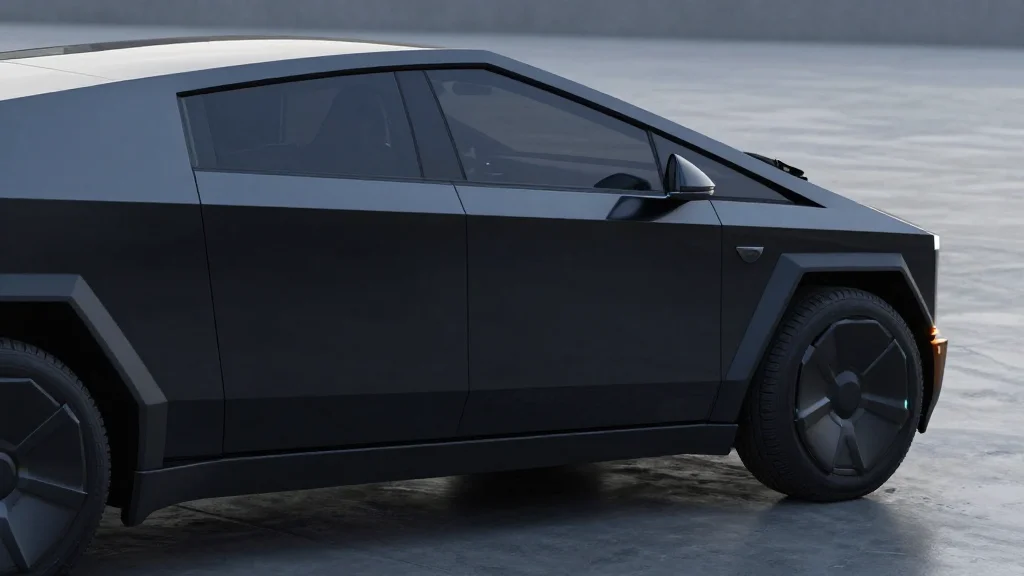
Tesla's Electric Cybercab Is Certified as the Most Efficient EV Ever

Companies Mentioned
Why It Matters
The unprecedented efficiency slashes energy costs per mile, giving Tesla a clear economic edge in robotaxi fleets and potentially reshaping ride‑hailing profitability. It also demonstrates how design trade‑offs can drive price competitiveness in autonomous‑vehicle markets.
Key Takeaways
- •Cybercab achieves 165 Wh/mi, beating next best by 28%
- •Two‑seat robotaxi design eliminates steering wheel, reducing weight
- •Sub‑50 kWh battery cuts charging time and vehicle cost
- •Projected $30,000 price hinges on efficiency‑driven savings
- •Fleet operators gain lower energy expense per mile advantage
Pulse Analysis
Efficiency has become the new performance metric for electric vehicles, and Tesla’s Cybercab sets a new benchmark at 165 Wh per mile. By stripping the vehicle down to a two‑seat robotaxi configuration and removing traditional controls, Tesla reduces mass and aerodynamic drag, delivering a 28% advantage over the Lucid Air Pure and a full third less energy than a Model 3. This certified rating, verified by the EPA‑type testing process, validates the claim beyond internal targets and signals that ultra‑efficient EVs are technically feasible, not just marketing hype.
For fleet operators, the economics of a robotaxi service hinge on three variables: vehicle acquisition cost, energy expense per mile, and downtime for charging. The Cybercab’s sub‑50 kWh battery translates into faster charging cycles and lower per‑unit battery spend, directly supporting Tesla’s $30,000 price goal. At current U.S. electricity rates, the 165 Wh/mi figure reduces energy cost to roughly $0.02 per mile, a substantial margin over competitors whose vehicles consume 200 Wh/mi or more. This cost structure could enable higher utilization rates and slimmer profit margins for ride‑hailing platforms, potentially accelerating the shift from driver‑owned cars to autonomous fleets.
However, the efficiency advantage does not erase the biggest hurdle: reliable, unsupervised autonomous driving. Tesla’s supervised robotaxi fleet still crashes at four times the rate of human drivers, and the steering‑wheel‑less Cybercab will rely on full autonomy to be viable. Production at Giga Texas has started, but a slow ramp‑up suggests supply constraints and quality‑control challenges. Competitors such as Waymo and Cruise are also pursuing purpose‑built robotaxis, meaning Tesla must pair its efficiency gains with robust safety and regulatory approvals to capture market share. If successful, the Cybercab could redefine the cost baseline for autonomous mobility, prompting a wave of similarly lean designs across the industry.
Tesla's Electric Cybercab is Certified as the Most Efficient EV Ever
Comments
Want to join the conversation?
Loading comments...