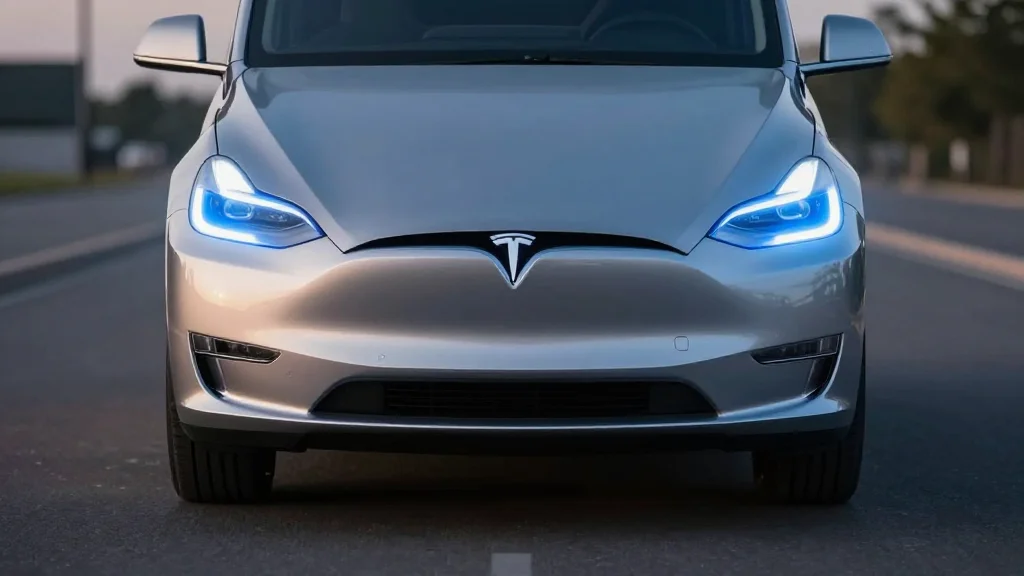
Tesla’s First Semi Rolls Off Nevada High‑Volume Line, Targeting 50,000 Units Yearly

Companies Mentioned
Why It Matters
The launch of a high‑volume Tesla Semi line signals that electric, autonomous‑ready trucks are moving from prototype to mainstream logistics. For shippers, the promise of lower fuel costs, reduced emissions, and potential driver‑less operation could reshape cost structures and regulatory frameworks. For the broader automotive industry, Tesla’s scale demonstrates that mass‑producing heavy‑duty EVs is technically feasible, pressuring incumbents such as Volvo, Daimler and BYD to accelerate their own electric truck programs. From an environmental perspective, the Semi’s projected 800‑km range and 1.06 kWh/km efficiency could cut diesel consumption by up to 70 % on long hauls, directly supporting national and corporate climate pledges. The integration of Full Self‑Driving technology also raises policy questions around safety standards, liability, and workforce transitions for truck drivers, making the rollout a focal point for regulators and labor groups alike.
Key Takeaways
- •First Tesla Semi leaves Nevada high‑volume line, capacity 50,000 trucks/year
- •Updated Semi offers 800 km range, 800 kW drivetrain, 1.06 kWh/km energy use
- •1.2 MW ultra‑fast charging enables full charge in under an hour
- •PepsiCo doubled its Semi fleet to 50 trucks after 2024 delivery
- •Tesla plans to embed Full Self‑Driving tech for autonomous long‑haul trucking
Pulse Analysis
Tesla’s transition from low‑volume pilot production to a 50,000‑unit annual capacity is a watershed for the heavy‑duty EV market. Historically, manufacturers have struggled to achieve economies of scale for trucks due to high material costs and limited demand. By leveraging its battery expertise and vertically integrated supply chain, Tesla can undercut traditional OEMs on both price and performance, forcing a recalibration of cost expectations across the sector.
The Semi’s autonomous capabilities also differentiate it from competing electric trucks that rely on third‑party driver‑assist systems. Tesla’s end‑to‑end FSD stack, already proven in passenger‑car deployments, offers a unified software platform that can be updated over‑the‑air, reducing the need for costly retrofits. This could accelerate regulatory acceptance of autonomous freight, especially if early adopters like DHL publish safety and efficiency data that meet or exceed existing standards.
Looking ahead, the real test will be how quickly Tesla can translate production capacity into sustained revenue. The company’s next earnings report will likely reveal whether the Nevada line is meeting yield targets and whether the Semi’s price point—rumored to be under $200,000 for the base model—holds up against competitor offerings. If Tesla can deliver on its promises, the Semi could become the benchmark for zero‑emission, autonomous trucking, reshaping supply‑chain economics for the next decade.
Tesla’s First Semi Rolls Off Nevada High‑Volume Line, Targeting 50,000 Units Yearly
Comments
Want to join the conversation?
Loading comments...