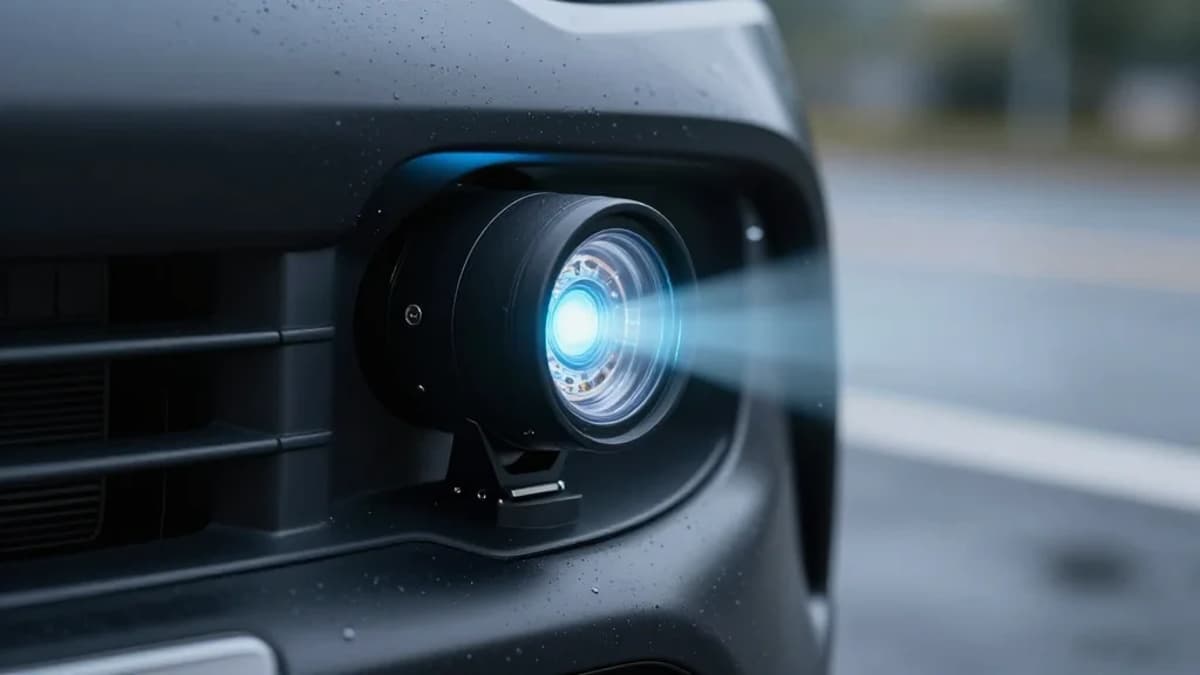
The Future of ADAS: Could Antennas Be the Key?
•February 27, 2026
0
Why It Matters
The advancement accelerates higher‑level autonomy by delivering more reliable sensing, helping OEMs meet safety and performance targets in a competitive market.
Key Takeaways
- •3D waveguide antennas boost radar range and resolution
- •77 GHz band shift enables higher detection precision
- •Compact design eases vehicle packaging and EMC compliance
- •HUBER+SUHNER partners with Tier‑1s for scalable radar solutions
Pulse Analysis
Radar‑based advanced driver assistance systems have become a cornerstone of modern vehicle safety, and their role is expanding as manufacturers chase higher levels of autonomy. While cameras and lidar provide rich visual data, radar offers unmatched robustness in rain, fog, and dust, making it indispensable for reliable perception. The shift from legacy 24 GHz units to the 77 GHz spectrum over the past decade has opened new performance margins, but it also introduced challenges in signal integrity, antenna size, and electromagnetic compatibility. Addressing these issues is critical for OEMs that aim to integrate multiple sensors without compromising vehicle packaging.
HUBER+SUHNER’s 3‑dimensional waveguide antenna tackles those challenges by combining a metallised‑plastic structure with a larger effective aperture, delivering several decibels of link‑budget gain compared with conventional printed‑circuit antennas. The design separates the passive radiating element from active MMIC modules, simplifying EMC shielding and allowing launch‑on‑package or launch‑in‑package integration. This results in compact, scalable modules that can support higher channel counts, essential for high‑resolution imaging radar and future sensor‑fusion architectures. For Tier‑1 suppliers, the technology shortens development cycles and reduces BOM complexity while meeting stringent automotive standards.
Looking ahead, radar will remain a backbone of sensor‑fusion strategies as AI‑driven software transforms raw data into predictive driving decisions. The ability of waveguide antennas to maintain performance in adverse conditions positions them as a key enabler for predictive safety features such as proactive braking for hidden pedestrians. As OEMs move toward unified perception platforms, the cost‑efficiency and integration flexibility of HUBER+SUHNER’s solutions could accelerate the rollout of Level‑3 and Level‑4 autonomous functions, reshaping market competition.
The future of ADAS: Could antennas be the key?
0
Comments
Want to join the conversation?
Loading comments...