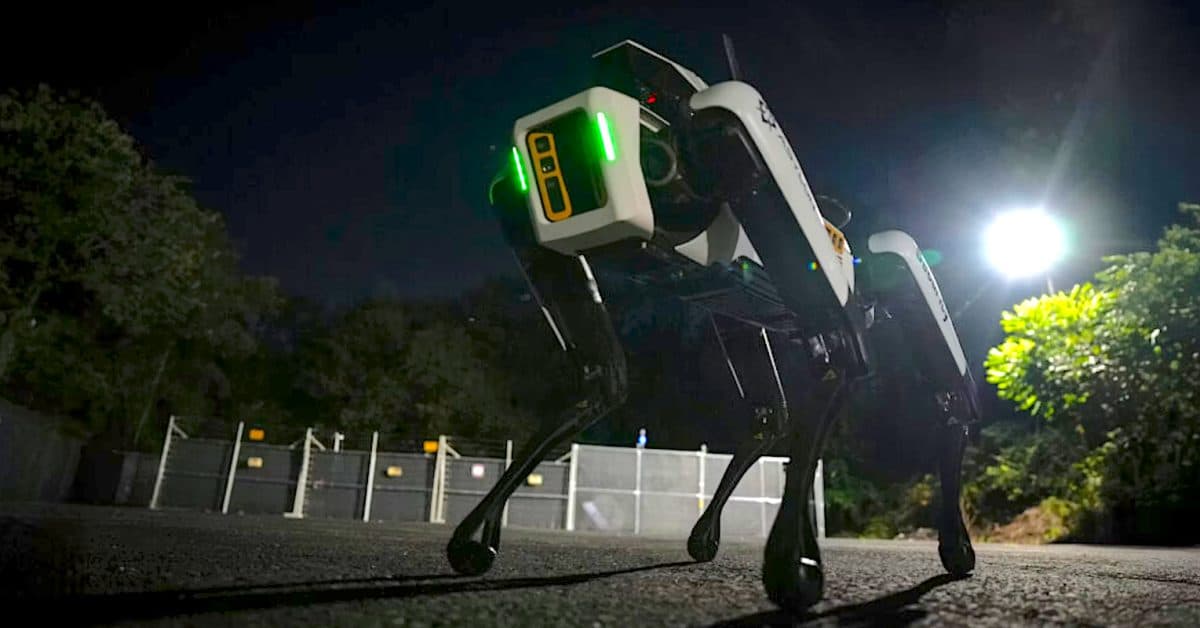
THEY TOOK R JOBS: New DroneDog Robot Security Guard Gets to Work
Why It Matters
Automated site security reduces labor costs and human error while providing continuous surveillance, a growing need as construction theft rises. The high price point, however, limits adoption to large‑scale projects that can justify the investment.
Key Takeaways
- •DroneDog combines Spot robot with Asylon PupPack security payload.
- •Over 250,000 automated security missions completed across sites.
- •More than 150,000 miles patrolled in real‑world environments.
- •Base Spot price $74,500; full system expected over $150,000.
- •Includes 20× optical zoom thermal camera and AES‑256 encrypted video.
Pulse Analysis
The security‑robot market has shifted from speculative humanoids to practical quadrupeds, and Boston Dynamics’ Spot platform exemplifies that transition. By leveraging Spot’s proven mobility and pairing it with Asylon’s specialized PupPack, DroneDog offers a turnkey solution that can navigate stairs, uneven terrain, and confined spaces—capabilities that traditional CCTV cannot match. This convergence of robotics, AI‑driven analytics, and secure communications reflects broader trends where autonomous systems are being deployed for high‑value, low‑margin tasks that demand reliability and 24/7 presence.
DroneDog’s operational data—over a quarter‑million missions and 150,000 miles of patrol—demonstrates that the technology is moving beyond pilot projects into sustained field use. Its sensor suite, featuring a 20× optical zoom thermal camera and AES‑256 encrypted video streams, feeds a cloud‑based Robotic Security Operations Center where human analysts can intervene in real time. While the hardware cost tops $150,000 and requires a subscription for monitoring staff, the potential ROI hinges on reducing theft losses, insurance premiums, and labor expenses on large construction sites where equipment theft can run into millions.
Industry analysts see DroneDog as a bellwether for the next wave of autonomous security solutions across critical infrastructure, ports, and energy facilities. Adoption barriers include upfront capital, integration with legacy security systems, and regulatory concerns over autonomous surveillance. However, as AI models improve and the cost of edge computing declines, the economics may shift, making such robots viable for mid‑size projects. Competitors are racing to add similar payloads to their platforms, suggesting a rapidly maturing market that could standardize autonomous patrols as a baseline security measure.
THEY TOOK R JOBS: new DroneDog robot security guard gets to work
Comments
Want to join the conversation?
Loading comments...