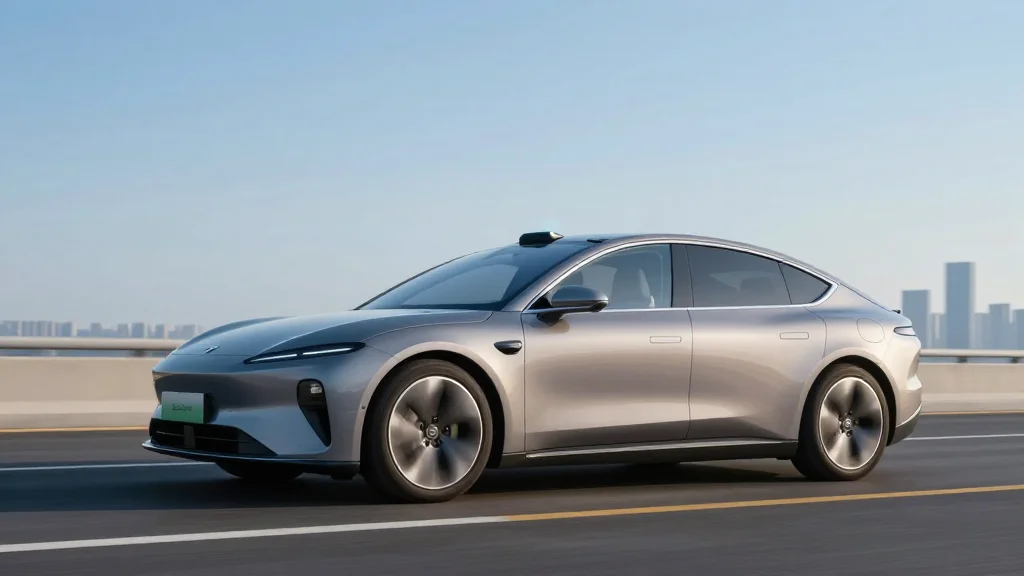
Uber CEO Calls Self-Driving Market a Trillion-Dollar Opportunity as Q1 Shows 25% Booking Growth

Companies Mentioned
Why It Matters
The self‑driving market represents one of the few remaining large‑scale growth frontiers for mobility platforms. Uber's public projection of a trillion‑dollar opportunity signals to investors that the company views autonomous rides as a core pillar of future earnings, not a peripheral experiment. By opting for a partnership model, Uber may set a new industry standard that balances rapid market entry with fiscal prudence, potentially reshaping how legacy automakers and tech firms collaborate on AV deployment. If Uber can successfully scale partner‑driven autonomous services, it could accelerate the transition from human‑driven rides to mixed fleets, lowering operating costs and expanding service coverage. Conversely, failure to deliver on the promised growth could validate the skepticism surrounding AV economics and reinforce the dominance of vertically integrated players like Tesla. The outcome will influence capital allocation across the broader transportation ecosystem, from venture investors to legacy car manufacturers.
Key Takeaways
- •Uber CEO Dara Khosrowshahi projects a trillion‑dollar autonomous‑vehicle market.
- •Q1 2026 gross bookings grew 25% YoY; adjusted EPS rose 44% to $0.78.
- •Stock trades 25% below its October 2025 high at a forward 22x P/E multiple.
- •Uber pursues a partnership‑centric AV strategy, contrasting with Tesla's in‑house development.
- •Company targets expanded AV deployments in Los Angeles, Chicago and Dallas during 2026.
Pulse Analysis
Uber's Q1 performance underscores a pivotal shift from pure growth to profitability, a transition that is now being anchored to autonomous‑vehicle ambitions. The partnership model reduces capital risk, but it also introduces dependency on third‑party technology quality and timelines. Historically, firms that tried to internalize AV development—most notably Waymo and Tesla—have faced prolonged rollout schedules and massive cash burn. Uber's approach could allow it to capture early market share while preserving cash, positioning the company to outpace rivals if partner solutions meet safety and reliability thresholds.
From a valuation perspective, the 22x forward P/E reflects a market that is cautiously optimistic. The trillion‑dollar market size claim is aspirational; even a modest 5% capture would translate to $50 billion in revenue, dwarfing Uber's current annual earnings. However, the path to that capture is fraught with regulatory hurdles, public perception challenges, and the need for seamless integration across diverse city infrastructures. Investors will be watching for concrete deployment metrics—such as miles driven autonomously and rider adoption rates—to gauge whether the AV narrative is moving from hype to revenue.
Strategically, Uber's AV push could force competitors to reevaluate their own models. If partnership‑driven AVs prove scalable, we may see a wave of similar alliances across the mobility sector, potentially accelerating industry consolidation. Conversely, a misstep could reinforce the argument for vertically integrated development, prompting a resurgence of in‑house AV programs. Either outcome will shape the competitive dynamics of the autonomous transportation market for years to come.
Uber CEO Calls Self-Driving Market a Trillion-Dollar Opportunity as Q1 Shows 25% Booking Growth
Comments
Want to join the conversation?
Loading comments...