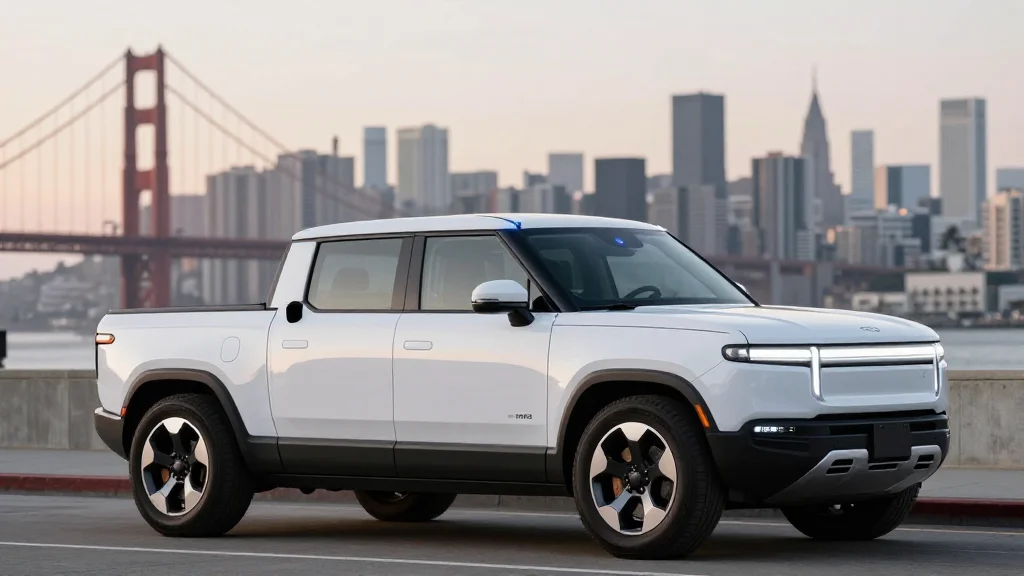
Uber Commits $300M to Launch up to 50,000 Rivian Robotaxis by 2031

Companies Mentioned
Why It Matters
The Uber‑Rivian alliance represents one of the largest capital commitments to robotaxi deployment in the United States, potentially reshaping the competitive hierarchy among autonomous mobility providers. By integrating Rivian’s R2 platform, Uber can diversify its fleet beyond the minivan‑centric models of Volkswagen and the high‑price point of Tesla, offering a more scalable, lower‑cost vehicle for mass‑market rides. The partnership also tests a collaborative model where a ride‑hailing giant funds vehicle manufacturers’ autonomy programs, a template that could accelerate industry‑wide rollouts if successful. Beyond market share, the deal raises regulatory stakes. Deploying thousands of driverless vehicles in densely populated cities will require close coordination with state and local authorities, setting precedents for safety standards, data sharing, and liability. The outcome will influence not only Uber’s future earnings but also the broader trajectory of autonomous transportation adoption across North America and Europe.
Key Takeaways
- •Uber will purchase 10,000 autonomous Rivian R2 SUVs, with an option for 40,000 more by 2030.
- •Uber has committed $300 million, with a total investment ceiling of $1.25 billion through 2031.
- •First robotaxi services are planned for San Francisco and Miami in 2028.
- •Rivian’s R2 price for consumers is $48,490, featuring 11 cameras, five radars and one lidar.
- •Uber shares fell 2% to $75.34; Rivian shares rose 4% to $16.12 after the announcement.
Pulse Analysis
Uber’s decision to back Rivian’s R2 reflects a strategic shift from a single‑vendor reliance toward a portfolio approach that spreads risk across multiple hardware partners. This diversification mirrors the broader industry trend where ride‑hailing platforms are becoming de‑facto integrators of autonomous technology, leveraging their data assets to extract value from vehicle manufacturers. Historically, Uber’s earlier forays with autonomous startups struggled due to fragmented technology stacks and regulatory headwinds. By aligning with Rivian—a company that has recently stabilized its balance sheet and demonstrated a robust sensor suite—the partnership mitigates some of those earlier pitfalls.
The financial terms also signal a pragmatic acknowledgment of the capital intensity inherent in scaling robotaxis. A $300 million upfront spend, capped at $1.25 billion, is modest compared with Waymo’s multi‑billion‑dollar R&D budget, yet it is sizable enough to fund vehicle production, software integration, and early‑stage deployment. If Uber meets its performance milestones, the optional 40,000‑vehicle expansion could catapult its autonomous fleet into the tens of thousands, rivaling Waymo’s operational scale. However, the success of this model hinges on achieving level‑4 autonomy reliably—a technical hurdle that has delayed many competitors.
From a competitive standpoint, the partnership intensifies the battle for market dominance in key metros. Waymo’s entrenched presence in Seattle, Phoenix and other cities gives it a data advantage, while Tesla’s over‑the‑air updates and brand cachet attract a different rider segment. Rivian’s entry, backed by Uber’s rider network, could carve out a niche focused on mid‑range, cost‑effective rides, especially if the R2’s lower price translates into higher fleet utilization. The next few years will reveal whether Uber’s multi‑partner strategy can outpace the more vertically integrated models of its rivals, and whether regulatory bodies will grant the necessary approvals for a fleet of truly driverless vehicles to operate at scale.
Uber commits $300M to launch up to 50,000 Rivian robotaxis by 2031
Comments
Want to join the conversation?
Loading comments...