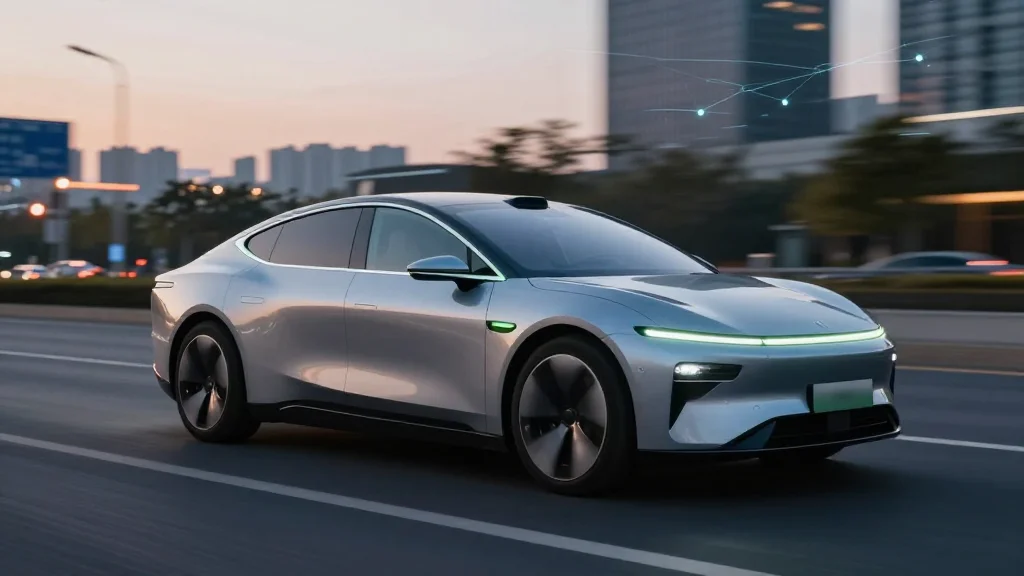
Uber Partners with Nvidia on Autonomous Deal, Aims for 100,000 Cars by 2027

Companies Mentioned
Why It Matters
The Uber‑Nvidia alliance could accelerate the commercialization of driverless rides, a sector that has struggled to move beyond limited pilots. By leveraging Nvidia’s AI hardware, Uber aims to lower the cost per autonomous mile, a critical factor for achieving profitability at scale. Success would not only boost Uber’s competitive position against Lyft but also validate the broader business case for autonomous mobility, encouraging further investment from automakers and capital markets. Beyond Uber, the partnership highlights a shift toward ecosystem‑level collaborations, where ride‑hailing platforms, chipmakers, and vehicle manufacturers co‑develop integrated solutions. This model may become the industry standard, reducing fragmentation and speeding up regulatory approvals, ultimately bringing autonomous transportation to everyday commuters faster than previously anticipated.
Key Takeaways
- •Uber announced a multi‑year partnership with Nvidia to use the DRIVE autonomous platform.
- •The deal targets 100,000 self‑driving vehicles on Uber’s network by 2027.
- •Uber reported a 15% EBIT margin for Q1 2026, indicating improving profitability.
- •Lyft’s autonomous efforts lack a comparable hardware partnership, potentially widening the competitive gap.
- •Pilot deployments of Nvidia‑enabled vehicles are planned for late 2026, with broader rollout in 2027.
Pulse Analysis
Uber’s strategic bet on Nvidia reflects a broader industry realization that hardware and software integration is essential for scaling autonomous fleets. In the early 2020s, many ride‑hailing firms pursued siloed development, resulting in fragmented solutions and costly duplication of effort. By partnering with a single, proven AI stack, Uber can focus on its core competency—network effects and logistics—while outsourcing the heavy lifting of perception and planning to Nvidia. This division of labor mirrors successful models in other tech sectors, such as cloud providers offering specialized AI accelerators to SaaS firms.
Historically, autonomous vehicle pilots have struggled with high per‑vehicle costs and limited geographic coverage. Nvidia’s economies of scale, driven by its dominance in data‑center GPUs and automotive chips, could compress those costs dramatically. If Uber can achieve the projected 100,000‑vehicle fleet, the resulting data volume will further improve AI models, creating a virtuous cycle of safety and efficiency gains. However, the timeline is aggressive; regulatory hurdles, public perception of safety, and the need for robust insurance frameworks remain significant obstacles.
From a market perspective, the partnership may force other ride‑hailing and logistics players to seek similar alliances or develop in‑house capabilities, intensifying competition for talent and chip supply. Investors should monitor the rollout milestones, especially the first commercial rides in 2026, as they will serve as a litmus test for the viability of large‑scale autonomous operations. Success could unlock a new revenue tier for Uber, while failure may reinforce skepticism about the near‑term profitability of driverless services.
Uber partners with Nvidia on autonomous deal, aims for 100,000 cars by 2027
Comments
Want to join the conversation?
Loading comments...