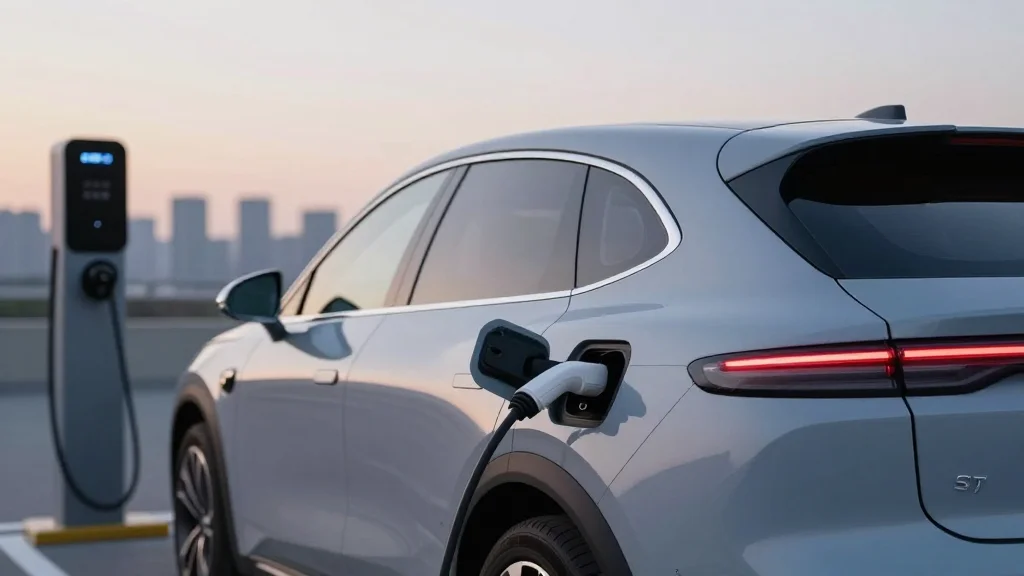
Uber Pours $1.25 B Into Rivian Robotaxi Fleet, Targeting 50,000 Autonomous Cars

Companies Mentioned
Why It Matters
Uber’s $1.25 billion infusion into Rivian accelerates the commercialization of robotaxis, a sector that has struggled to move beyond pilot projects. By committing to a fleet of up to 50,000 autonomous vehicles, Uber could achieve economies of scale that lower per‑ride costs, making driverless rides competitive with traditional taxis and public transit. The deal also forces a reckoning for gig workers, highlighting the social and political stakes of large‑scale automation in a labor‑intensive industry. Beyond Uber, the partnership signals to automakers and tech firms that deep capital commitments are required to secure market share in autonomous mobility. Rivian’s RAP1 platform, with its high‑throughput AI compute, may set a new benchmark for sensor fusion and real‑time decision‑making, prompting rivals to accelerate their own R&D pipelines. Regulators will need to adapt quickly to oversee safety, data security, and the broader economic impact of a robotaxi network that could serve millions of riders across continents.
Key Takeaways
- •Uber commits $1.25 billion to Rivian for up to 50,000 robotaxis by 2031
- •First 10,000 R2 SUVs to launch in San Francisco and Miami in 2028
- •Funding split: $300 million upfront, $950 million tied to performance milestones
- •Additional $100 million allocated for fast‑charging hubs in three U.S. cities
- •Potential displacement of 850,000 U.S. gig drivers raises labor‑policy concerns
Pulse Analysis
Uber’s strategic pivot from a pure‑play platform to an autonomous fleet operator reflects a broader industry trend: control over the end‑to‑end customer experience is becoming a competitive moat. By locking Rivian’s RAP1 platform to its app, Uber not only secures a dedicated supply of driverless vehicles but also creates a data feedback loop that can refine routing, pricing and vehicle utilization faster than competitors who rely on third‑party fleets. This vertical integration could compress margins for rivals that must negotiate vehicle access and revenue sharing with independent operators.
However, the partnership’s success hinges on regulatory clearance and public trust. The RAP1 system’s claimed 1,600 trillion operations per second is impressive, yet safety validation in dense urban environments remains unproven at scale. Any incident could trigger a backlash that stalls deployment and invites stricter oversight, as seen after Uber’s 2018 fatal crash. Moreover, the social contract with gig drivers is fragile; without a clear transition plan, Uber risks labor unrest and potential legislative action that could impose constraints on autonomous fleet expansion.
In the longer view, Uber’s bet could reshape urban mobility economics. If robotaxis achieve cost parity with human‑driven rides, they may erode the market share of traditional taxis and public transit, prompting cities to rethink congestion pricing, parking policies, and infrastructure investment. Rivian, for its part, sacrifices broader OEM partnerships for a guaranteed off‑take, a gamble that could pay off if Uber’s network scales as projected, but also leaves the company vulnerable if the robotaxi rollout stalls. The next 12‑18 months will be a litmus test for whether capital‑heavy, vertically integrated models can outpace the more fragmented approaches currently populating the autonomous vehicle landscape.
Uber pours $1.25 B into Rivian robotaxi fleet, targeting 50,000 autonomous cars
Comments
Want to join the conversation?
Loading comments...