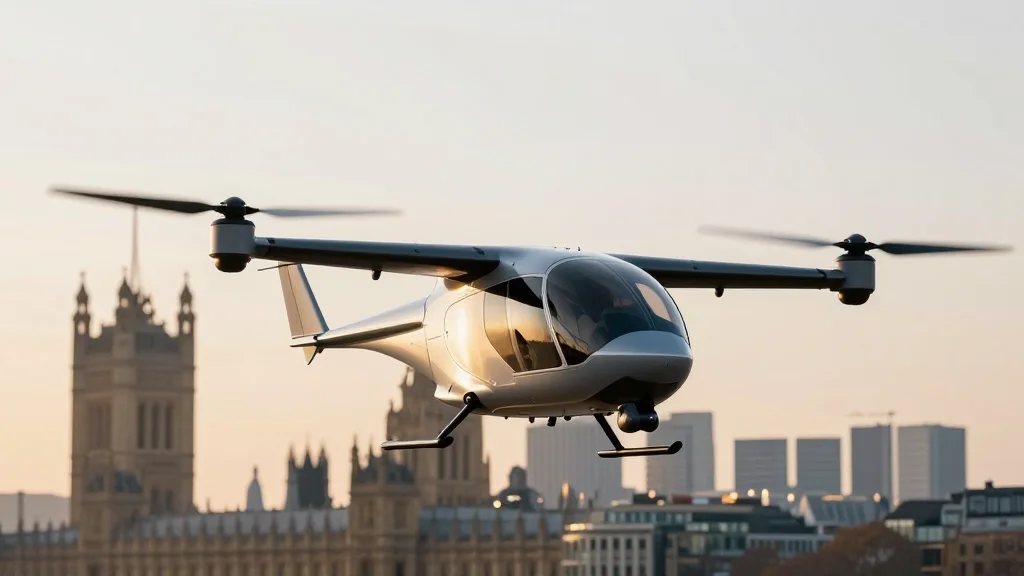
UK Government Outlines Regulatory Workplan for Speeding BVLOS Operations and eVTOL Integration
Companies Mentioned
Why It Matters
By streamlining approvals and establishing clear rules, the UK can attract commercial drone and air‑taxi operators, boosting the domestic advanced‑mobility market and advancing carbon‑reduction goals.
Key Takeaways
- •CAA to act as Market Surveillance Authority for drones by end 2026.
- •Fast‑track approvals for hazardous‑task BVLOS flights like rail and power lines.
- •Regulatory framework for eVTOL operations targeted for completion by 2028.
- •Mutual recognition of flightworthiness assessments to speed operator certification.
- •Integrated policy aims to standardise multi‑operator urban drone deliveries.
Pulse Analysis
The United Kingdom is positioning itself as a hub for advanced air mobility by tightening the regulatory scaffolding around unmanned aircraft systems. Beyond Visual Line of Sight (BVLOS) flights, long‑awaited by logistics firms and utilities, promise to unlock high‑value routes such as railway inspections, power‑line monitoring and precision agriculture. Analysts estimate the global BVLOS market could exceed $30 billion by 2030, and the UK’s early adoption could capture a sizable share of that growth. By codifying safety standards while encouraging innovation, the government hopes to attract investment and create skilled jobs in a nascent sector.
The transport minister’s letter tasks the Civil Aviation Authority with a sweeping set of deliverables for 2026‑27. The CAA will become the Market Surveillance Authority, policing drone imports and granting regulatory certainty by the close of 2026. A streamlined approval process will prioritize hazardous‑task operations, while mutual recognition of flight‑worthiness assessments and an upgraded Specific Operations Risk Assessment (SORA) framework aim to cut certification timelines. The agency will also model its coordination after the FAA’s UAS Integration Office, offering a single‑window interface that promises predictable decision‑making for commercial operators.
On the eVTOL front, the CAA plans to finalize a comprehensive rulebook by the end of 2028, supported by pathway trials throughout 2026‑27 that will test airworthiness, pilot licensing and dedicated vertiport standards. The Department for Transport will receive an Opinion and Instruction Document in 2026, outlining legislative changes slated for 2027. Successful integration could see the UK launch passenger‑focused Advanced Air Mobility services within the next five years, reducing urban congestion and delivering zero‑emission travel options. Together, these measures aim to cement the UK’s reputation as a global leader in low‑carbon aviation.
UK government outlines regulatory workplan for speeding BVLOS operations and eVTOL integration
Comments
Want to join the conversation?
Loading comments...