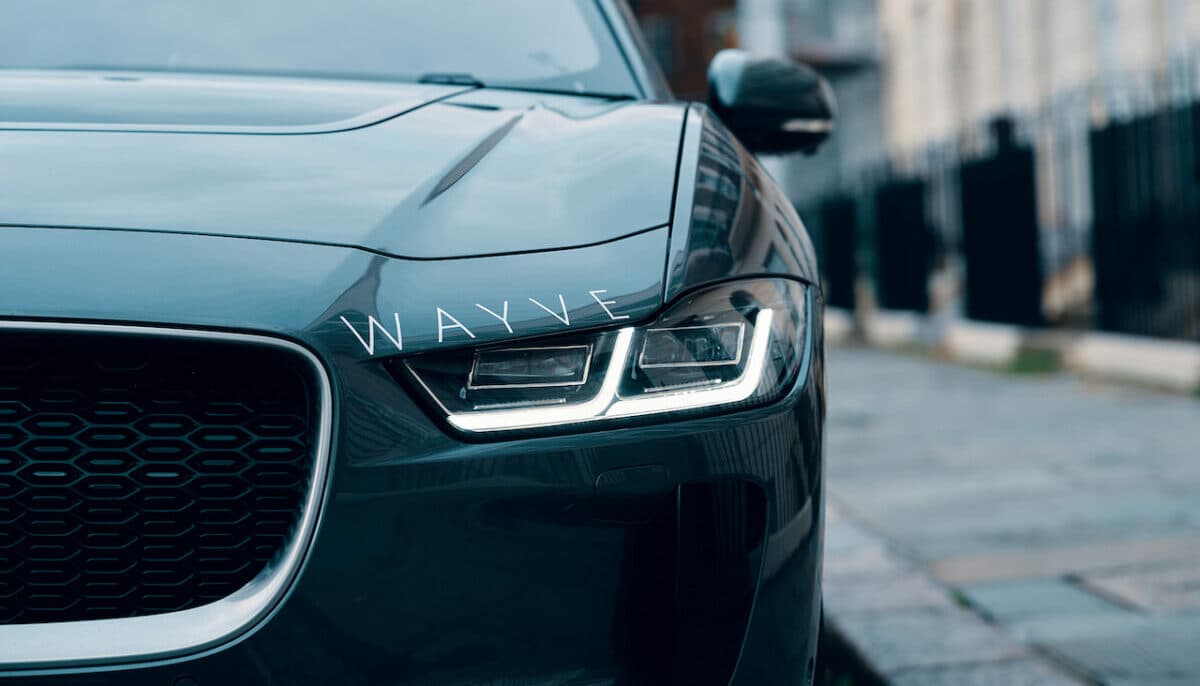
UK Self-Driving Startup Wayve Closes US$1.5bn Funding Round
•February 25, 2026
0
Companies Mentioned


Why It Matters
The infusion accelerates Wayve’s shift to commercial autonomy, challenging entrenched players like Waymo and Tesla while offering OEMs a lower‑capex path to self‑driving capabilities.
Key Takeaways
- •Wayve raises $1.5bn, valuation $8.6bn.
- •Mercedes, Stellantis, Nissan become first auto investors.
- •Uber commits $300m for robotaxi fleet across ten cities.
- •Wayve's AI learns without geofencing, targets commercial licensing.
- •London slated for first robotaxi launch in 2026.
Pulse Analysis
Wayve’s latest Series D round injects $1.5 billion into the UK‑based autonomous‑driving firm, pushing its post‑money valuation to $8.6 billion and bringing total capital to $2.5 billion. The round is anchored by Eclipse Ventures, Balderton Capital and SoftBank Vision Fund 2, and marks the first direct equity stakes from major OEMs—Mercedes‑Benz, Stellantis and Nissan. Uber adds a conditional $300 million tranche, earmarked for a fleet of robotaxis that will operate in ten global cities, with London earmarked as the inaugural market. This capital surge positions Wayve to transition from research to commercial deployment faster than many rivals.
Wayve differentiates itself through an embodied‑AI architecture that learns from raw driving data rather than relying on high‑definition maps or rule‑based logic. The system is designed to transfer across vehicle platforms and urban environments without city‑specific tuning, a promise that echoes Tesla’s long‑standing claim of geofence‑free autonomy. By licensing the software layer to OEMs instead of building a proprietary robotaxi fleet, Wayve aims for higher margins and lower capital expenditure. This model could sidestep the massive operating losses that have plagued Waymo, Pony.ai and even Uber’s own robotaxi experiments, offering a potentially more scalable path to profitability.
The upcoming London rollout gives Wayve a home‑field advantage in a market that is rapidly becoming a testing ground for robotaxi services from Waymo, Baidu’s Apollo Go and Uber‑Lyft partnerships. If the Uber‑backed fleet meets its milestones, the company will field hands‑off Level 2 vehicles from Nissan by next year and progress to fully driverless operations thereafter. Success would validate the licensing approach and could accelerate OEM adoption of third‑party autonomy stacks, reshaping the competitive landscape. Investors and regulators will watch closely, as Wayve’s trajectory may set a new benchmark for commercial autonomous mobility.
UK self-driving startup Wayve closes US$1.5bn funding round
0
Comments
Want to join the conversation?
Loading comments...