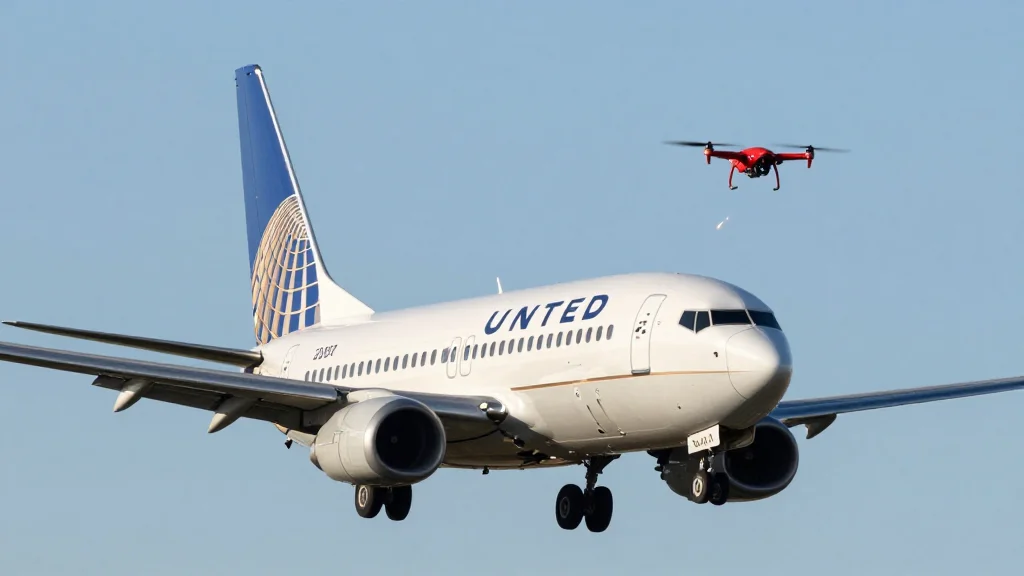
United Pilot Reports Possible Drone Strike at 4,000 Ft over San Diego, FAA Launches Probe

Companies Mentioned
Why It Matters
The San Diego drone‑strike report highlights a critical fault line between rapid growth in autonomous aerial systems and the existing safety framework governing manned aviation. If drones can operate at altitudes far above current limits without detection, the risk of mid‑air collisions rises sharply, threatening passenger safety and public confidence in both airlines and emerging drone services. Regulators face a choice: tighten enforcement and impose new technical requirements that could slow market adoption, or allow a more permissive environment that may invite further incidents. The FAA’s response will signal how the United States intends to balance innovation in autonomous logistics with the imperative to keep the national airspace safe.
Key Takeaways
- •United pilot of Flight 1980 reported hitting a red drone at ~4,000 ft during landing at San Diego International Airport
- •FAA confirmed the sighting exceeded the 400‑ft legal ceiling for civilian drones
- •United’s post‑flight inspection found no damage to the Boeing 737
- •FAA opened an investigation to determine if the drone was operating under a waiver or in violation of Part 107
- •The incident could prompt new altitude‑tracking or transponder requirements for high‑altitude autonomous drones
Pulse Analysis
The San Diego encounter is likely to become a reference point in the ongoing debate over how autonomous drones share airspace with commercial airlines. Historically, the FAA has relied on altitude caps and visual line‑of‑sight rules to keep drones away from jet traffic. However, as delivery firms push for higher‑altitude, beyond‑visual‑line‑of‑sight (BVLOS) operations, those legacy safeguards are increasingly inadequate. The pilot’s description of a "red drone" at 3,000‑4,000 feet suggests either a rogue operator or a test vehicle operating under a special waiver. In either case, the lack of a real‑time identification system meant the aircraft crew could only react after the near‑miss.
From a market perspective, the incident could accelerate the push for mandatory detect‑and‑avoid (DAA) technologies. Companies like Zipline and Wing have already invested heavily in DAA prototypes, but widespread adoption has been hampered by cost and certification hurdles. A high‑profile incident involving a major carrier may tip the cost‑benefit analysis in favor of faster rollout, especially if the FAA moves toward requiring transponder‑style broadcasting for any drone operating above 500 feet. Such a mandate would create a new compliance layer for startups, potentially consolidating the market around firms that can absorb the expense.
Looking ahead, the FAA’s investigation timeline and any resulting rule changes will be closely watched by investors and policymakers alike. If the agency issues a swift, stringent directive, we could see a short‑term slowdown in BVLOS trials but a longer‑term boost in safety‑focused innovation. Conversely, a tepid response may embolden operators to test the limits, raising the probability of future incidents. Either outcome will shape the trajectory of autonomous aerial logistics and its integration into the national airspace system.
United pilot reports possible drone strike at 4,000 ft over San Diego, FAA launches probe
Comments
Want to join the conversation?
Loading comments...