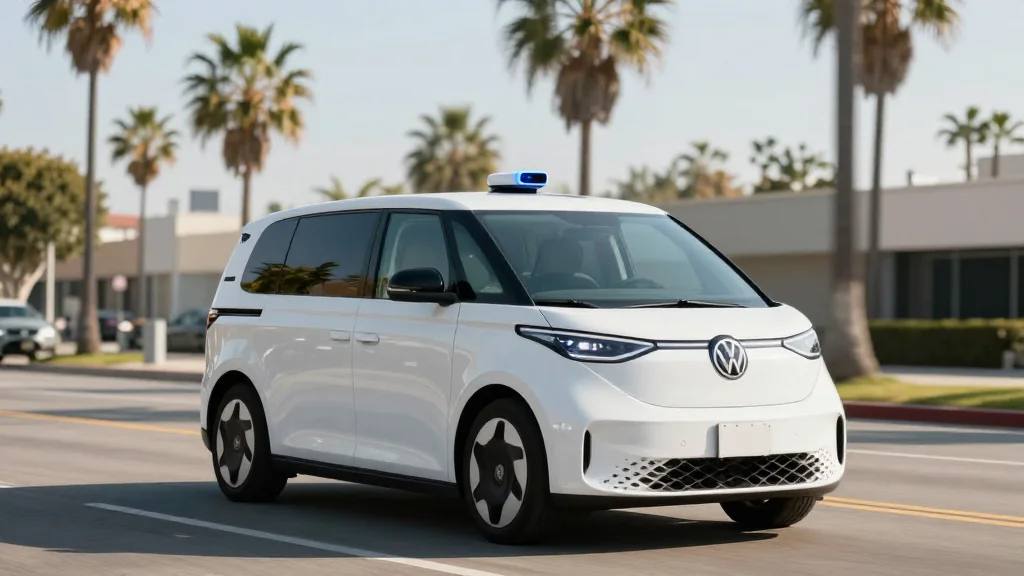
Volkswagen's MOIA and Uber Launch Autonomous ID. Buzz Robotaxi Tests in Los Angeles

Companies Mentioned
Why It Matters
The MOIA‑Uber test represents a concrete step toward mass‑market autonomous mobility in the United States. By targeting a 500‑vehicle driverless fleet, the partnership aims to prove that large‑scale robotaxi operations can be profitable, safe, and scalable—key criteria that have so far limited widespread rollout. A successful launch would validate the business model of integrating OEM‑built autonomous hardware with a ride‑hailing platform’s demand‑side network, potentially reshaping how cities plan for future transportation infrastructure and how investors allocate capital across the autonomous‑driving ecosystem. Moreover, the Los Angeles market offers a demanding proving ground: high traffic density, diverse weather conditions, and a strong car culture. Demonstrating reliable driverless service here could serve as a template for other metropolitan areas, accelerating regulatory approvals and public acceptance nationwide.
Key Takeaways
- •MOIA America and Uber began on‑road testing of autonomous ID. Buzz minivans in Los Angeles on April 8, 2026.
- •Initial fleet of ~10 vehicles equipped with 27 sensors (13 cameras, 9 LiDAR, 5 radars) processed by Mobileye Drive.
- •Target: commercial robotaxi rides by late 2026; >500 fully driverless vehicles by Q3 2027.
- •Plan to scale to >100 safety‑operator vehicles before commercial launch.
- •Jointly owned operations hub in Los Angeles to manage fleet and data.
Pulse Analysis
The MOIA‑Uber collaboration signals a maturation of the autonomous‑vehicle value chain. Early pilots often relied on a single player—either a tech firm providing the self‑driving stack or an OEM supplying the vehicle. By co‑owning the fleet and the operations center, Volkswagen and Uber are aligning incentives across hardware, software, and demand generation. This integrated approach reduces friction in data sharing, accelerates iteration cycles, and offers a clearer path to profitability, as revenue can be directly tied to ride volume rather than licensing fees.
Historically, autonomous pilots have struggled with scaling beyond a few dozen vehicles due to regulatory hurdles and high operational costs. The announced goal of 500 driverless units within a year suggests that both firms have confidence in their safety case and cost structure. If they achieve this, it could compress the timeline for other players—Waymo, Cruise, Zoox—to expand, potentially igniting a wave of city‑level competitions for autonomous fleet permits.
Investors will likely watch the upcoming California DMV permit decision closely. Approval would not only unlock the commercial rollout but also serve as a de‑risking catalyst for the broader autonomous market, prompting fresh capital inflows into sensor manufacturers, mapping services, and AI compute providers. Conversely, any setback could reinforce skepticism about the near‑term viability of large‑scale robotaxi services. In either scenario, the MOIA‑Uber test will be a bellwether for the next phase of autonomous mobility commercialization.
Volkswagen's MOIA and Uber Launch Autonomous ID. Buzz Robotaxi Tests in Los Angeles
Comments
Want to join the conversation?
Loading comments...