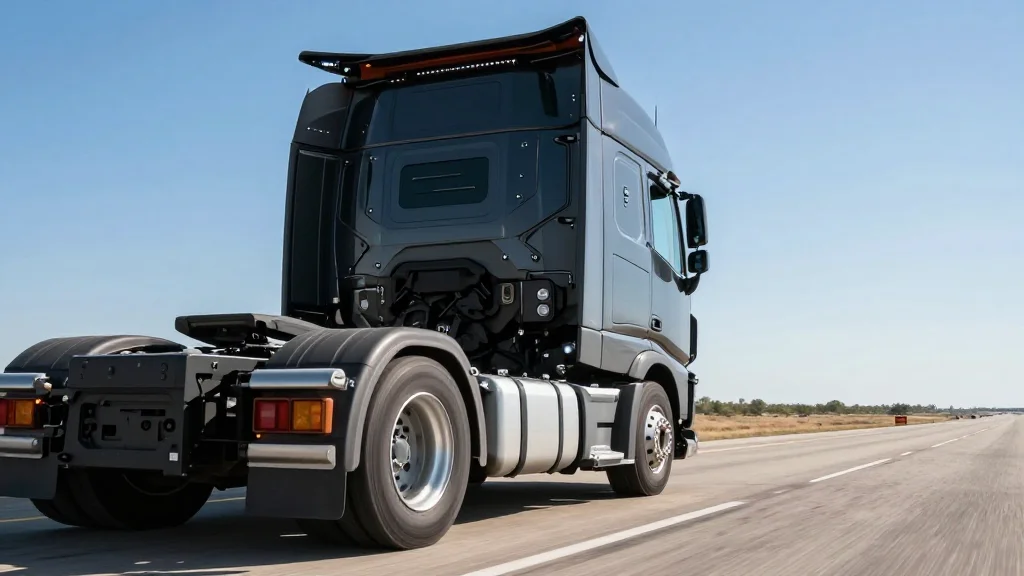
Volvo and Aurora Deploy 200‑Mile Autonomous Freight Route Between Dallas and Oklahoma City

Companies Mentioned
Why It Matters
The Dallas‑Oklahoma City autonomous corridor demonstrates that self‑driving freight can move beyond controlled test environments into routine, customer‑facing operations. By cutting drayage and handoffs, the service promises lower logistics costs, faster transit times, and reduced emissions—key drivers for shippers seeking supply‑chain resilience. Moreover, the partnership leverages Volvo’s global service infrastructure, potentially accelerating industry‑wide adoption of autonomous trucks. Regulators and industry observers will view the final validation phase as a litmus test for full driverless deployment. Successful driverless operation could prompt faster permitting processes and encourage other manufacturers to pursue similar collaborations, reshaping the competitive dynamics of the autonomous trucking market.
Key Takeaways
- •Volvo Autonomous Solutions and Aurora launch a 200‑mile Dallas‑Oklahoma City autonomous freight route.
- •The Volvo VNL Autonomous runs five days a week in supervised autonomy, logging hundreds of miles weekly.
- •Partnership enters final validation phase for fully driverless operations.
- •Volvo plans to build hundreds of Aurora‑integrated trucks at its New River plant starting in 2027.
- •Route reduces drayage moves and handoffs, offering cost and efficiency gains for shippers.
Pulse Analysis
The Dallas‑Oklahoma City corridor marks a pivotal inflection point for autonomous freight: it moves the conversation from "if" to "how quickly" the industry can scale. Volvo’s deep dealer network and after‑sales support address a long‑standing barrier—fleet operators’ fear of service downtime—while Aurora’s modular Driver software provides a plug‑and‑play solution for multiple vehicle platforms. This synergy reduces integration risk and shortens time‑to‑market, giving the duo a competitive moat against pure‑play tech firms that must build their own service ecosystems.
Historically, autonomous trucking pilots have been confined to single‑state, hub‑to‑hub loops with limited payload diversity. By delivering directly to customer facilities, Volvo and Aurora are testing a more complex logistics model that mirrors real‑world supply chains. If the supervised‑autonomy phase proves reliable—measured by incident‑free miles and on‑time performance—regulators may grant broader exemptions, accelerating the transition to driverless fleets. This could compress the investment horizon for carriers, prompting a wave of retrofits and new vehicle orders.
Looking forward, the partnership’s roadmap suggests a staged rollout: expand the corridor network, complete driverless validation, then scale production at New River. The success of this model could trigger a cascade effect, prompting other OEMs to partner with software firms rather than develop in‑house autonomy stacks. For shippers, the promise of lower cost per mile and higher predictability may shift procurement preferences toward autonomous carriers, reshaping freight market pricing dynamics over the next five years.
Volvo and Aurora Deploy 200‑Mile Autonomous Freight Route Between Dallas and Oklahoma City
Comments
Want to join the conversation?
Loading comments...